
Baby Iris was born at just 26 weeks of pregnancy.
With a weight of 620g, she was barely heavier than a packet of sugar.
Her almost fused eyelids, barely opening.
Her skin, so translucent that it looked like it could tear.
Her chest, so tiny that it struggled with each breath.
Within minutes, she was surrounded by doctors and nurses.
A breathing machine helped her lungs expand.
Small tubes delivered medication and nourishment.
Her new home was a box called an incubator in the neonatal intensive care unit (NICU).
Her mother had imagined holding her newborn against her chest, admiring her fingers and listening to her first cries.
Instead, she watched through the transparent walls of an incubator, wondering whether her daughter would survive.
For Iris, the first day of life was a view of wires and machines.
She was in a battle for her life – a journey that is full of challenges faced by millions of premature babies worldwide.
Born before their time
According to the World Health Organization (WHO), approximately 13.4 million babies were born prematurely in 2020 – roughly one in 10 births.
Prematurity – defined as birth before 37 completed weeks of pregnancy – remains a leading cause of death among children under the age of five.
Iris belonged to the most vulnerable group: extremely premature babies.
During the final months of pregnancy, the lungs, brain and digestive system undergo vital development.
Iris had missed much of that preparation.
She was not simply a smaller version of a full-term baby; almost all her organs were being asked to work before they were ready.
Every breath is a battle
Iris’ first challenge was something most of us do without thinking: breathing.
Her immature lungs lacked sufficient surfactant, a substance that prevents the tiny air sacs from collapsing with every breath.
Without it, breathing becomes exhausting.
Imagine inflating a balloon that repeatedly collapses.
Doctors administered surfactant and supported her breathing using specialised equipment.
But even as her lungs improv-ed, there were moments when Iris suddenly stopped breathing.
This condition, called apnoea of prematurity, occurs because the brain’s breathing control system remains immature.
Sometimes, her heart rate dropped, triggering an alarm as she simply forgot to breathe.
For her mother, every alarm brought fresh anxiety.
Iris’ heart faced challenges too.
A blood vessel called the ductus arteriosus, which normally closes after birth, can remain open in premature babies.
This can increase blood flow to the lungs, making breathing harder and straining the heart.
Doctors monitored Iris closely, knowing that some babies require treatment while others improve naturally.
Fragile brain blood vessels
At 26 weeks, Iris’ brain was still undergoing a period of extraordinary growth.
Its delicate blood vessels were particularly vulnerable.
Very premature babies face an increased risk of bleeding into the spaces within the brain, known as intraventricular haemorrhage.
Iris underwent ultrasound examinations to monitor her brain.
Not every premature baby develops such complications, but even those who survive without major brain injury require developmental monitoring.
For Iris, leaving the NICU would eventually mark an important victory, but it would not mean that her developmental journey was complete.
Just a few drops of milk
While most newborns begin feeding shortly after birth, Iris could not yet coordinate her sucking, swallowing and breathing to occur simultaneously.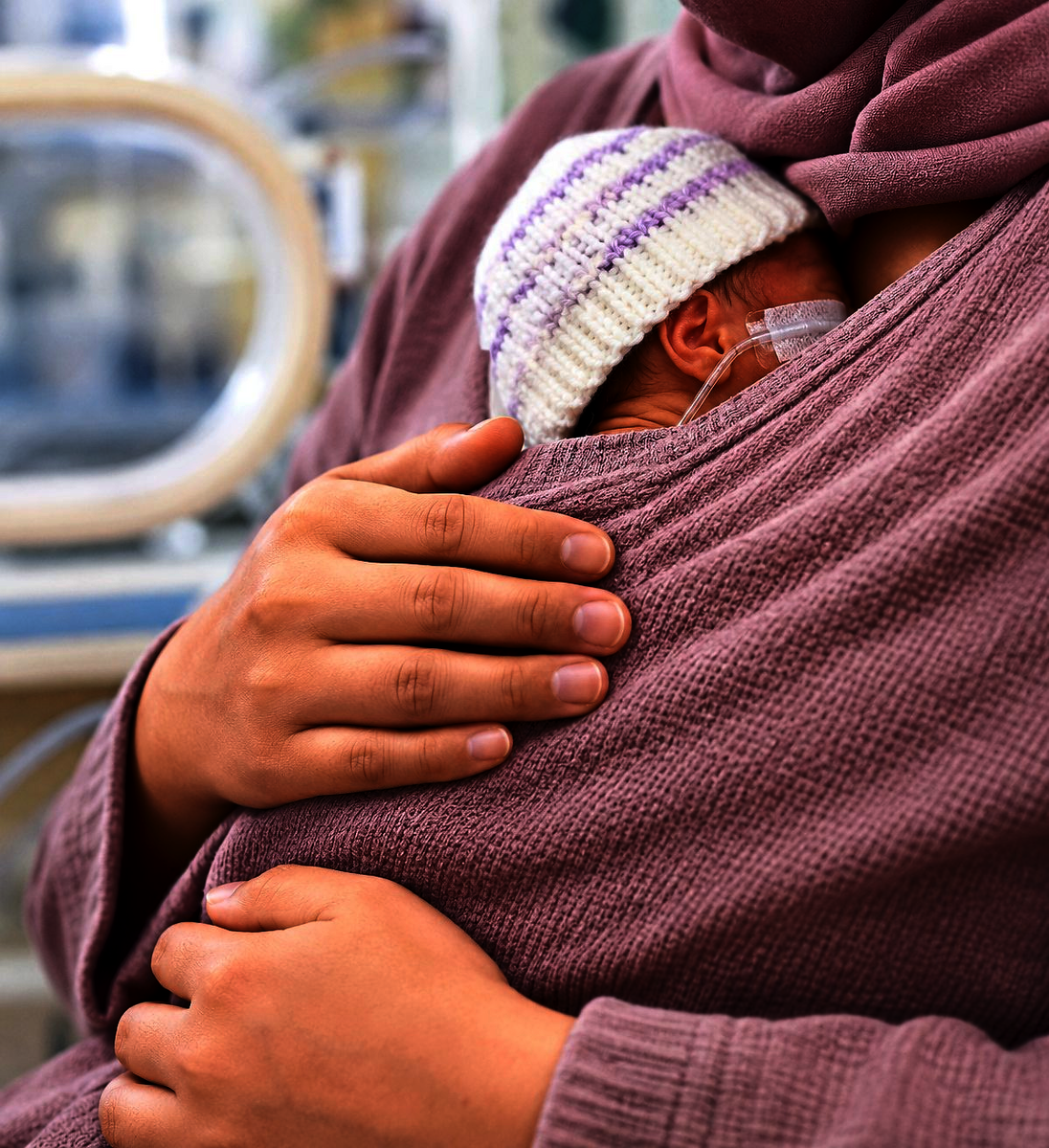
Her nourishment initially came through intravenous (IV) fluids and a tiny feeding tube.
Her mother’s expressed breast milk became especially valuable, providing nutrition and protective factors against infections.
But feeding was approached cautiously.
Premature intestines are vulnerable to a potentially devastating condition called necrotising enterocolitis, where parts of the bowel become severely inflamed and damaged.
For Iris, tolerating just a few millilitres of milk was progress.
As the days passed, her feeds slowly increased.
Eventually, she began gaining weight.
To most people, gaining 20g might seem insignificant; inside the NICU, it was something worth celebrating.
ALSO READ: Ensuring that your premature baby has the right nutrition
A fragile defence system
Iris’ immune system was also underprepared.
Much of the protective antibody transfer from mother to baby occurs during the final trimester.
Born so early, Iris had missed out on this important transfer of natural protection.
Her delicate skin offered less defence against germs, while the IV lines and medical devices keeping her alive also carried infection risks.
Even staying warm was difficult.
Without sufficient body fat, premature babies lose heat rapidly.
A fall in body temperature increases their oxygen and energy requirements, placing further strain on an already vulnerable body.
Iris’ incubator helped maintain the warmth she could not yet regulate herself, and the special linen nests done by the nurses was to help provide her the comfort akin to her mother’s womb.
Developing windows to the world
Each day, Iris tried to open her tiny eyes, hoping that she could see how her mother looked like.
Very premature babies risk developing retinopathy of prematurity, a condition involving abnormal blood vessel growth in the retina that can threaten their vision.
Regular eye examinations can help detect such problems before permanent damage occurs.
Hearing assessments are equally important, ensuring that difficulties are identified and addressed early.
A parent’s healing touch
The day then came for the milestone that Iris’ mother had long awaited.
With support from the neonatal team, she finally held Iris against her bare chest, warmth that is as enriching to the baby as it is to the mother.
This practice, called kangaroo mother care, provides far more than emotional comfort.
Skin-to-skin care helps maintain temperature, supports breastfeeding and strengthens bonding.
WHO now recommends beginning it as soon as possible, including for many babies who still require medical support.
For Iris’ mother, however, the experience meant something beyond statistics.
After days of watching monitors and tubes, she could finally hold her daughter close.
Beyond the incubator
Weeks passed.
Iris gradually needed less breathing support.
Her feeds improved and she gained weight.
She was also eventually able to maintain her temperature without an incubator.
After months in the hospital, she was finally ready to go home.
Yet her journey was far from over.
Ophthalmologists, audiologists and developmental specialists would continue monitoring her progress.
Some premature babies face lasting disabilities, while others grow into healthy children whose difficult beginnings are barely visible.
For Iris and her family, leaving the NICU was already a remarkable victory.
As we commemorate World Prematurity Day (Nov 15), we celebrate the survival of these babies, the resilience of their families and the dedication of the healthcare teams caring for them.
We also remember those whose journeys ended too soon and the families who carry their memories.
One day, Iris may run across a playground or blow out the candles on her birthday cake.
Those around her may see an ordinary child doing ordinary things.
But her parents will remember.
The first breath that needed a machine.
The first few drops of milk.
The first night without an alarm.
The first time they held her close.
For children like Iris, some of life’s greatest victories happen long before they even learn to walk.
Life’s first steps are never the same, and every one of those victories deserves to be celebrated as these are moments that shape a lifetime.
Dr Naveen Nair Gangadaran is a paediatrician and a committee member of the Perinatal Society Malaysia and Malaysian Paediatric Association respectively. Associate Professor Dr Azanna Ahmad Kamar is a consultant paediatrician and neonatologist, and past president of the Perinatal Society Malaysia. For more information, email starhealth@thestar.com.my. The information provided is for educational and communication purposes only, and should not be considered as medical advice. The Star does not give any warranty on accuracy, completeness, functionality, usefulness or other assurances as to the content appearing in this article. The Star disclaims all responsibility for any losses, damage to property or personal injury suffered directly or indirectly from reliance on such information.