Blurry vision as you age is not necessarily due to cataracts


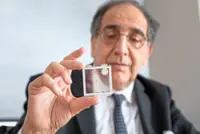
In wet AMD, abnormal blood vessels under the macula (the centre of the retina), which break and bleed easily, cause the retina to swell, resulting in rapid and severe loss of central vision. — Photos: Novartis

As we get older, it’s only normal for our vision to start deteriorating.

Some people shrug off blurriness as a sign of ageing, thinking perhaps it is due to cataracts.

But blurry vision is also associated with age-related macular degeneration (AMD), an eye disease that can lead to irreversible vision loss if not properly diagnosed and treated.

In this condition, the cells in the macula – the portion of the eye at the centre of the retina that processes sharp, clear, straight-ahead vision and colour perception – are degrading.

In contrast, cataracts involve the eye lens, which becomes clouded, and can be removed via surgery and replaced with an artificial one.

AMD can be categorised as dry or wet, and usually affects those above 50.

Dry AMD causes blurred or reduced central vision, due to the thinning of the macula.

It can affect one or both eyes.

If only one eye is affected, you may not notice any changes in your vision because your good eye may compensate for the weak one.

As the condition doesn’t affect side (peripheral) vision, it rarely causes total blindness, although it can make it difficult to decipher what you are seeing.

Dry AMD can progress to wet (neovascular) AMD.

This is where abnormal blood vessels develop under the macula, then break, bleed and leak fluid, hence the term “wet”.

“This leaking can damage and scar the macula, causing patients to experience severe deterioration in their vision,” says national ophthalmology service head Dr Nor Fariza Ngah.

“Early symptoms of the disease include seeing blurred or grey spots in one’s central field of vision.

“Sometimes, a patient also sees distortions, such as straight lines appearing bent or wavy, and colours looking faded or washed out.

“As the disease progresses, central vision worsens and patients are unable to perform daily activities, such as reading, driving, or even recognising faces.

“Ultimately, with the loss of sight, they will also lose their independence.”

According to focus groups comprising doctors, patients and family members, patients tend to isolate themselves as they are reluctant to communicate their problems.

“They need full family support, especially to come for regular hospital check-ups,” Dr Nor Fariza says.

She adds: “For the ladies, they cannot do housework as much, as the symptoms disturb them.

“They can become depressed – some are optimistic they will regain their vision, but others completely lose hope.

“Another factor is finances as the medication is not cheap and they need to be on it for life.”

In most cases, because there is no pain involved, people don’t realise they have wet AMD until it is too late.

Epidemiology studies show that AMD affects 10-13% of adults over the age of 65.

Although wet AMD accounts for only 15% of AMD cases, it is responsible for 90% of AMD-associated vision loss.

In a 2013 local survey, it was estimated that 46,000 Malaysians had wet AMD, but Dr Nor Fariza believes that the figure is probably higher at the moment due to our ageing population.

Delay in diagnosis

A dark spot like a smudge in your vision that doesn't go away is one of the signs of AMD.


AMD risk factors include age, family history of AMD, previous history of stroke, smoking, poorly-controlled high blood pressure, poor diet, an unhealthy lifestyle and significant exposure to sunlight (although this is difficult to quantify).

“It is hard to say if farmers are more prone to getting this condition because they are in the sun,” Dr Nor Fariza comments.

While we can’t do anything about getting older and our genes, consultant ophthalmologist Dr Tara Mary George says that the one major modifiable risk factor is smoking.

By quitting, the risk of developing wet AMD reduces four-fold.

“Other factors like maintaining weight, controlling blood pressure, etc, have to start way before AMD develops.

“If you already have AMD and decide to better your lifestyle, you may not see much difference,” she says.

On whether vitamins help prevent AMD, the specialists, who were speaking at the “Wet AMD – From Blur to Blind” briefing, say studies show that lutein and zeaxanthin help prevent AMD from progressing, but only if they are taken during the early stage.

Other supplements that might help include anti-oxidants to slow down the process of ageing, and vitamin C.

Dr Nor Fariza says: “Managing the first stage of central vision loss is important as it will determine whether we can reverse the condition or give patients better vision.

“Patients are sometimes afraid to inform us of distorted images and will only tell us when we keep asking repeatedly.

“They are not aware that AMD can be treated.”

She shares that 85% of AMD is diagnosed through clinical findings, i.e. dilating the eye and using special lenses to check the retina for any changes.

Imaging tools may also be utilised to support the diagnosis.

Besides a lack of awareness, other reasons for delayed diagnosis include patients having a wait-and-see attitude and difficulties obtaining appointments to see an eye specialist.

“When the patient comes with a referral letter which states ‘blurring of vision for two years’, we may not think it is an emergency, so he may be given the next available appointment at a MOH (Health Ministry) hospital.

“But if the letter says the patient is ‘having retinal haemorrhage, possibly AMD’, then we try to see him on the same day and there is no delay.

“There are cases where the patient with a referral letter may not think the situation is urgent because the problem has been around for a while, so he waits.

“I had a patient who kept the letter for two years before seeking treatment!” she shares.

Nationwide, there are only 16 MOH hospitals with retina specialists.

Dr Nor Fariza points out: “Not all hospitals are equipped with equipment for diagnosis and monitoring.

“With private doctors, we tell them if they don’t have the facilities, please don’t treat the patient, because how are they going to monitor them?”

Regular check-ups

With AMD, objects seem to move or change in shape and size.


Therefore, it is important for older folks to go regularly for eye tests and monitor their vision.

Don’t assume all is well if your vision is fine.

Remember that when AMD begins in one eye, your good eye will compensate for the affected one so that your vision remains seemingly good.

One simple home test Dr Tara recommends is for everyone above 50 to look at their bathroom tiles or close one eye at a time while reading, and see if anything looks distorted.

The retina is made up of 10 layers and it only takes one affected layer to alter your vision.

The increased bleeding in AMD will cause the retina to swell up, creating a large patch in the centre of the affected eye’s vision.

This is not a symptom of cataracts, Dr Tara notes.

She points out that while many patients say that they go for regular eye check-ups with the optometrist, such appointments only test their vision, while AMD requires a retina examination.

However, similar to self-monitoring at home, such check-ups do offer an opportunity to detect any problems early, alerting patients to the need to see the eye specialist.

“When you get older, you need to have a retina examination so that the doctor can look and see if you have dry AMD, which has a higher risk of progressing to wet AMD that can deteriorate over months to years,” Dr Tara says.

A jab in the eye

Four decades ago, there was no treatment available for wet AMD and patients lost their central vision within two or three years of developing the disease.

Patients are sometimes afraid to inform doctors of distorted images and will only confess when repeatedly grilled, according to Dr Nor Fariza.

All doctors could do was counsel and prepare them for vision loss.

In the early 1980s, thermal laser treatment was introduced to cauterise the bleeding retinal blood vessels.

But as it also burnt the surrounding healthy blood vessels and couldn’t save vision, it didn’t take off.

Then photodynamic therapy became available in the early 2000s.

However, while it helped arrest the disease, it didn’t help regain vision.

It wasn’t until 2005 that treatment advanced in the form of anti-vascular endothelial growth factor (anti-VEGF) injections.

Dr Tara explains: “By inhibiting the VEGF proteins, anti-VEGF injections will reduce the growth of abnormal blood vessels and help ‘dry’ the fluid in the retina.

“With early and regular treatment, 95% of patients can maintain vision at whatever level they started from, and 25-30% actually see an improvement in vision.

“It doesn’t eradicate the problem, but it’s still a great advancement.”

Most people fear getting injected in the eye, but the procedure is pretty simple and short, says Dr Tara.

Most people fear getting injected in the eye, but the procedure is pretty simple and short.

“The needle is finer than a hair and five times finer than the vaccination needles.

“We use anaesthetic drops to numb the eye, use an instrument to keep the eye open, and we ask the patient to look up or down so that he doesn’t have to see the needle going in; within two minutes, it’s done!

“In fact, we spend 1.5 minutes preparing and cleaning the eye – the actual injection takes less than five seconds,” she says, noting that a lack of understanding, self-denial and having to endure the treatment have led many patients to miss appointments with their ophthalmologists or to stop seeing them entirely.

The treatment typically begins with monthly injections.

This might eventually be lengthened to as far apart as one shot every 16 weeks, although this depends on the patient’s response to treatment.

There are small risks involved in the injections, including developing infections or experiencing a burning sensation at the injection site due to the antiseptic used to clean the eye.

Sometimes, there may be a little bruising on the eye surface.

This is not dangerous as older people may be taking blood thinners, which contribute to the problem.

The eye may be red for a few days, but it doesn’t affect vision.

“When we start anti-VEGF treatment, it’s a long journey, not a sprint,” says Dr Tara.

“All patients want fast fixes to their problem, but this is not the case, so we have to explain to them about the short term and maintenance phases.

“If they only understand the initial phase, whatever treatment we start will have no benefit, because after the initial phase, they disappear and only come back when their vision is bad, and we’re back to square one.”

Get 20% OFF The Star Digital Access

Monthly Plan

RM 13.90/month

RM 11.12/month

Billed as RM 11.12 for the 1st month, RM 13.90 thereafter.

Best Value

Annual Plan

RM 12.33/month

RM 9.87/month

Billed as RM 118.40 for the 1st year, RM 148 thereafter.

Follow us on our official WhatsApp channel for breaking news alerts and key updates!

Next In Health

Can our bodies adapt to heatwaves?�
When water takes lives�
What is a head spa?
How elections can affect our emotions
Nutrition during the golden years�
When you're trapped by an earthquake
No, creatine won't make you go bald
Doctors, please treat the woman, not just her cancer
Rabies reemerges in Europe due to disruptions in wildlife vaccinations
Pack these essentials when you're working out outdoors

Others Also Read