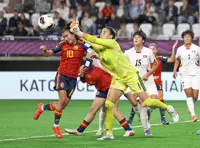
Near goals, penalty shoot-outs, outrageous fouls – football is pure excitement for fans.
For your heart, it’s hard work.
All those thrills can be especially dangerous for anyone with pre-existing conditions, as a new study shows.
Tournaments are a particularly exciting time for football fans, with the World Cup or the European Cup potentially making for emotional turbulence, which can increase the risk of a heart attack, according to a new study.
More people were admitted to hospital with heart attacks during the 2014 World Cup, say German researchers in a study published in the trade journal.
They weighed hospital data from the official statistical office and compared hospital admissions and mortality due to heart attacks over four different periods of time.
There were 18,479 admissions in Germany during the World Cup which ran for about four weeks, from mid-June to mid-July, 3.7% more than during the same period in 2015, and 2.1% more than the same time in 2013.
Meanwhile admissions fell by 5.4% in the month after the World Cup.
There was no difference in the death rate, say the scientists – but the mortality rate was highest among hospitalised heart attack patients on the day of the final game.
In 2014, the German team beat Argentina in a tense match, scoring 1-0 after extra time, noted the researchers from the University Medical Centre Mainz’s cardiology centre and the Department of Sports Medicine at Heidelberg University Hospital.
“Watching soccer can affect your heart, no question about it, ” says cardiologist Thomas Meinertz of the German Heart Foundation.
That doesn’t apply to every game – just those that viewers are particularly excited about.
The links are proven between heart attacks and extremely stressful situations, and these can range from earthquakes to elections or sporting events, says Meinertz.
The number of patients admitted to hospital with heart attacks or cardiac arrhythmias during the 2006 World Cup increased 2.7-fold when Germany was playing, according to a team led by cardiologist Ute Wilbert-Lampen, in Munich, Germany.
All the excitement causes the body to release stress hormones, leading to an increase in heart rate and blood pressure, says Meinertz.
This raises the risk of heart problems for those who already have a heart condition, he says.
So patients at high risk should be particularly careful during the current European soccer championship.
That means reduced consumption of alcohol and no rich meals – as they use oxygen and blood, drawing blood away from the heart to the gastrointestinal tract.
Avoid smoking at all costs, he adds.
Also, don’t stay seated all the time but periodically get up and stretch and walk around a little, to make sure you’re watching the game as safely as possible.
Lifestyle changes during the tournament are also something to be careful about, according to Axel Schmermund, a cardiologist based in Frankfurt.
He says such tournaments often lead people to spend a lot of time sitting down, eating snacks they might otherwise avoid and drinking alcohol and none of that is helpful to your health. – dpa
Already a subscriber? Log in
Get 20% OFF The Star Digital Access
Cancel anytime. Ad-free. Unlimited access with perks.