Did you know that most thyroid-related disorders remain undetected?
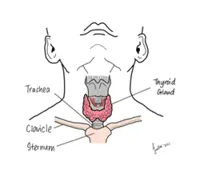
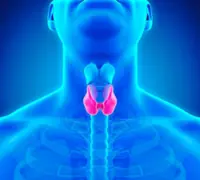
Often described as the butterfly-shaped gland, the thyroid gland is situated at the base of our neck and releases triiodothyronine (T3) and thyroxine (T4) hormones.
These hormones control our body’s metabolism and regulate vital functions such as body temperature, heart rate, muscle and digestive functions, brain development, and bone maintenance.
It is important that your T3 and T4 levels are neither too high nor too low, with the right balance achieved with the help of your hypothalamus and pituitary gland.
It has been found that females have a higher chance of thyroid dysfunction – five to eight times more likely than their male counterparts – with about one in eight women developing thyroid problems during their lifetime.
Although it is not understood why women are more prone to thyroid issues, it is suspected that the development of thyroidism and its variants is linked to autoimmunity, which is more commonly found in women.
Here are some examples of the more prevalent thyroid disorders, and how it can affect men and women alike.
Overworked and stressed out

Hyperthyroidism occurs when the thyroid gland produces too much T4 hormones.
This can cause irritability, nervousness, muscle weakness, sudden weight loss and sleeping problems among other symptoms.
The most common cause of hyperthyroidism is Graves’ disease.
This is a genetic autoimmune condition that can cause swelling of the muscle and tissue behind the eyes, commonly known as Graves ophthalmopathy.
Other causes include toxic adenoma and toxic multinodular goitre.
Both conditions cause increased hormone production in the thyroid gland due to a single nodule in the former and two or more nodules in the latter respectively.
An increasingly common exogenous (outside the body) source of thyroid hormones nowadays are over-the-counter supplements containing various amounts of T3 and/or T4 hormones.
Hyperthyroidism is typically diagnosed through blood tests and a physical examination to identify the levels of serum thyroid-stimulating autoantibodies present.
These levels are a specific biomarker for the diagnosis and severity of Graves’ disease.
The aim of treatment is to achieve an euthyroid state, i.e. a normally-functioning thyroid, as quickly and safely as possible.
This is done through antithyroid medications (methimazole and propylthiouracil), radioactive iodine ablation of the thyroid gland or surgery, which is generally rare.
Non-adherence to therapy is one of the main causes of failure in achieving euthyroidism.
Although these treatments do not cure Graves’ hyperthyroidism, they are very effective in controlling the condition when given in adequate doses.
A patient is considered to be in remission if they have a normal serum thyroid-stimulating hormone (TSH), free T4 and free T3 for a year after stopping treatment.
Treatment choices depend on a few factors, i.e. the underlying diagnosis, the presence of contraindications to a particular treatment method, the severity of hyperthyroidism and the patient’s own preference.
A low-iodine diet is usually advised for patients with hyperthyroidism, which includes lots of cruciferous vegetables such as bok choy, cabbage, broccoli and cauliflower, plus vitamins and minerals, including iron, zinc and selenium.
A thyroid storm is an endocrine emergency marked by the extreme overproduction of the T4 and T3 hormones.
Not all people with hyperthyroidism will develop a thyroid storm, but it occurs more frequently in those who aren’t receiving appropriate treatment.
While symptoms of a thyroid storm are similar to those of hyperthyroidism, these symptoms are more sudden, severe and extreme.
Individuals experiencing a thyroid storm are typically admitted into the intensive care unit (ICU) as this condition can be fatal without prompt, aggressive treatment.
Underactive and tired out
Hypothyroidism occurs when the thyroid gland doesn’t produce sufficient amounts of T3 and T4 hormones, or enough TSH.
The most common cause is Hashimoto’s thyroiditis, which is an autoimmune condition where the body attacks its own immune system.
This causes the thyroid gland to stop producing hormones.
Hashimoto’s thyroiditis is more frequently seen in women.
Depending on the severity of the hormone deficiency, the signs and symptoms of hypothyroidism vary and tend to develop slowly – often over a number of years.
These include dry skin, extreme fatigue, depression, forgetfulness and weight gain.
However, these symptoms can also occur in many other medical conditions, and are not specific to hypothyroidism.
If hypothyroidism is suspected, a physical examination and a blood test to check TSH, T4 and T3 levels will be carried out.
Although there is no cure for this condition, the gold standard treatment is daily use of the synthetic thyroid hormone levothyroxine.
This will help the patient to achieve a state of euthyroidism and normalise the circulation levels of TSH and thyroid hormones.
It is important to note that the absorption of levothyroxine can be impaired if taken with a number of other medications or milk-based beverages.
Hence, it’s advisable to take levothyroxine first thing in the morning on an empty stomach, one to two hours before breakfast or four hours before consuming any milk-based products or any kind of supplements.
The dosage may change over time, so regular consultations with your doctor is recommended.
If you are diagnosed with hypothyroidism, here are five foods to add to your diet to help boost your thyroid hormone production:
- Roasted seaweed, which is naturally rich in iodine.
- Salted nuts, which are an excellent source of selenium.
- Baked fish, known to be rich in omega-3 fatty acids and selenium.
- Frozen yoghurt and dairy products, which are said to contain iodine.
- Fresh eggs, as they contain healthy amounts of both selenium and iodine.
An extreme complication of hypothyroidism is myxoedema coma, which is life-threatening as patients exhibit multiple organ abnormalities and progressive mental deterioration.
This occurs when the body’s automatic responses to hypothyroidism are overwhelmed by a precipitating factor such as infection.
Patients with myxoedema coma usually have longstanding hypothyroidism, although it may not have been previously diagnosed.
The patient should be admitted to the ICU immediately as it carries a significant fatality rate, even with appropriate testing and treatment.
Problems in pregnancy

Thyroid disease is the second most common endocrine disorder affecting women of reproductive age.
It can lead to increased risks of miscarriage, placental abruption, hypertensive disorders and growth restriction, if left untreated during pregnancy.
The occurrence of hyperthyroidism in pregnancy ranges from 0.1% to 1.6% worldwide.
In Malaysia, it is 0.9 cases per 1,000 deliveries.
The onset of the disease during pregnancy is rare, as Graves’ disease is the most common cause of hyperthyroidism.
Meanwhile, the occurrence of hypothyroidism in pregnancy ranges from 0.3% to 4.8%.
The onset of the disease during pregnancy is rare and the most common cause of hypothyroidism in pregnancy is pre-existing autoimmune thyroiditis (Hashimoto’s thyroiditis).
Other possible causes include surgery, radioiodine ablation, congenital hypothyroidism, and rarely, lymphocytic hypophysitis.
Rare with good prognosis
Thyroid cancer is a rare type of cancer and can present itself as a painless lump or swelling in the neck.
It can also be associated with unexplained hoarseness of voice that lasts for weeks; a sore throat or difficulty swallowing that doesn’t get better; or even no symptoms whatsoever.
About one in 20 thyroid lumps are cancerous, and not all thyroid nodules indicate thyroid cancer.
The exact cause of thyroid cancer is unknown, but it can be linked to certain inherited conditions.
Women are two to three times more prone to developing thyroid cancer, compared to men.
There are four main types of thyroid cancer:
- Papillary carcinoma – the most common type, accounting for about six out of 10 cases and usually affecting those under the age of 40.
- Follicular carcinoma – accounts for around three out of 20 cases and tends to affect older adults.
- Medullary thyroid carcinoma – accounts for between five and eight out of every 100 diagnosed cases and can run in families.
- Anaplastic thyroid carcinoma – the rarest and most aggressive type of thyroid cancer, usually affecting those over the age of 60.
Tests and procedures used to diagnose thyroid cancer include physical examination, blood tests, ultrasound imaging with fine needle aspiration biopsy, and other imaging or genetic testing, particularly for medullary thyroid carcinoma.
Treatments depend on the type and grade of the cancer, and whether a complete cure is realistically achievable.
Treatment methods include a combination of surgery to remove most or all of the thyroid gland (thyroidectomy), and radiotherapy to destroy any remaining cancer cells and prevent the cancer from returning.
This is followed by lifelong treatment with levothyroxine.
Recurrence of the cancer is seen in 5-20% of thyroid cancer survivors and can strike other parts of the body such as the bones.
Although women are at greater risk of developing thyroid problems, it can still happen to anyone.
However, with a proper diagnosis, thyroid dysfunctions can be successfully treated.
Dr Shalena Nesaratnam is a consultant physician and endocrinologist. For more information, email starhealth@thestar.com.my. The information provided is for educational purposes only and should not be considered as medical advice. The Star does not give any warranty on accuracy, completeness, functionality, usefulness or other assurances as to the content appearing in this column. The Star disclaims all responsibility for any losses, damage to property or personal injury suffered directly or indirectly from reliance on such information.
Already a subscriber? Log in
Get 20% OFF The Star Digital Access
Cancel anytime. Ad-free. Unlimited access with perks.