The first time Chris Lim took the stage as part of the 24 Festive Drums troupe, she expected to hear the thunder of mallets on drum skins. What she didn’t expect was the sound of her own heartbeat, thumping almost as loudly in her ears.
Standing in a drum studio, drumsticks in hand with her fellow drummers, the 74-year-old felt a flutter of nerves that she had not seen coming. Though she’d spent years line dancing in front of crowds, this experience felt different, and the expectations seemed greater.
The drum in front of her was large and commanding; the choreography of the performance was precise and the rhythm had to be exact.
“The tension that built up was so great that I could hear the pounding sound of my own heart,” Lim recalls.
Then the first beat landed.
What followed was a blur of movement, sound and focus - as weeks of practice came rushing back: The memorised rhythms, the coordinated steps, the discipline of moving as one. Gradually, she found her footing again.
When the final beat echoed through the room and the group held their final pose, the audience erupted in roaring applause.
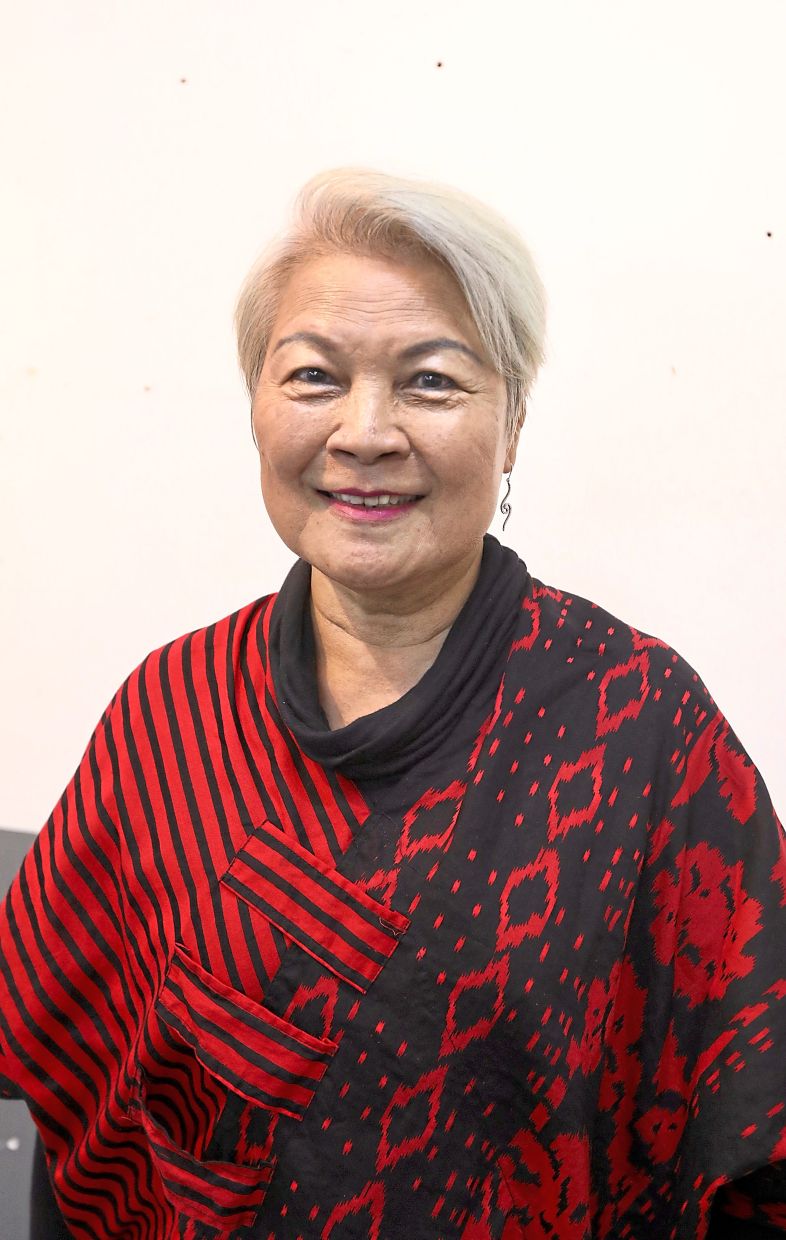
That moment marked more than just a successful personal performance for Lim, who only picked up the drumsticks at 72.
Beating the odds
The 24 Festive Drums group, aptly named the DrumBeatz Team, is a successful product of the University of the Third Age Malaysia – a programme under the “Lifelong Learning for Older Malaysians” initiative, based at the Malaysian Research Institute on Ageing at Universiti Putra Malaysia in Serdang, Selangor.
“U3A Malaysia is dedicated to lifelong learning for older persons,” says U3A committee member Chen Kwee Ling, who oversees the 24-drum course and performances.
The drum course is just one of many programmes offered. Other courses offered by U3A range from art and digital skills to art, to health and Islamic studies.
The drum course was first introduced in 2019 but fell silent with the onset of the Covid-19 pandemic a year later.
“The programme came to an abrupt end due to the Movement Control Orders,” Chen says. “But it resumed in 2024.”
The response was so strong that the association had to organise two intakes, in June and August 2024, with Chen and her fellow committee member, Angeline Cheong, each managing one batch.
Since then, it has continued to draw a steady interest, with close to 80 to 90 participants having taken part in workshops. Today, about 30 remain actively involved.
For Chen, the programme is about more than just music; it is about dispelling myths while providing opportunities for senior members to explore and discover talents they may not have had the chance to discover in their younger years.
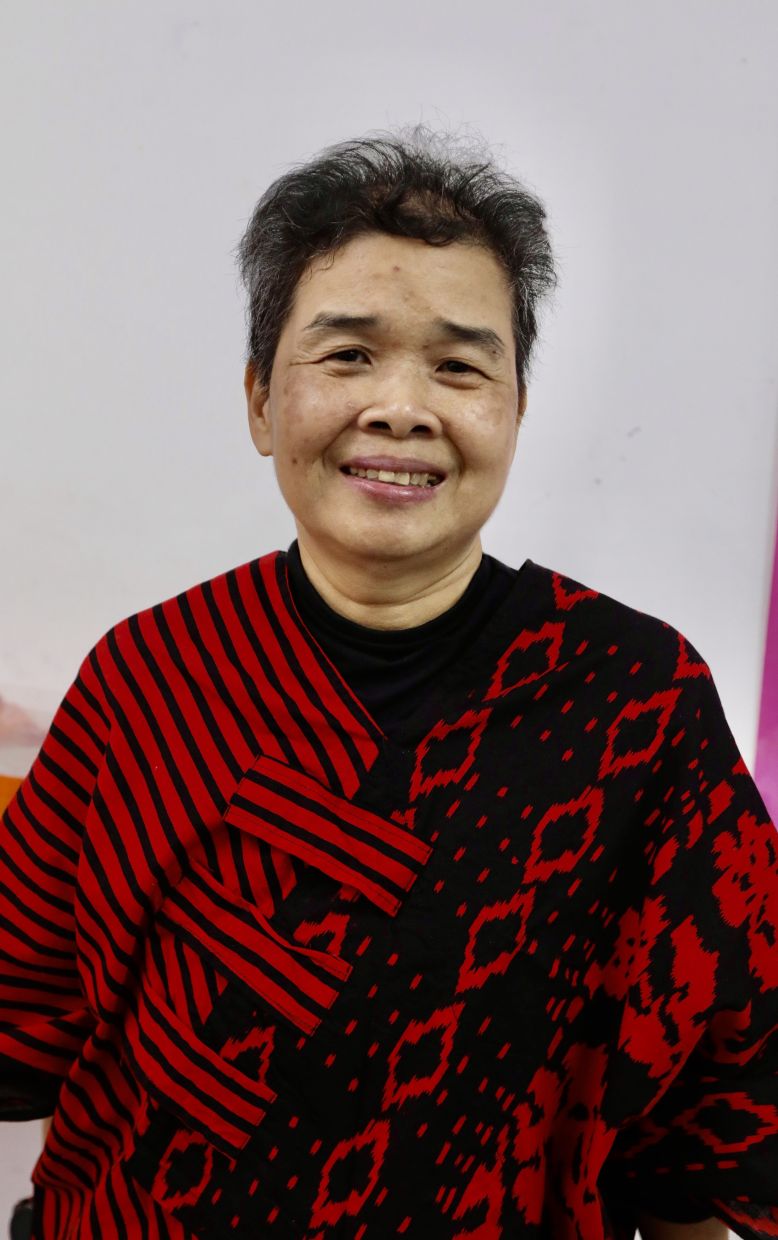
“It shows that we still have the potential to teach, share, and grow,” says the 62-year-old former public accountant, who is no stranger to music.
After opting for early retirement to pursue interests she hadn’t had the chance to explore in her younger years, Chen took up the erhu and eventually found her way to U3A Malaysia’s drum programme.
Designed for older learners, Chen says the drum programme strikes a balance between challenge and accessibility.
“We focus more on rhythm and teamwork while still helping participants build physical agility and mental strength,” she explains.
The training itself has been modified from traditional 24 Festive Drums instruction, which can be physically intense.
Lessons begin with the basics – wrist movements, control and simple beats – before gradually progressing to more complex sequences and choreography.
For seniors, the challenges are multiple: Memory, hand-eye coordination and stamina. Self-doubt is another issue that can surface.
“But with a slower pace and more deliberate teaching approach, together with patience, repetition and encouragement, they overcome these challenges,” says Chen.
A rhythmic homecoming
When Cheong took charge of one of the two batches in the 2024 intake, it was no mere coincidence.
For the 60-year-old former chief financial officer and chartered accountant, the journey stemmed from a deep-seated desire to reconnect with her cultural heritage.
“I have always been interested in all things Chinese,” she says, citing her efforts to learn Mandarin later in life, having been educated in a national school.
The 24 Festive Drums, often associated with the high-octane energy of lion dance performances, held a particular appeal for her.
However, she only became a member of U3A Malaysia after the drumming programme was suspended during the pandemic.
Refusing to give up, she reached out to members from the earlier batches. This is how she eventually learnt that the drum coach was conducting classes elsewhere.
“I joined his class, but at the same time, I urged my fellow committee members at U3A Malaysia to restart the drumming programme,” Cheong says proudly.
“I am happy to say that the majority of those early members continued playing, and are now performing as the U3A Malaysia DrumBeatz Team.”
For Cheong, the drums resonated with her instantly.
“The sound is invigorating. It rouses strong positive energy.”
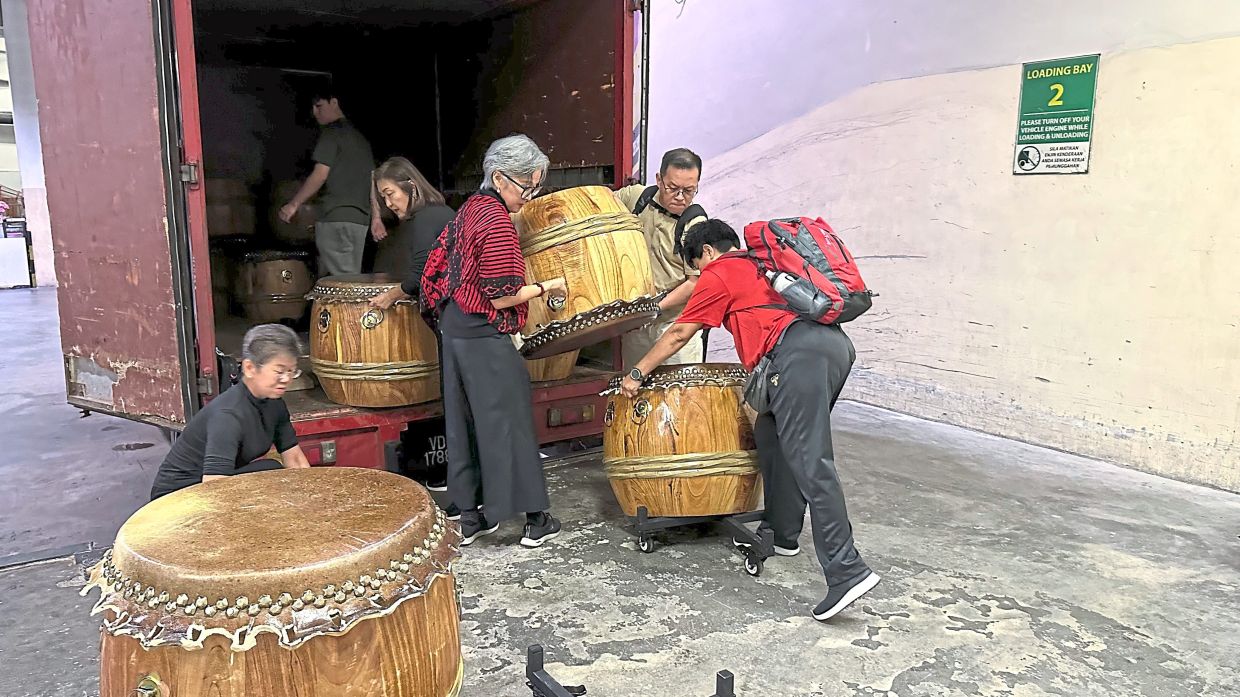
Despite having no formal musical background, she found the learning process surprisingly intuitive.
“I took to it like a duck to water,” she says, adding that drumming is about listening to the beat, following the rhythm, and remembering sequences and movements.
Beyond the technical aspects, she gained something deeper too – a form of release.
“It’s like all the stress and pressure, dissatisfaction and weariness dissipates with each beat,” she says.
“I find it very therapeutic.”
That sense of rhythm extends beyond the individual performer. For Cheong, one of the most meaningful aspects of drumming as a group is the collective experience.
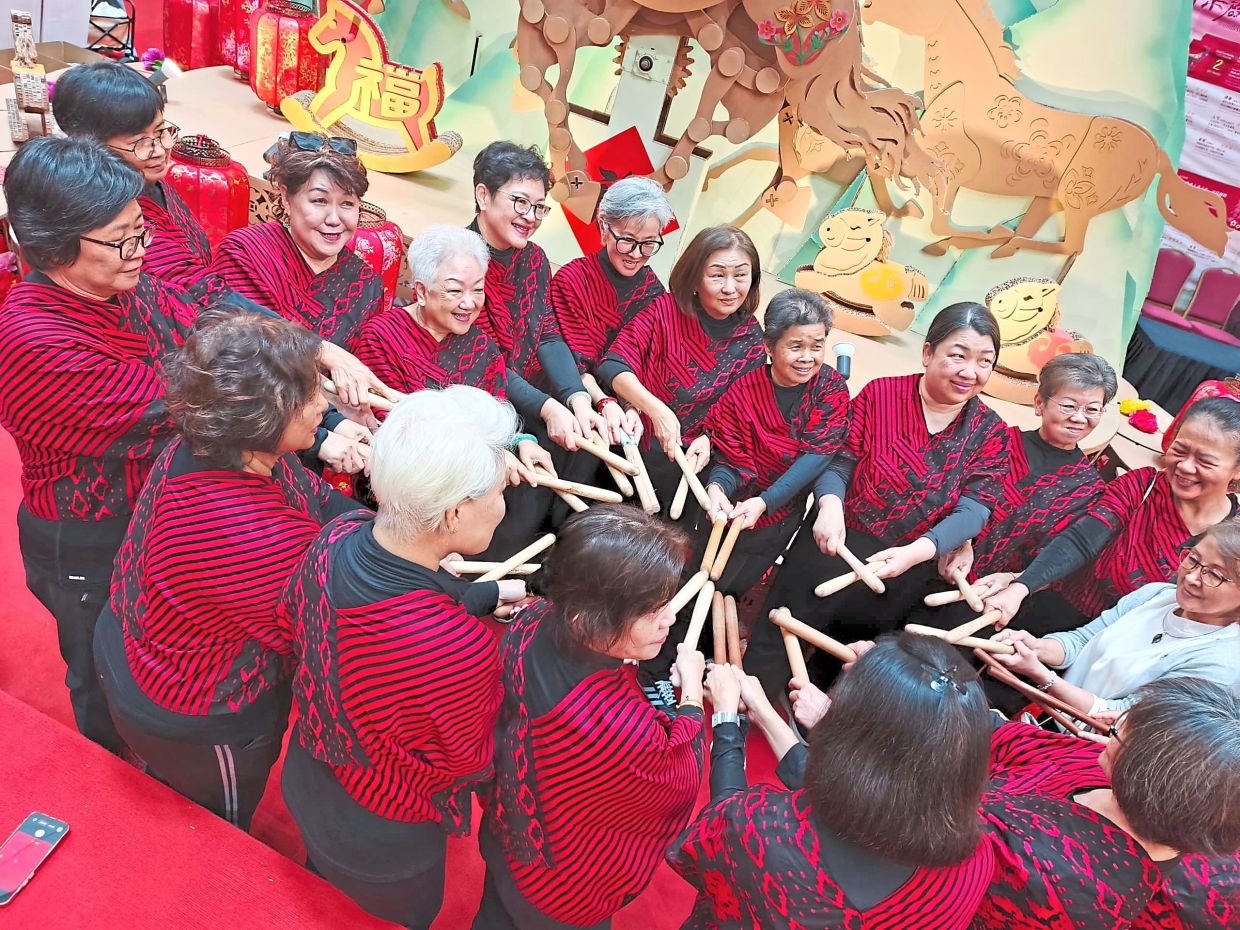
“There is a harmony of togetherness,” she says. “When we beat in unison, it creates a singularity of purpose.”
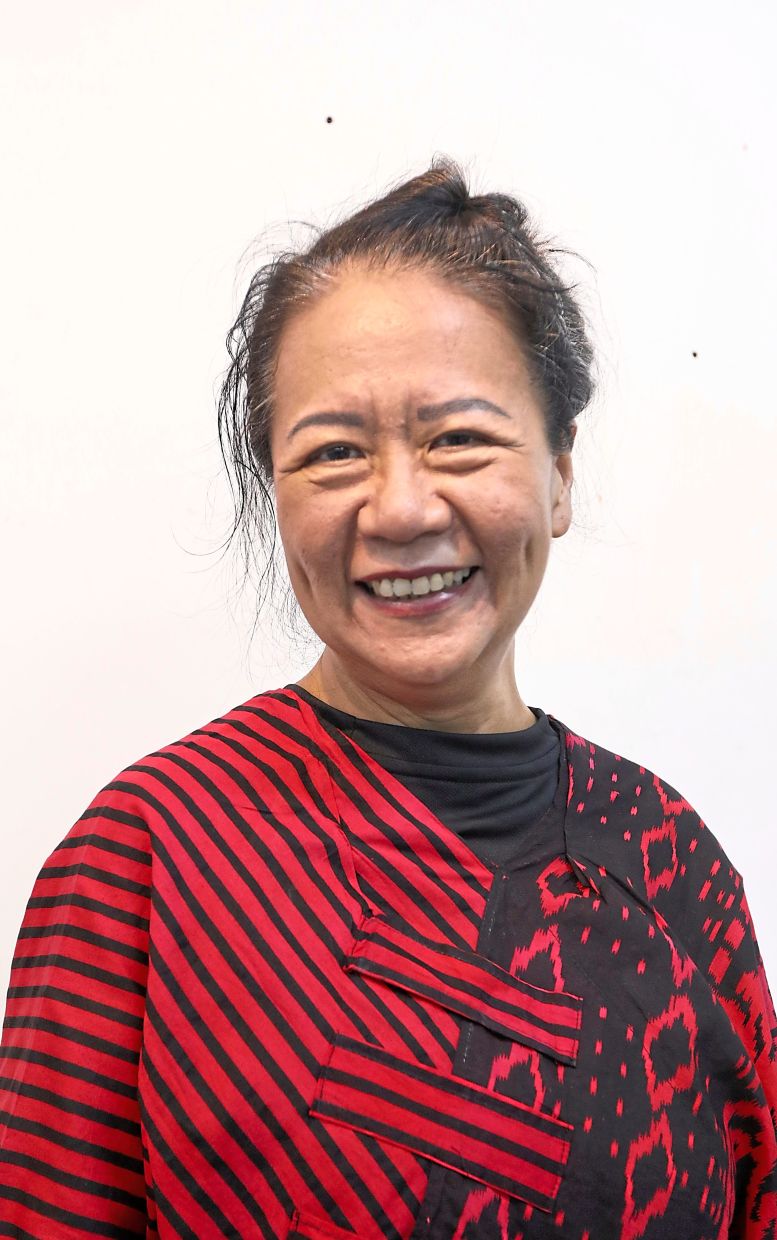
“We don’t see the age differences between us,” she adds.
“Instead, we see how far we have come together.”
A dynamic second act
Lim concurs: “In 24 Festive Drums, teamwork is vital. Team spirit is the essence of a successful performance.”
For her, that sense of unity, forged through shared practice and repetition, has become one of the most rewarding aspects of the experience.
“When we drum together, we feel connected, and are full of inspiration,” she says. “The sound is loud and powerful – it creates excitement and a sense of accomplishment when we get it right.”
Over time, the progress became evident – not just in terms of technical skill, but also their confidence.
“It is very satisfying to see how much we have improved through continuous practice,” she adds.
Lim had not imagined this version of retirement after having spent decades overseeing the financial and contractual affairs of a construction company as a professional accountant.
Like many, she imagined her later years would ease into a slower rhythm – quieter days, lighter routines, and more time spent at home.
“I imagined my senior years would be slow and quiet, mostly staying at home, watching TV, using my handphone, maybe doing some gardening,” says Lim, who now also runs a modest family-owned hotel in Kuala Lumpur.
Drumming upended that picture entirely.
When she joined the programme in September 2024, the class had already been running for two months.
“I was quite nervous on the first day,” she admits. “I was behind everyone else.”
But the excitement of learning something new quickly overtook her fear.
Like many in the group, Lim had no musical background. Even the basics – how to hold the drumsticks, where to strike, and how to control the force of each beat – had to be learned from scratch.
“It was not easy initially,” she says. “There was so much to learn – the sequences, the coordination, the control.”
What kept her going was a mix of persistence, encouragement from instructors, and quiet determination.
“I kept asking questions,” she says with a laugh. “And I kept trying.”
Striking a chord
Beyond the training and performances, the impact of drumming also shows up in quieter, more personal ways – in the body, the mind, and in everyday life.
For Cheong, the physical benefits are evident.
“Drumming has certainly improved my memory and dexterity, especially in my wrist movements and coordination when executing the choreography,” she says.
“Standing throughout the two-hour practice also helps sustain strength and stability in my lower body.”
Lim adds: “Drumming is a physical workout for both the body and the mind.”
She says the discipline has changed how she carries herself.
“My posture has improved because during training, we have to stand tall and straight – strictly no hunching allowed. The muscles in my arms, shoulders, core, and even my feet have become stronger.”
The feedback from the members has also impacted the programme.
Chen says that the instructors have purposefully adapted the traditionally high-energy 24-drum style to focus on agility and rhythm, to ensure that it remains accessible to older learners.
“We see marked improvements in joint mobility and posture, particularly in the shoulders and core, as well as hand-eye coordination and fine motor skills,” she explains.
There are also noticeable gains in confidence and social interaction.
“Drumming encourages non-verbal communication and collaboration,” she says. “Participants connect with one another, even if they come from different backgrounds.”
Public performances bring an entirely new dimension to the experience. For audiences, watching seniors take on the 24 Festive Drums often sparks surprise – and even awe – as the energy, precision, and coordination challenge expectations of what older performers can achieve.
“The fact that we are older is the ‘wow’ factor,” says Cheong.
Chen adds, “But when you see seniors doing this confidently, it is empowering.”
For Lim, her first performance remains unforgettable – not because it was perfect, but because it marked a turning point.
“It showed me what I am still capable of,” she says. “The joy of learning and performing far exceeded my expectations, and I am glad I took up this active and loud hobby at 72.”