Around this time of year, questions about whether I’ll be returning to my hometown for Cheng Beng inevitably start coming up.
“No” is my stock answer.
You see, I hardly knew my father except for a few memories of him during my primary school days. He passed away at age 37 from an illness. I was only nine then. I do recall visiting his grave a couple of times and helping to sweep away the piles of dry leaves and weeds that had accumulated over the preceding 11 months. I remember standing in front of the grave with joss sticks in my hands, listening to the elders praying aloud in Hokkien. Not all my siblings and relatives could be there. My paternal grandmother was unable to make the trip to the cemetery due to her age. It would mean travelling out of town and walking up a hill under the blazing sun.
As the years passed, I was told only a handful of family members would observe this annual ritual of visiting my father’s grave to pay their respects. Too troublesome, they complain as they have moved to other towns or settled overseas.
It is the same story I hear from my friends.
The number of family members visiting the cemeteries to pray to their dearly departed and do some “tomb-sweeping” has dwindled due to various reasons, mainly inconvenience and apathy.
The younger generation show little interest in such observances. To them, their grandparents and great grandparents are total strangers. They feel no attachment, no interest. The only time they get to know something about them is through the stories and anecdotes their parents occasionally share.
It was different for my mother. She passed away at age 95 in 2021. She was cremated and her ashes scattered in the sea. We preserve the memory of both my parents in a plaque posted on a remembrance wall in a Buddhist temple in Petaling Jaya.
Every year during Cheng Beng, only my brother, his wife and I pay our respects at the temple. Eventually when the three of us are gone, will anyone continue with this observance at the temple? I have my doubts.
Changing times
This is how traditions die or evolve with the times. Our elders, parents and grandparents are the story-tellers, curators of the family history and genealogy. They preserve and perpetuate the traditions and customs of their ancestry.
When one generation fails to pass these to the next generation, when parents fail to teach their children, that’s how traditions fade into obscurity. The same goes for dialects and mother tongue. In many Chinese homes, English or Mandarin is spoken, not Cantonese, Teochew or Hakka.
Young English-educated doctors are finding it a problem communicating with their elderly patients who only understand dialect. My children hardly speak any dialect. My fault.
I never picked up enough dialect to speak it fluently to my daughters. Likewise with traditional practices such as preparing festive food at home. I still have fond memories of my elderly aunts sitting together in my grandma’s kitchen, spending hours preparing rice cakes for Chinese New Year, and rice dumplings for the Mid-Autumn Festival.
Now we can buy them in many varieties already cooked from stalls in Chinatown. So convenient. The same goes for ketupat. No need to source for young coconut leaves to weave into ketupat. Just buy ready-cooked ketupat from the shops, or purchase them online. Saves hours of weaving the ketupat by hand in time for the Raya celebrations.
Many traditions no longer remain – mainly because our parents didn’t practise them, didn’t teach us by example. My mother didn’t adopt most of these traditional practices, so I couldn’t learn from her. I didn’t have enough interest to learn on my own to pass it down to my children. Thus, this ignorance and indifference are perpetuated. Ultimately, we lose a part of our culture and traditions.
Children learn by observing and doing.
My 113-year-old role model and mentor Teresa Tsu once said, “There are no naughty children – only naughty parents.”
So very true. She probably meant parents who didn’t teach their children well about traditions, customs and values, including respect for the elders and filial piety.
Preserving traditions
Unlike heritage buildings which we can preserve (kudos to the excellent restoration work done on Seri Negara and Bangunan Sultan Abdul Samad), it’s a different story when it comes to preserving traditions and values, which are best taught by example and practice.
Let’s take the Confucian concept of filial piety. Like traditions, this is rapidly being redefined and reinterpreted to suit the current times. This is inevitable given the change in the structure of the family home.
The traditional three-generation family home filled with the laughter and cries of children is becoming rare, now replaced by an empty silence. The children have grown and flown, to start their own nest and fill it with their own brood.
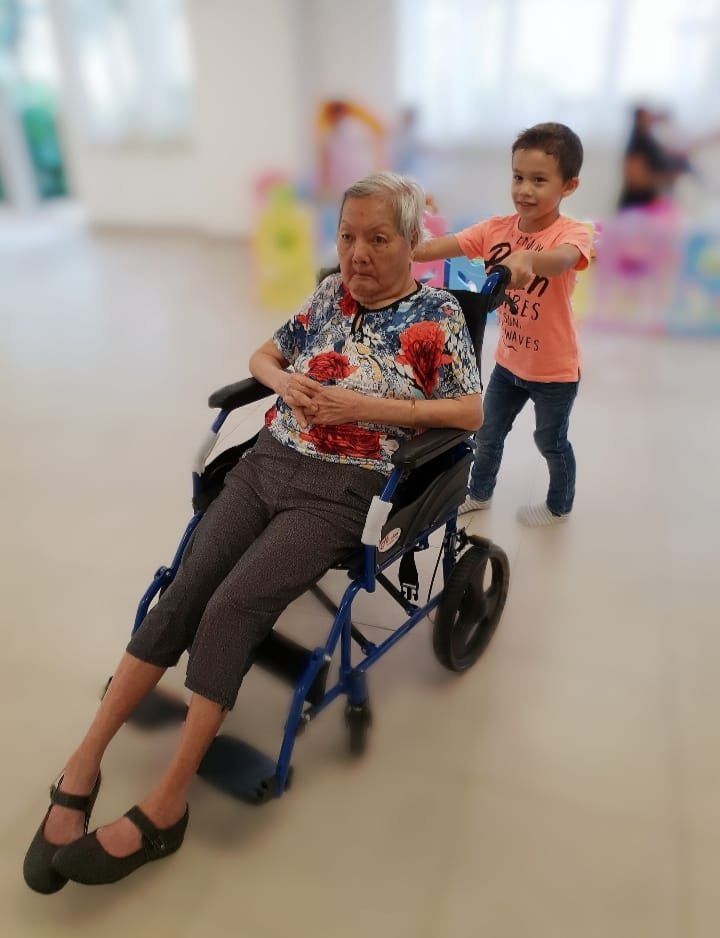
This affects the bonding between the generations. The grandchildren are not exposed to how their parents treat their grandparents with respect and care. This gap can be narrowed if parents bring along their young children to visit the grandparents regularly.
Alternatively, grandparents can offer to help out by looking after the children on weekdays while their parents are at work. The onus is on the parents to ensure close family ties are maintained.
With technology, this can easily be done through regular online platforms such as Zoom or Whatsapp. When there is little intergeneration contact and communication, filial piety goes out the window. So does respect for the elderly.
I see this on a daily basis on crowded trains and buses. The young occupy priority seats while the elderly stand.
By extension, when filial piety is eroded, who among the adult children will offer to look after the remaining parent when the other is gone?
Who among them will invite the surviving parent to move in with them? The eldest son because it is expected of him? Or the daughter who is single or divorced? Will they do so willingly or grudgingly? Why?
Because it’s one extra mouth to feed and care for? Because the relationship has always been strained from the start?
As for the parents, how does this make them feel?
Frankly, most of the seniors I have spoken to prefer to live on their own, alone, rather than be a burden to the children. When it’s no longer safe for them to live alone due to increasing old age and comorbidities, the only option is either to move to an assisted living facility or a nursing home.
In the worst-case scenario, the elderly parent is packed off to a welfare old folk home. This is the reality facing the elderly living alone, and where there is a breakdown of family ties.
There are families where respect for the elderly is drummed into everyone, from the youngest child to the oldest. The parents show by example how they treat their elderly parents with little daily acts of care and gratitude. The children observe and soon learn to repeat these acts of kindness with their grandparents. It is not enough to teach, but for learning to take root, it must be practised till it becomes intrinsic, as part of one’s character.
To conclude, let’s make a concerted effort to improve family ties, preserve traditions and inculcate values. Home is where everything begins, where parents teach and show by example, and where children learn by observing and doing.
Lily Fu is a gerontologist who advocates for seniors. She is the founder of SeniorsAloud, an online platform for seniors to connect and enjoy social activities for ageing well. The views expressed here are entirely the writer’s own.