My mother’s generation grew up in the World War Two era when women had no voice, no official role to play in society. They were the family nurturer and caregiver, roles thrust upon them which they accepted without complaint or protest.
Being meek and submissive were much sought-after virtues in young women of those days. Many didn’t even have a say in who they wanted as their life partner. Their parents or professional matchmakers made the choice for them.
They were brought up to be seen, not heard.
I recall a quote which compars women to a bonsai tree. It alludes to how, when society keeps women small, and restricts their growth, their branches can shelter no birds and their wood is never allowed to reach its strength. A similar sentiment was expressed by poet Marge Piercy, in her poem A Work Of Artifice, in which she uses the metaphor of the bonsai tree to describe how a woman’s growth is often deliberately curtailed by social expectations and patriarchal norms.
Women were like ornaments if they were pretty, much like the trophy wives of today. But if they were poor and rough, they were like work-horses. That was the worth of women in the old days.
The women from my mother’s era were mostly tough physically and mentally, often raising as many as 10 children singlehandedly, and managing all the housework literally with bare hands, while the men went out to work. And when the men returned home, the women looked after them too.
They were multi-skilled and could handle several diverse roles equally well – from doing the laundry, cooking, cleaning, feeding, nursing, disciplining and inculcating values in their children. It was a life of daily sweat, toil and stoicism.
The true emancipation of women came with access to education, from school right up to university. The women from my generation of Baby Boomers were the first to benefit from this. Paper qualifications opened the door to better jobs and financial independence. Women learned to drive and that gave them the freedom to venture further afield, explore more opportunities, develop confidence and cultivate a spirit of adventure.
Education opened up not only their eyes but more importantly, their minds. Women began to change their mindset and shed of their “I’m not good enough” mentality. They stopped viewing themselves as good only for child-bearing, housekeeping and bed-warming. They realised that given the right opportunities and support, they could excel in anything they chose.
The Malaysia Gender Gap Index (MGGI), 2025 records a small but positive rise in women’s participation in almost every sector. The exception is political empowerment where women represented only 16.1% of ministerial positions, and 13.5% in the House of Representatives. This disparity is significant and highlights the ongoing challenges in achieving gender balance in political leadership in Malaysia. As we shall see, this has ramifications in passing legislations to protect vulnerable women – those identified as poor, single, elderly, without much education, and unable to fend for themselves.
It’s also an uphill task for women to shine in the corporate sector.
Opportunities are there but limited, and gender discrimination is still practised. There is always this nagging concern that it’s money down the drain to train women and groom them into captains of industry. Once they are in the family way, they either go on extended maternity leave or opt out of the work force altogether to raise their children. It is no wonder young women opt to delay marriage and having children for as long as possible, or choose to remain single. Career and financial security come first.
Formidable force
Along with jobs came earning power and purchasing power. Today women consumers are a formidable force that cannot be ignored. They spur growth in the market and the economy. Among older women, the power of female consumers is even more profound as they are now reaping the benefits of having their retirement savings at their disposal.
Women are born shoppers. Women shop not only for themselves, but also for their children, their husbands and for their home. They decide what household appliances to buy, what groceries and health supplements for the family.
Increasingly, they are shopping for technical products too, such as laptops, mobile phones and other gadgets.
It is common knowledge from decades of observations that in most family households, it is the lady of the house who wields considerable influence on her husband when making decisions on big item purchases. A joint account also gives women more freedom to make purchases. They are often the ones who do the bookings, make reservations and handle the family’s accounts and budget. The rise in the number of single professional women as well as single moms further enlarges the pool of female consumers.
Indeed, women are making their numbers count in almost every sector of the economy and industry. More younger women are emerging as successful entrepreneurs, with many running their own online businesses.
We are fortunate to live in a country where women’s rights are recognised and the government places importance on the safety and protection of women and children.
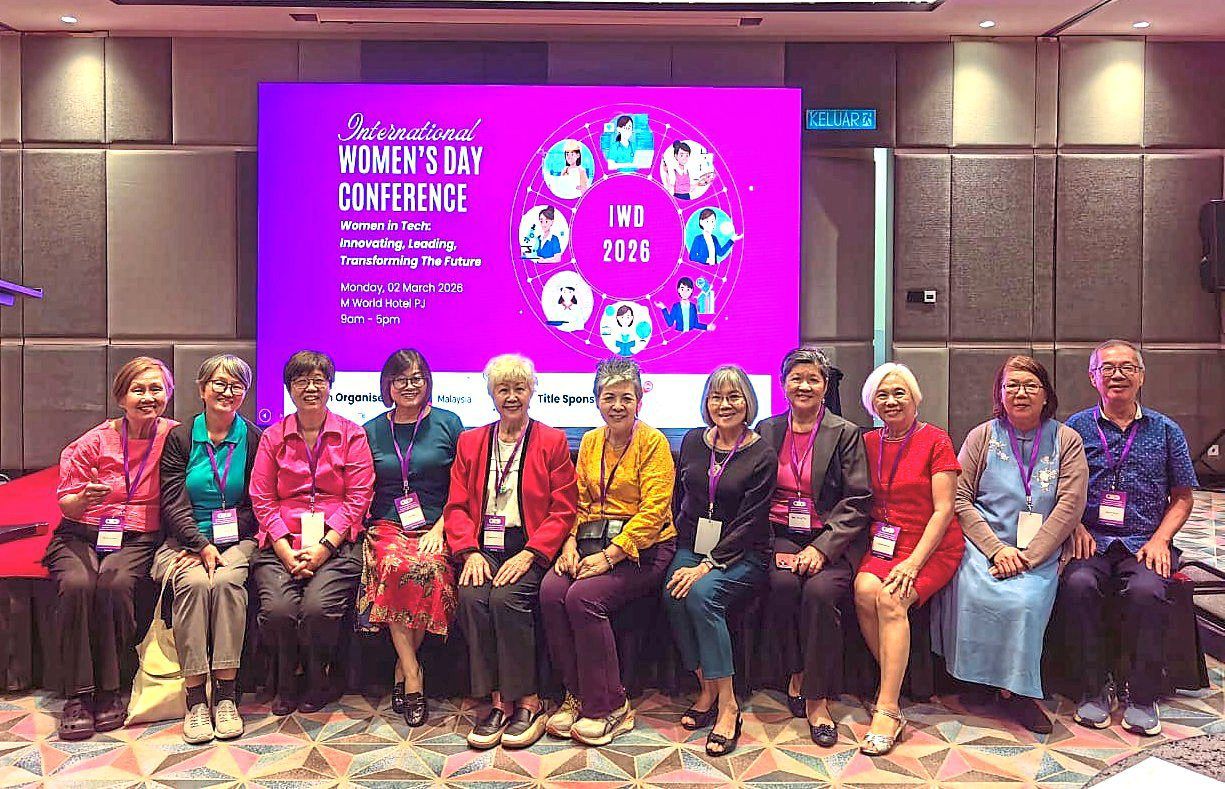
Yes, we have come a long way since my mother’s World War Two days, thanks to decades of advocacy by women leaders like Zainah Anwar, Maria Chin Abdullah, Datuk Ambiga Sreenevasan and Ivy Josiah. We are indebted to women-led NGOs like WAO (Women’s Aid Organisation), AWAM (All Women’s Action Society) and SIS Forum (formerly Sisters in Islam). They have remained strong defenders of women’s rights.
The United Nations’ theme for International Women’s Day 2026 is “Rights. Justice. Action. For all women and girls.”
The fact that the UN sees the need to choose this theme is an indication that there is still work to be done to stop violence, discrimination and exploitation of women and girls.
We need to push for reforms in the protection of older women and men. According to the Women, Family and Community Development Ministry, almost 16% of the 30,228 cases of domestic violence from 2020 to January 2025 involved elderly victims. This is probably the tip of the iceberg. Official cases cannot be relied on as many abused elderly do not make reports, especially when the abuser is a family member.
With less than 16% women leaders in ministerial posts, it will be a long slow wait for legislation to be passed to protect our elderly against abuse and neglect. It has been more than 15 years since the Maintenance of Parents Act was brought up. Every year we are told the Senior Citizens Bill will be tabled, read in Parliament and passed. Well, there is still no sign of it.
How many more years do the elderly have to wait? Many are already in their twilight years.
The overall report card on the role of women going forward is fairly positive. Both the private and public sectors should be prepared and be ready to adjust projections for the 2030s and beyond.
Whether it’s on the domestic front, in social and corporate circles, in the economy, in aged care and retirement homes, the future is definitely female. And it’s not only because women enjoy longer life expectancy, it’s because they are making their presence felt in almost every sphere and walk of life. They are proving their worth after a history of suppression, repression and servitude. They are finally coming out on their own. There are still miles to go but there is momentum, there is acceleration, and that is an encouraging sign.
We have learned to appreciate small blessings, however slow they are in coming.
Lily Fu is a gerontologist who advocates for seniors. She is the founder of SeniorsAloud, an online platform for seniors to connect and enjoy social activities for ageing well. The views expressed here are entirely the writer’s own.