Since the age of seven, Japanese schoolboy Shun Sasaki has been offering free guided tours to foreign visitors of the Hiroshima Peace Memorial Park with a mission: ensuring that the horrors of nuclear war do not fade from memory with the passage of time.
Aged 12 now, Shun has conveyed that message to some 2,000 visitors, recounting in his imperfect but confident English the experiences of his great-grandmother, a "hibakusha" who survived the atomic bomb.
"I want them to come to Hiroshima and know about what happened in Hiroshima on Aug 6," Shun said in English, referring to the day the bomb was dropped in 1945.
"I want them to know how bad is war and how good is peace. Instead of fighting, we should talk to each other about the good things of each other," he said.
About twice a month, Shun makes his way to the peace park wearing a yellow bib with the words "Please feel free to talk to me in English!" splashed across the back, hoping to educate tourists about his hometown.
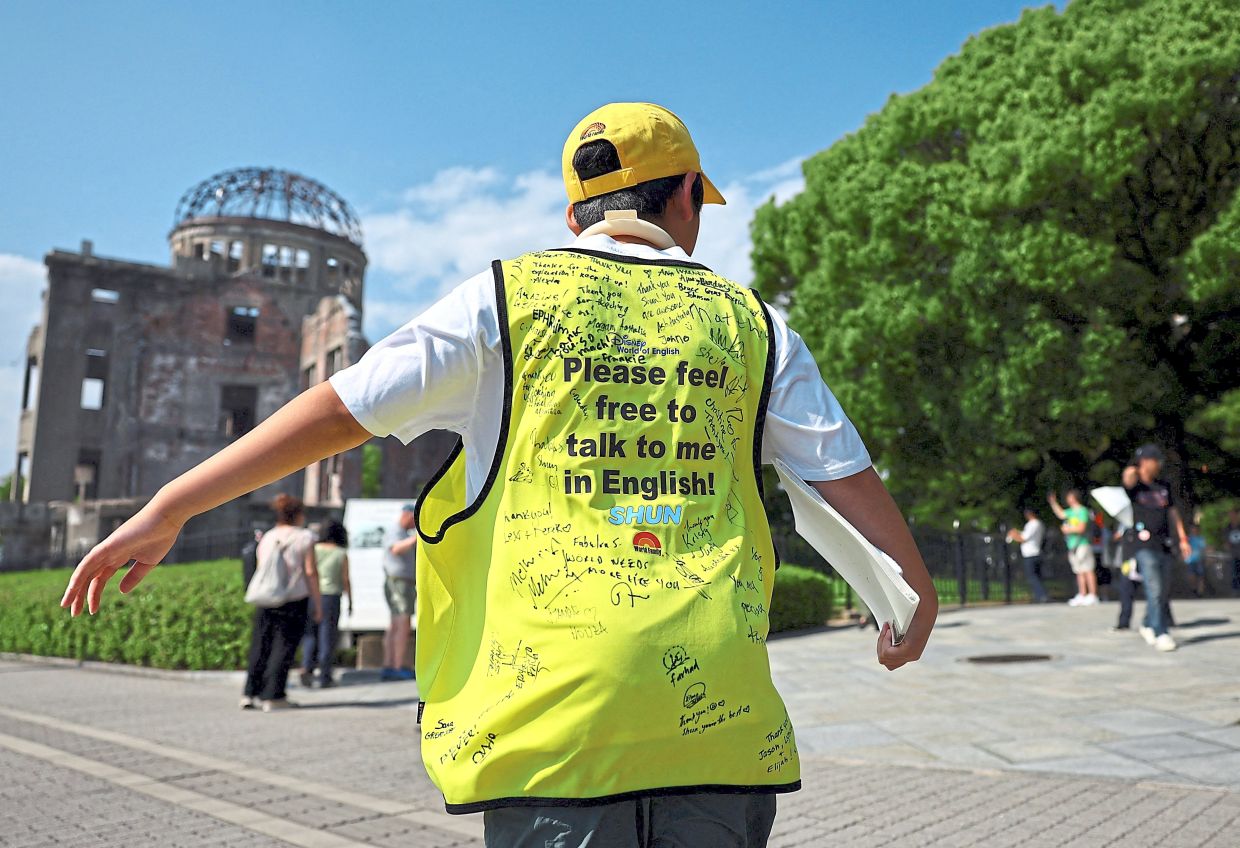
His volunteer work has earned him the honour of being selected as one of two local children to speak at this year's ceremony to commemorate 80 years since the A-bomb was dropped – its first use in war.
Shun is now the same age as when his great-grandmother Yuriko Sasaki was buried under rubble when her house, about 1.5 km from the hypocentre, collapsed from the force of the blast. She died of colorectal cancer aged 69 in 2002, having survived breast cancer decades earlier.
The uranium bomb instantly killed about 78,000 people and by the end of 1945 the number of dead, including from radiation exposure, reached about 140,000. The United States dropped a second atomic bomb on Nagasaki on Aug 9.
Canadian Chris Lowe said Shun's guided tour provided a level of appreciation that went beyond reading plaques on museum walls.
"To hear that about his family ... it surely wrapped it up, brought it home and made it much more personal. So it was outstanding for him to share that," he said.
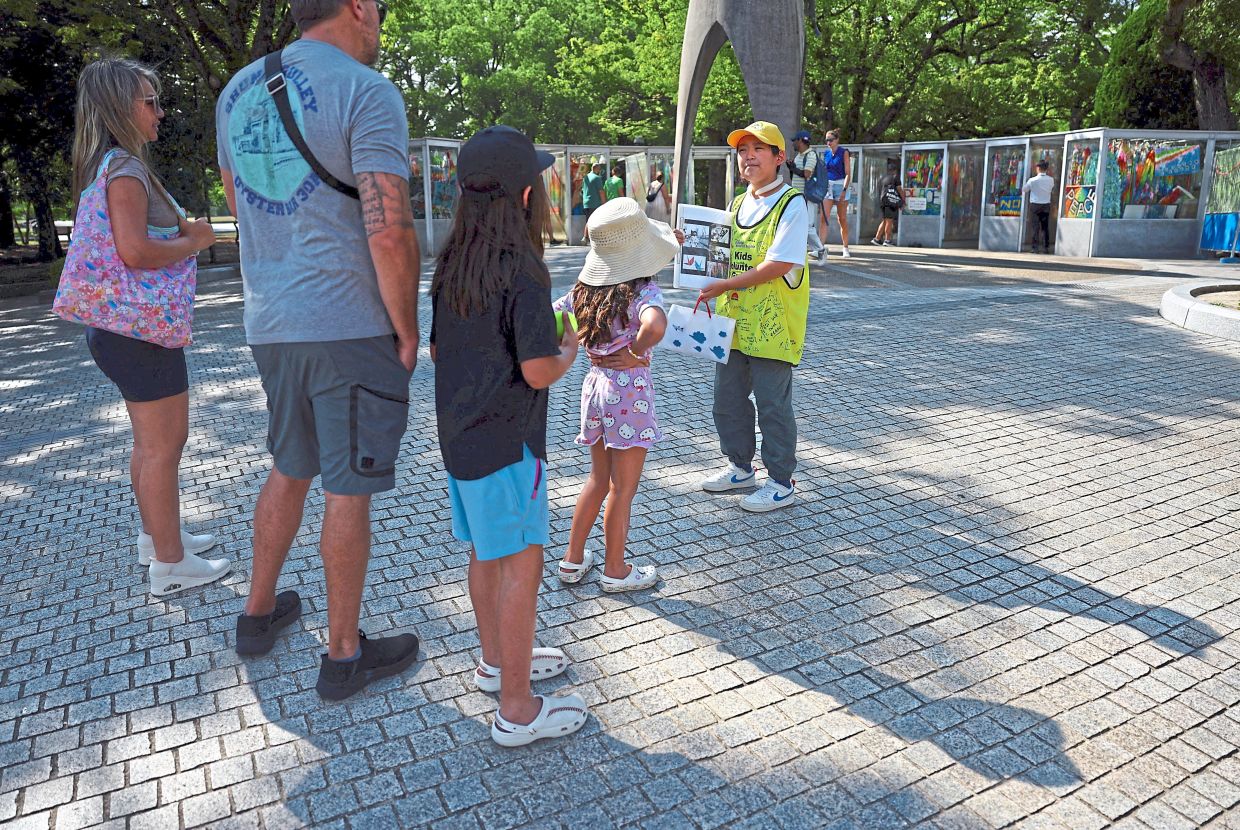
Shun said he plans to continue with the tours as long as he can.
"The most dangerous thing is to forget what happened a long time ago ... so I think we should pass the story to the next generation, and then, never forget it, ever again." – Reuters