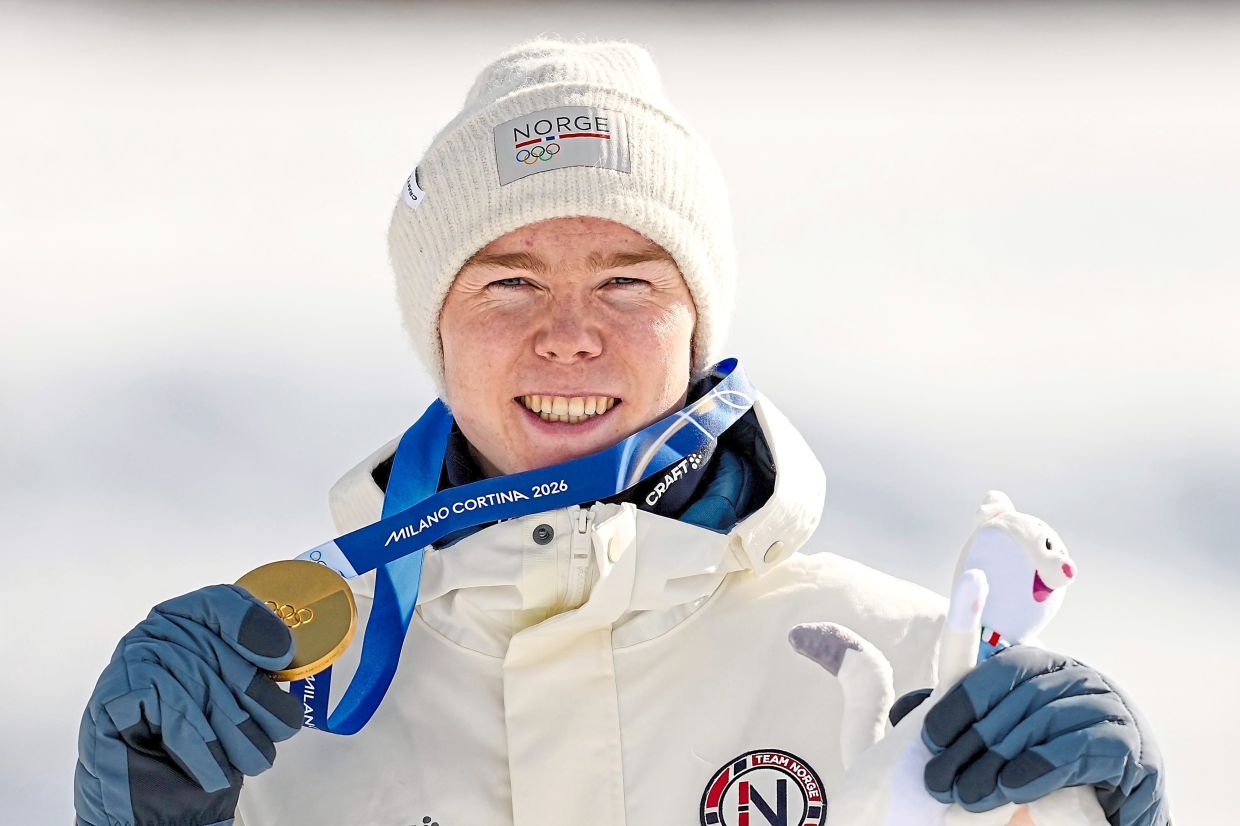
Norway's remarkable consistency at last month's Winter Olympics stems from a decades-old culture that puts children’s happiness, equal access to sport and shared expertise ahead of fast results, the country’s head of delegation Tore Oevreboe said.
Norway tops the table with 41 medals, including 18 golds, ahead of the United States, the Netherlands and Italy. The Scandinavian nation has consistently led medals since the 2014 Games in Sochi and scored well in previous Olympics too.
"We know that we have to succeed in every event we participate in. But we try to stay very relaxed and humble ... and we very much respect our competitors,” Oevreboe said, stressing that Norway does not take success for granted.
Oevreboe said Norway’s advantage begins far from elite facilities and medal targets. "It's not so easy to say what is the secret. It has to do with the way we organise our society,” he said.
"We distribute the wealth ... so it’s possible for kids to participate in sports and for the parents to help them. People work eight hours a day and then they have quite a few hours to be with their kids doing sports."
Focus on enjoyment, not early performance
Norway’s model, Oevreboe explained, is designed to keep children in sport by protecting their enjoyment rather than pressuring them to win. "We try not to focus on winning too early," he said.
Children are encouraged to play multiple sports, develop broad physical and social skills and avoid early ranking.
"We should not create losers. We should create young small winners ... The winning part is to be part of the sport and have joy."
"The point of doing sport in Norway is to lead a good life. So you start young and learn motor skills, social skills, and then you learn how to use your body in a physical setting."
Oevreboe added that Norway’s success is reinforced by a collegial sports system built on collaboration among coaches and federations that has shaped the elite sports system since 1988.
"We share knowledge because we are not big enough to stay in silos," he said. "The people who really have knowledge...know each other, or they learn to know each other because (the country) it’s so small."
Secondhand market
Even in expensive winter sports, Oevreboe said Norway tries to make participation possible for all families. "We have a huge used equipment market," he said. "Lots of the athletes that come up here that are quite good, they have used equipment during their younger years."
"We want to communicate that we believe in our athletes ... but the athlete should not be too worried about this."
Oevreboe said the same philosophy extends even when top talents choose to leave the Norwegian system, as skier Lucas Pinheiro Braathen did before switching to Brazil.
"If he is happier competing for Brazil, he should choose Brazil," he said. "We will never stop anyone." – Reuters