

Giving up a pacifier and/or thumb-sucking can be a challenging process for some children.
A recent United States survey reveals that parents are not lacking in imagination when it comes to helping their offspring through this transition.
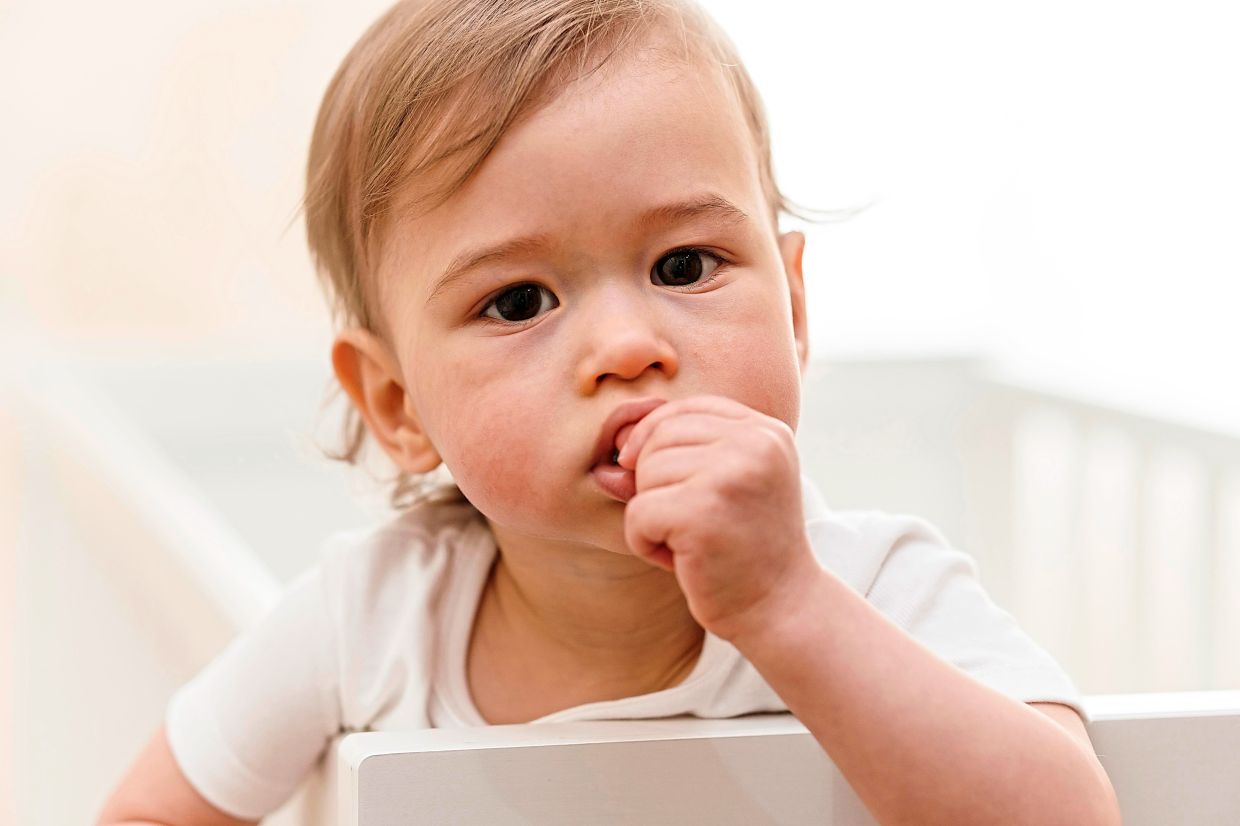
A pacifier and/or thumb or finger sucking can help lull babies to sleep in the first months and years of their life. So much so that giving up this habit can become a real challenge.
A recent US survey, conducted by the University of Michigan CS Mott Children’s Hospital among more than 2,000 parents with at least one child aged one to six years, serves as a reminder that this habit is widespread. Around half of parents (51%) say that their children currently or previously used a pacifier, while about one-quarter of parents (23%) report that their child currently or previously sucked their thumb or fingers.
According to their feedback, these methods of self-soothing are typically used at bedtime or nap time (79% for pacifiers, 57% for thumb/finger sucking), when children are stressed or fussy (47% for both), or when watching TV or videos (10% for pacifiers, 24% for thumb/fingers).
Only 18% say their child uses a pacifier almost all the time (14% for thumb/fingers).
Finding solutions
While some children are perfectly capable of giving up this habit on their own, quitting sucking a pacifier or the thumb or fingers may require some training.
And there are plenty of strategies available, as the responses of the parents who took part in the survey demonstrate.
The most frequently cited methods include limiting the pacifier to bedtime, hiding it, or even pretending to have lost it.
While 33% say they prefer a more gentle approach, letting the child decide when to stop, a majority of parents opt for more classic methods, such as keeping a child’s hand away from their mouth (61%) or explaining to the child that they are “too old” for this kind of behaviour (25%).
Others turn to more extreme tactics, such as cutting a hole in the pacifier (10%) to make it less appealing.
Some even go so far as to put an unappetizing substance on their child’s thumbs and fingers, such as hot sauce or Vaseline.
Dr Susan Woolford, a paediatrician at U-M Health CS Mott Children’s Hospital and co-director of the Mott Poll, points out that there are many strategies for helping a child give up thumb or pacifier sucking, like reading a book or watching a video on the subject, or encouraging the child with small rewards.
“Substituting a stuffed animal or soft doll may also provide an alternate self-soothing option for the child,” the expert suggests in a news release.
Dental health and speech development
The survey also revealed that, according to parents, the “right” age to stop pacifier use is between zero and two years (79%), while 15% consider it acceptable to break the habit at age three or over.
A small proportion feel that they acted too late to stop their child’s pacifier use (9%) or thumb/finger-sucking (16%).
So, at what age should a child be encouraged to kick the habit? Recommendations vary from country to country: the Canadian Pediatric Society, for example, recommends stopping as early as 12 months, while the American Academy of Pediatrics advises a gradual reduction in the use of pacifiers and/or thumb sucking from 18 months.
However, health professionals generally agree that this habit should be stopped altogether between the ages of two and four.
Beyond that age, the risks to the child’s health become more significant.
Prolonged sucking can lead to misalignment of the teeth, deformation of the palate or malpositioning of the tongue, all of which can result in speech disorders (stuttering, lisping), as well as delays in language and vocabulary. – AFP
