
Ketupat is a staple of the Hari Raya Aidilfitri celebration but for Zuraini Aman, this traditional rice dish is also a source of pride.
Every year, the finance manager from Petaling Jaya, Selangor weaves her own ketupat shells (or kelongsong), a skill that’s rare now since ready-made shells are widely available.
Zuraini says ketupat weaving is a skill she has picked up since she was a child.
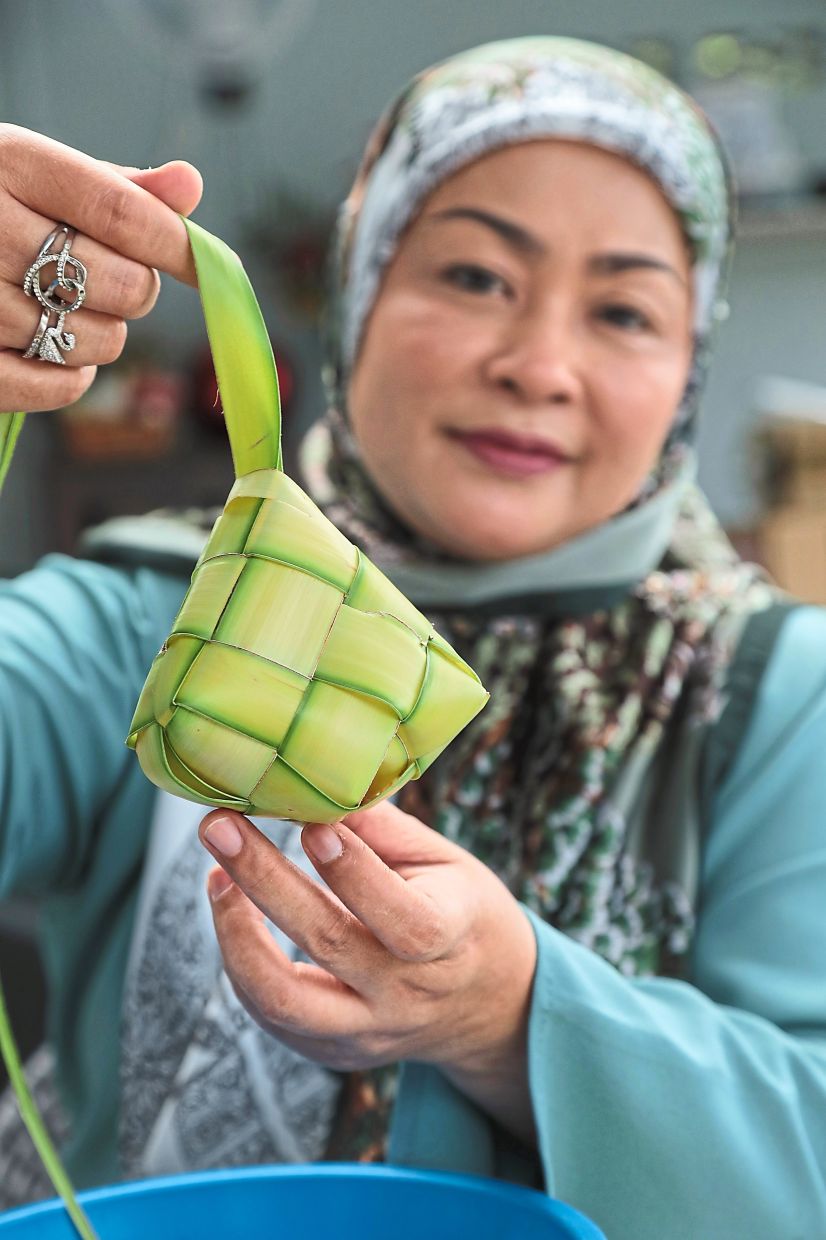
“I learned to weave from my father when I was 10 years old. Weaving ketupat can be tricky for beginners, but with practice, it gets easier.
“If I could learn it while I was in primary school, anyone can learn it too,” says Zuraini, 51, during an interview at her home in Kelana Jaya, PJ.
Each year, she prepares about 50 pieces of ketupat. Ketupat is a traditional food item made of rice and cooked in shells weaved from coconut leaves. They are then boiled for several hours until the rice is cooked.
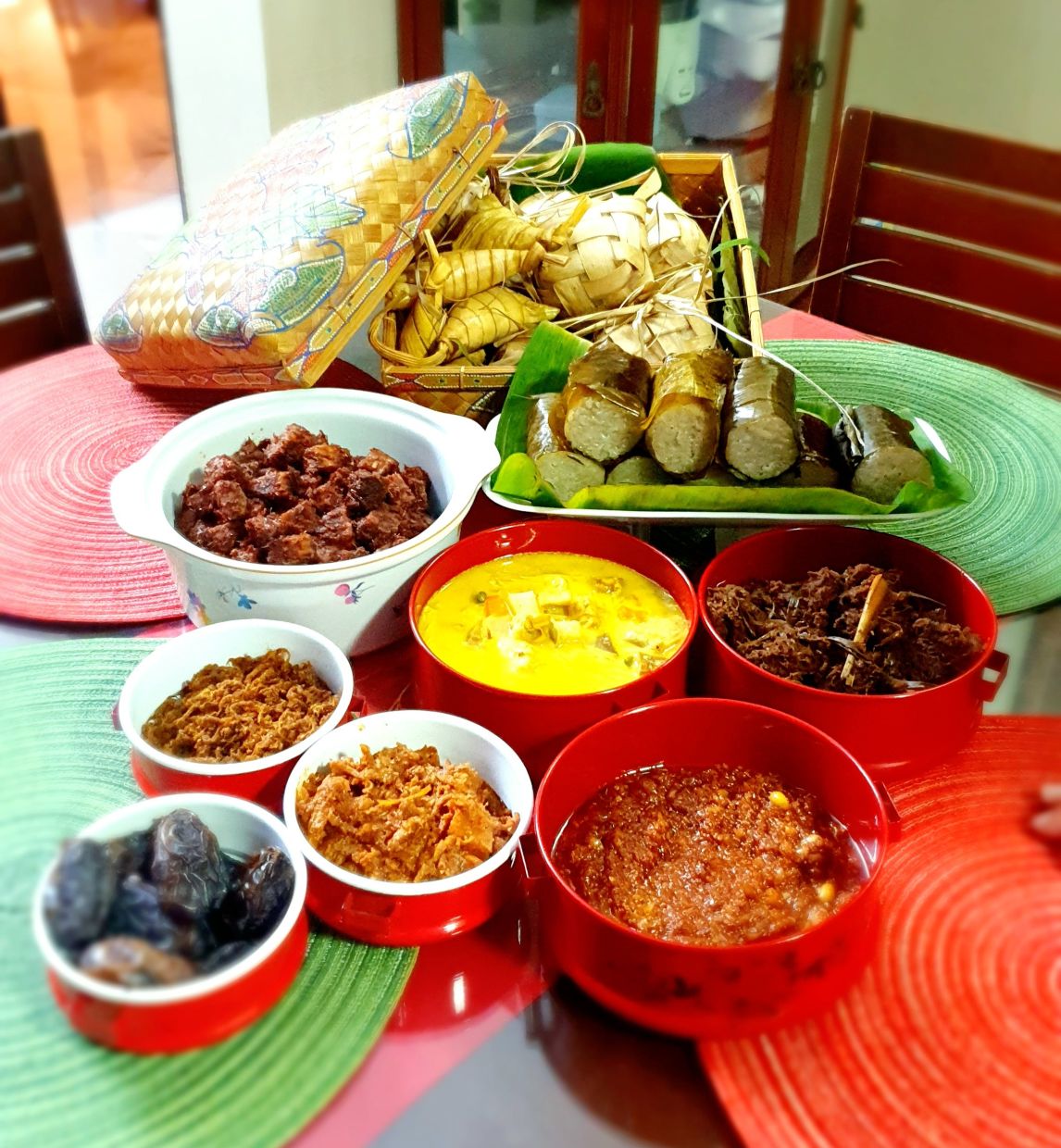
Alongside ketupat, Zuraini will also be preparing a spread of festive dishes – including beef rendang, ayam masak merah, lontong and kuah kacang – to serve to her guests on the first day of Hari Raya next week.
Hari Raya Aidilfitri marks the end of the holy month of Ramadan. It is the first day of Syawal, the 10th month of the Muslim calendar.
Also known as Hari Raya Puasa, this special celebration signifies the end of fasting for Muslims as families and friends gather to partake in festivities.
And naturally, food forms a big part of the celebration, with many traditional dishes, including ketupat, prepared for family and guests.
The art of weaving ketupat
Ketupat weaving is considered an art passed down through generations because it requires skills and patience. Often, the elders teach younger family members, ensuring the craft remains alive while strengthening familial and cultural bonds.
Ketupat is woven using young coconut leaves folded into a crisscross pattern to create a pouch. The weaving involves interlacing two strips of leaves, forming a tight, symmetrical casing. Once completed, the pouch is filled with rice and boiled, allowing the grains to expand and take shape within the woven casing.

“If they don’t learn it, the skill will die, and they won’t be able to teach it to future generations. Ketupat weaving has been part of our heritage for decades, and it would be a shame to see it just fade away.”
Born in PJ, Zuraini said when she was young, buying ready-made ketupat casings from the market wasn’t an option. Such items were never sold as everyone wove ketupat casings themselves.
“I remember my father chopping down fresh coconut fronds from our tree, and we’d use the leaves to weave ketupat.
“On the eve of Hari Raya, it was a family tradition to gather on the kitchen floor and weave ketupat together. My father taught us to make ketupat bawang (onion), as it is one of the basic weaving techniques. This style gets its name because its shape resembles an onion,” said Zuraini, who is also skilled in weaving ketupat nasi (rice), a flatter, more squarish version of the rice cake.
There are many ketupat weaving styles including ketupat burung (bird), ketupat bakul (basket), ketupat jantung (heart) and ketupat lembu (cow). Ketupat bawang and ketupat nasi are usually served during Hari Raya.
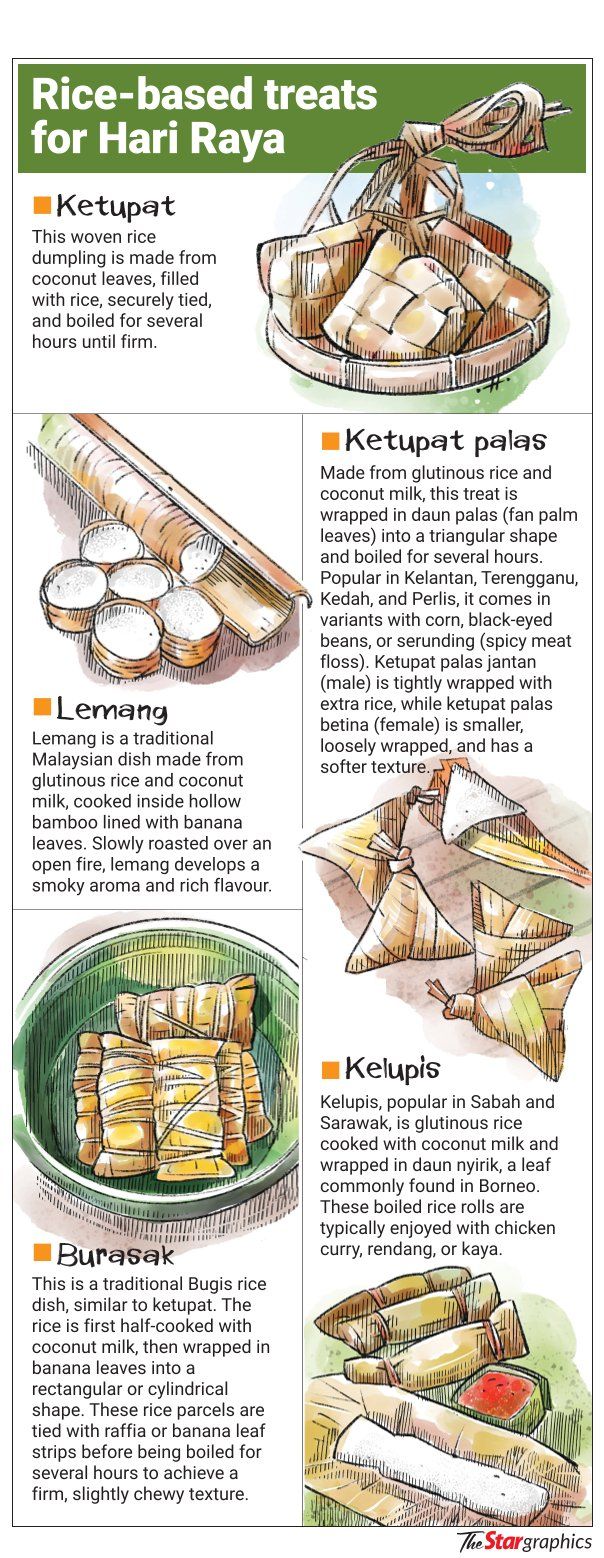
Besides ketupat nasi, ketupat palas (made from glutinous rice, coconut milk and wrapped in fan palm leaves) and lemang (also made from glutinous rice and coconut milk but cooked in bamboo) are other must-have food on the dining table.
According to Zuraini, some people believe that eating ketupat on Hari Raya symbolises the act of seeking forgiveness and embracing purity.
“On the first day of Hari Raya, children are taught to kiss their parents’ hands and ask for forgiveness. Part of our tradition is also eating ketupat, which represents purity. The rice wrapped in coconut leaves signifies prosperity and abundance after a month of fasting,” she adds.
A hard skill to learn
This year is Nur Shazriana and Mohamed Shazwan’s first attempt at weaving ketupat, and Zuraini is both excited and eager to teach them this family tradition.
Nur Shazriana and Mohamed Shazwan sit on the patio, each holding a pair of coconut leaves, their fingers fumbling over the delicate weaving process. Zuraini watches with amusement as their first attempts result in loose, lopsided weaves.
“This is harder than it looks. I keep getting confused which end goes where,” says Mohamed Shazwan, sighing as his ketupat unravelled in his hands.
Nur Shazriana, determined to get it right, carefully follows her mother’s instructions but soon found herself stuck in a tangled mess of overlapping leaves.
“It looks nothing close to ketupat bawang or ketupat nasi. The hardest part is interlocking the leaves in a crisscross pattern that is firm,” she laughs, showing her mother the misshapen weave.
Zuraini patiently took their ketupat apart, showing them the proper technique again.
“You need to be gentle yet firm,” she advises her children, demonstrating how to pull the leaves through without tearing them.
After several failed attempts, the leaves began to show signs of wear, their edges bruised from repeated undoing.
“I think I have ruined this one,” Nur Shazriana admits sheepishly.
Zuraini chuckles, “That is part of the learning process. You need to concentrate and understand how the weaving is done.
“But once you get the rhythm, it becomes second nature.”
For the last 27 years, Zuraini has tried to teach her husband, IT account manager Mohamed Shafiee Mohd Salleh, 56, the art of ketupat weaving but he has yet to master it.
“Ketupat weaving seems too difficult. I think my fingers are just too large (laughs) to weave something as intricate as ketupat. I tried it a few times but my leaves always end up torn.
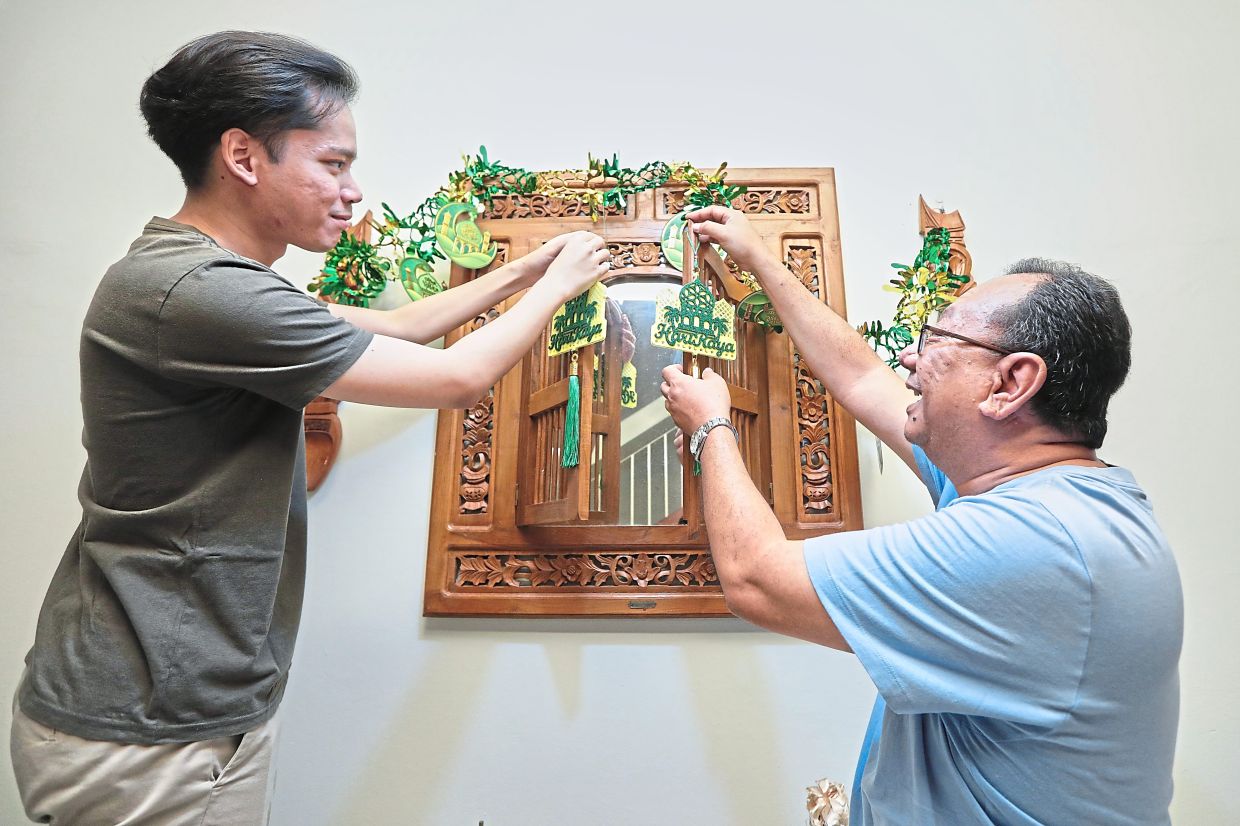
“Growing up, my late father was always the one who used to weave ketupat during Hari Raya. I’m lucky that my wife is able to weave ketupat, so we never had to order them. Since I can’t help with ketupat weaving, I will help with other chores like putting up Hari Raya decorations and grocery shopping,” Mohamed Shafiee quips.
A learning process
Judging from her children’s weaving skills, Zuraini knows the task of weaving the bulk of the ketupat will fall on her. And she doesn’t want to take the easy way out and order ready-made ketupat shells from the wet market closer to Hari Raya.
“It is convenient to buy ketupat shells online too, but for now, I am determined to teach them. I want them to appreciate the effort and skill that goes into making ketupat from scratch.”
There is also the option of instant ketupat nasi, which is pre-packaged plastic pouches filled with rice, which expand into compressed rice cakes when boiled.
Once cooked, the plastic is cut open, and the rice is sliced into bite-sized pieces, similar to nasi impit.
“The woven coconut leaves add a fragrance to the rice. You can’t get that from plastic ketupat nasi. Somehow, rice in a ketupat is compacted naturally, giving it a firmer texture. Nasi impit can sometimes feel too soft or mushy.
“I don’t expect my kids to be experts today but what matters most is they are giving it a try. And I think with practice, they can master the skill.
“After all, it is a family tradition that connects us to our roots and reminds us of the joy of preparing for Hari Raya together,” says Zuraini, adding that she is also teaching her children to cook some of their family recipes like rendang and kuah kacang.
Crafted with passion

As Hari Raya nears, Zuraini Aman (right) teaches her children ketupat weaving to keep the tradition alive for future generations. Photos: The Star/Yap Chee Hong
Ketupat weaving is more than just a skill; it’s a tradition and cultural heritage passed down through generations.
Photo: The Star/Yap Chee Hong
Rice is carefully filled into the woven ketupat casing, ready to be boiled for a delicious Hari Raya treat.
Photo: The Star/Yap Chee Hong
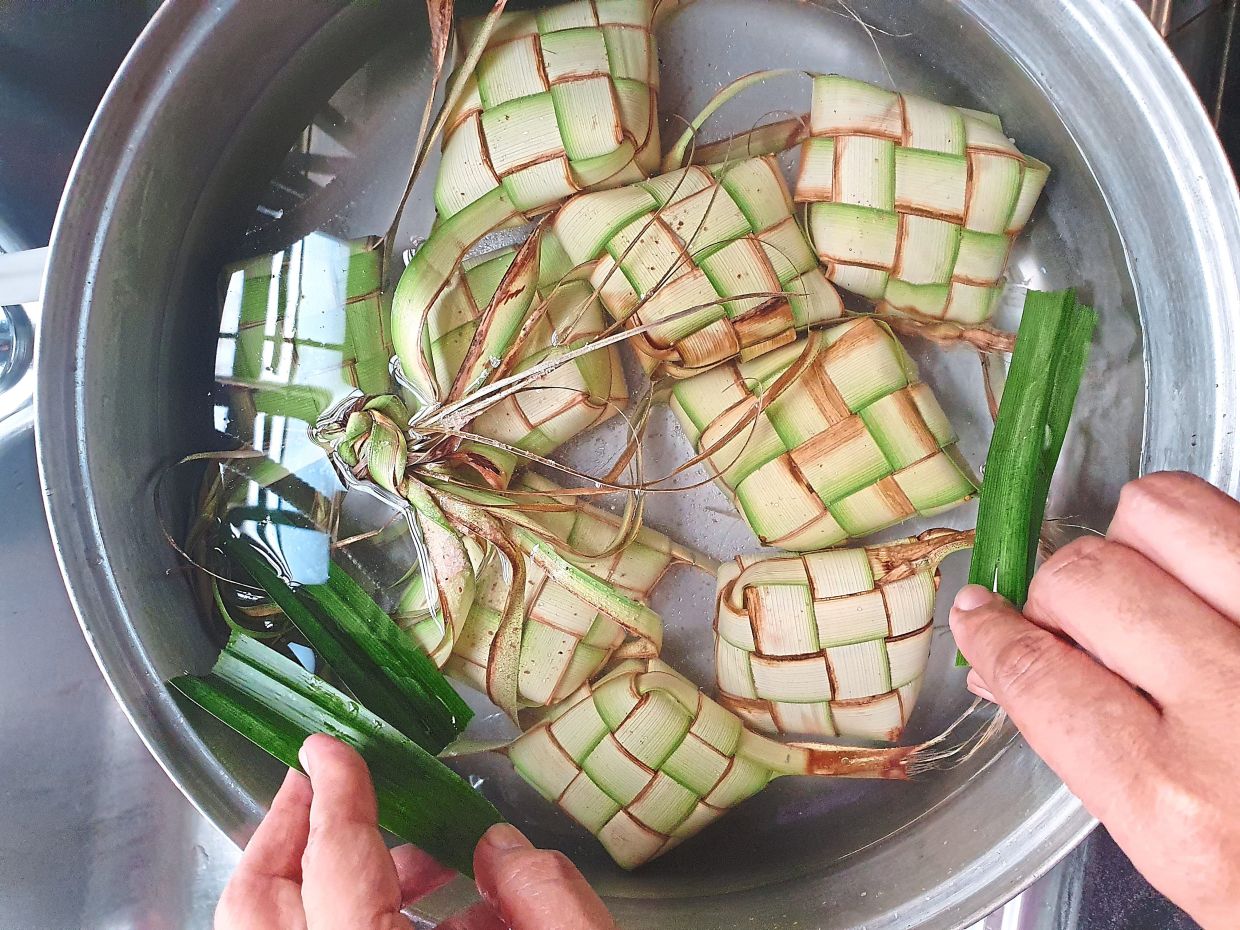
Washed, uncooked rice grains are put into the woven ketupat casings before they are boiled. Photo: The Star/Sheela Chandran
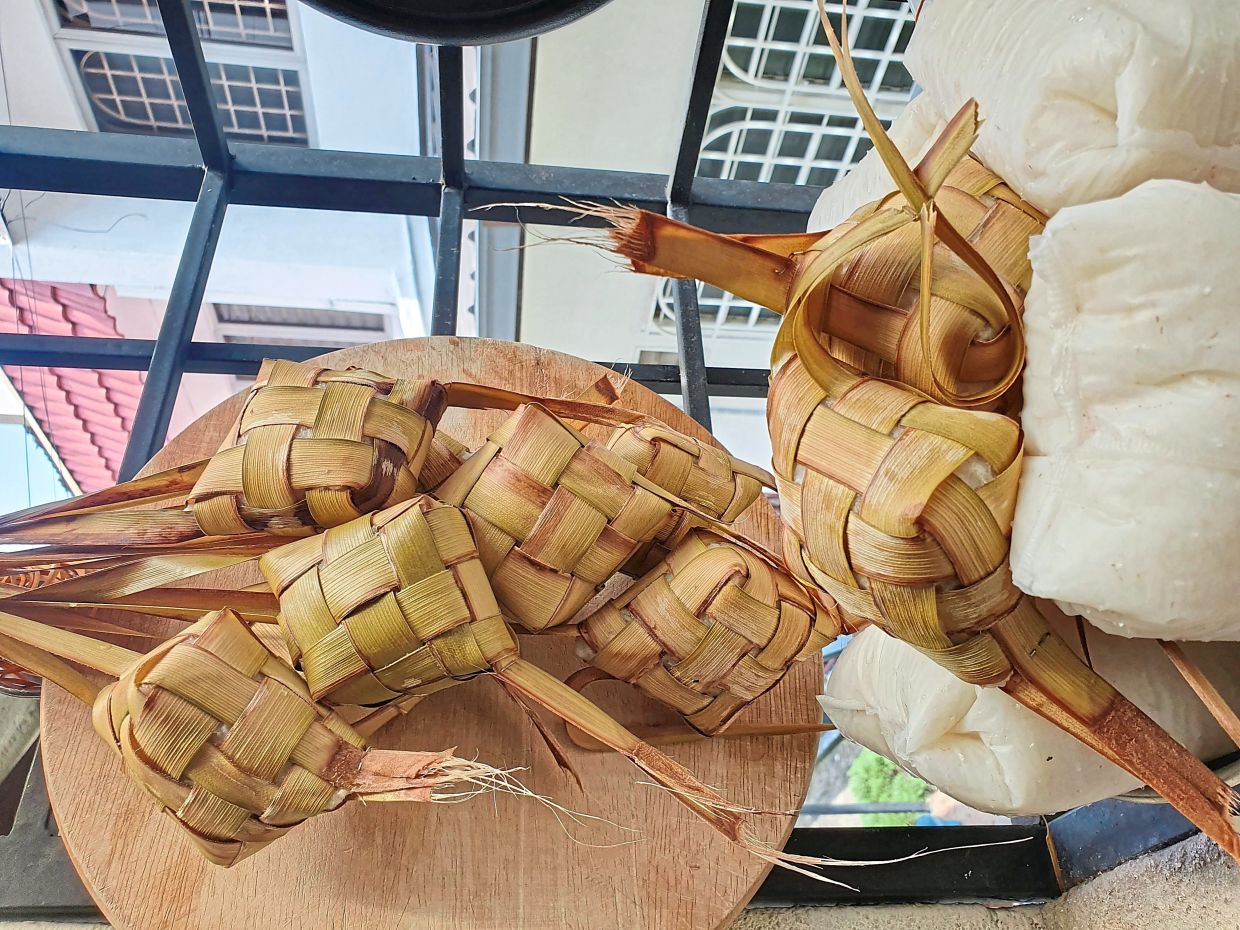
The freshly boiled ketupat is hung to dry, allowing it to set before serving with festive dishes. Photo: The Star/Sheela Chandran
Mohamed Shazwan (left) helps his father put up Hari Raya decorations while the family gears up for the celebration.
Photo: The Star/Yap Chee Hong
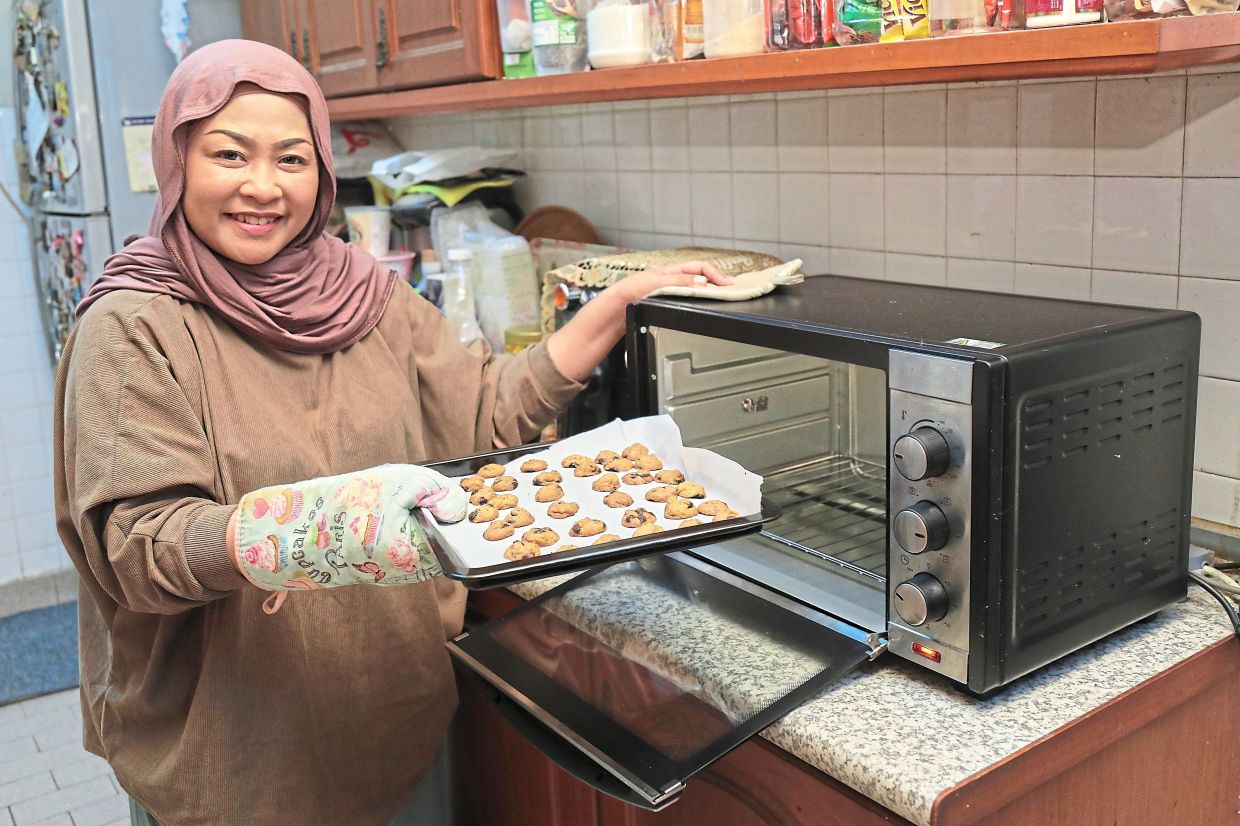
Zuraini preparing homemade Raya cookies for the season.
Photo: The Star/Yap Chee Hong
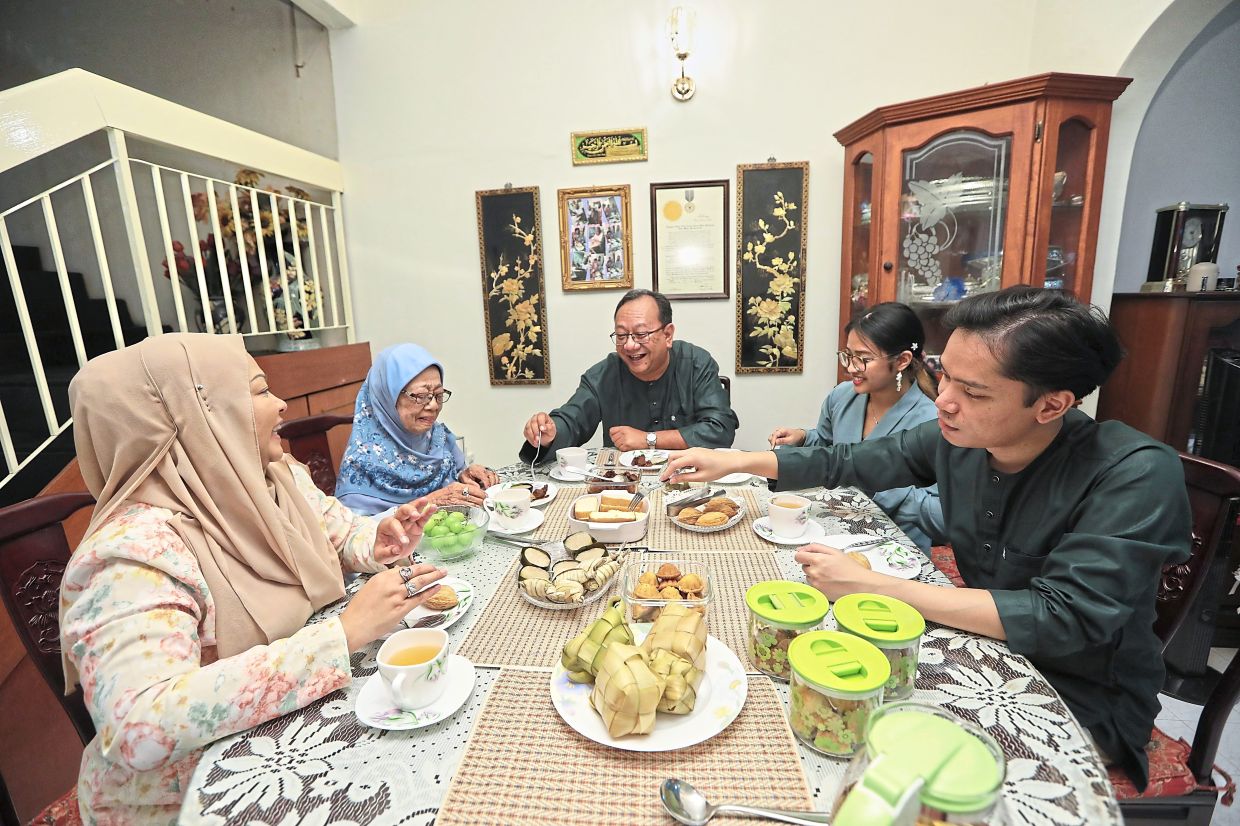
Hari Raya is a celebration of faith, family and tradition, bringing loved ones together and strengthening bonds.
Photo: The Star/Yap Chee Hong
Simply delicious
The Star Graphics
Ketupat pairs perfectly with festive favourites like rendang, kuah kacang, serunding and lontong. Photo: The Star/Sheela Chandran