To the fore: Young women activists set to become media-savvy advocates through training programme


Gender mainstreaming is not just about women. It’s about society, and also affects men and children, so we need to talk about it for people to understand why gender advocacy and the presence of women in decision-making for both the public and private sectors is vital, says Dr Siti Mariah. Photo: Pixabay

Young women have an important role to play in advocacy for gender equality and women empowerment, and it is with this in mind that the “Creating Agents for Change” programme was launched in October.

“Change is important, but it’s hard, especially if we’ve been doing things the same way for a very long time. It needs new thinking and new actors, and I think it’s particularly important to have young women be those agents of change,” says Datin Paduka Marina Mahathir at the launch.

“In order to protect and advocate for the rights of women in Malaysia, we need to raise more women leaders to be agents for change in attitudes, approaches, policies, and laws,” she adds.

As such, twenty young Malaysian women activists are set to become advocates through the Creating Agents for Change programme.

Launched online (via Zoom) by the US Ambassador to Malaysia Brian D McFeeters, Selangor State Executive Councillor for Health, Unity, Women and Family Empowerment Dr Siti Mariah Mahmud, and activist Marina, the programme is organised by women’s NGO Empower Malaysia and 3R Malaysia with the support of the US Embassy.

The five-month, capacity-building programme will equip the young women who are aged between 18 to 30, to become better advocates in their fight for gender equality.

“This demographic (young people) is selected because they spend the majority of their time using digital media. Every user has a platform and a certain degree of influence, whether it’s to their friends or their family, and it’s what they do with it that differentiates them from others,” says Empower’s project coordinator Denise Lee.

Importance of advocacy

McFeeters says the programme is a continuation of the US Embassy’s Wanita Empowered campaign that started about a year ago and is a major priority.

“The Covid-19 pandemic has exacerbated existing inequalities for women in every sphere, from health and economy, to security and social protection, but women have also played a large role in responding to the virus as front line workers, caregivers at home, and world leaders,” says McFeeters.

“Women’s unpaid workload has increased significantly as a result of school closures and increased needs of older family members during the pandemic. They are also hit by the economic impact of Covid-19 as they disproportionately work in the informal economy, putting them at greater risk of falling into poverty,” he adds.

“The pandemic has also led to an increase of violence against women and girls because during the lockdowns, women have been trapped at home in abusive situations, struggling to access critical services that have been impacted during the lockdowns.

"Domestic violence, sexual harassment, child marriage – these are just some of the issues that the participants are working to combat,” he says.

Creating Agents for Change involves a series of workshops that will immerse the 20 young women in the foundations of human and gender rights to anchor their advocacy efforts. They will also receive in-depth media training to enhance their creativity in promoting social change and learn how to use media tools effectively to run their own media-focused advocacy campaigns in the future.

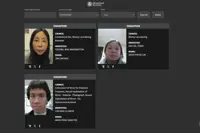
At the launch of Creating Agents for Change: (Top row, left to right) Dr Siti Mariah Mahmud, Brian D McFeeters, Lina Tan, Dayah Bakar, (second row, third and fourth from left) Marina Mahathir, Denise Lee. Photo: US Embassy Kuala Lumpur

Persevere through challenges

Speaking at the launch, Dr Siti Mariah offered advice that not only the 20 participants but all women advocates in general can benefit from.

Dr Siti Mariah encouraged the participants not to become discouraged in their advocacy work, but rather persevere when they don’t see things improve immediately.

“If you wonder whether your advocacy will be successful and when the results will materialise, realise that you might not always see it in your lifetime. But, also know that we’re all part of a link in the chain because what we do now will be continued by others in the future who have the same goals and aspirations as us,” she says.

Speaking from her own personal experience, Dr Siti Mariah reveals that advocacy work often involves taking small steps consistently and speaking out or communicating.

“In my early days as an MP with the Islamic party, women were not a part of any committees, and I had to voice out that there should be women representatives for every committee that we have,” says Dr Siti Mariah.

“There would also be meetings at 9pm after prayers which often ran till midnight, and as women, we wear many hats (such as attending to our children) which made this difficult. And I would communicate my thoughts on this and after that, they changed it to an earlier time at 6pm,” she says.

“Although it may not always be taken well, we need to speak out because how else would men know the needs of women if we women do not tell them?” Dr Siti Mariah asks rhetorically.

Secondly, don’t be discouraged when you meet with walls in your advocacy work, she says.

“Change can be subtle. In my 20 years of experience, as advocates, we may be very passionate and enthusiastic, and sometimes, we meet with walls or those who are resistant to change.

“But don’t be discouraged. Instead, try to think out of the box. I found that talking about memperkasahkah (empowerment) sometimes gives people a negative and wrong impression of aggressive women with big muscles forcing their way through, and as a result, instead of being willing to listen, people (whether men or other women) are driven away.

“So, we have to be wise in our approach, lobby first before we introduce our idea or thoughts,” she advises, advocating a "work smart as well as work hard approach".

Thirdly, advocacy for women to be part of decision-making is a conversation that must happen, she says.

“We need to communicate and speak out. The hardship that women have to go through when women aren’t involved in decision- and policy-making can only be eliminated if we talk about it,” says Dr Siti Mariah.

“Gender mainstreaming is not just about women. It’s about society, and also affects men and children, so we need to talk about it so that people will understand why it’s important – and why gender advocacy and the presence of women in decision-making for both the public and private sectors is vital,” she says.

The Creating Agents for Change programme will allow young women from various backgrounds the safe space to actively engage in critical conversations on advocacy and gender issues.

In addition, a variety of gender experts and advocacy groups – Amnesty International, Legal Dignity, MISI Solidariti, Justice for Sisters and many more – will be brought in to connect participants with current rights activists in Malaysia. The merging of rights-based thinking, creativity, media advocacy skills, and meaningful connections are instrumental as stepping stones towards enhancing their capacity as young activists.

At the end of the programme, the participants will have the opportunity to design and produce their own audio-visual content to highlight various gender issues and their efforts will be showcased in a special screening held in conjunction with International Women’s Day in March 2022.

Malaysian host and presenter Dayah Bakar, a young person herself, says that social media is a good platform to share one's thoughts, ideas and messages, and as an advocate, it’s a good way to put across what that you’re passionate about in a way that people can relate to, in order to generate awareness on important issues.

“To all those going through the programme, I believe that you’ll learn a lot. Similar to the 3R project that I went through, you’ll have very experienced and knowledgeable mentors who will teach you so many things,” she says.

Dayah's message to the participants is simple but impactful: “Speak your own mind, be relatable and as creative as you can. Remember that a simple message can impact or change someone’s life.”

“The participants in this programme will learn that advocating for change is difficult but it can be done. There are knowledge and skills to be picked up and ways to implement them in effective ways. The programme can improve the community’s understanding towards advocacy work in Malaysia and I believe there will be community support when people understand that these agents of change want to benefit all of society, not just themselves,” concludes Marina.

More info at: Creating Agents of Change.

Get 20% OFF The Star Digital Access

Monthly Plan

RM 13.90/month

RM 11.12/month

Billed as RM 11.12 for the 1st month, RM 13.90 thereafter.

Best Value

Annual Plan

RM 12.33/month

RM 9.87/month

Billed as RM 118.40 for the 1st year, RM 148 thereafter.

Follow us on our official WhatsApp channel for breaking news alerts and key updates!

Next In Family

How this retired Malaysian transformed his grief into an adventure for good
These dads are experiencing a shift in fatherhood as new norms take place
Study suggests women who do strength training will live a longer, healthier life
Are we failing neglected seniors in Malaysia?
It's time for parents to adopt these Japanese child upbringing approaches
Families in Sri Lanka are bearing the cost of the Middle East conflict
Why parents should step back and allow kids learn on their own
Helping single mothers get back on their feet
Helping single mothers build financial resilience and community
A platform for women entrepreneurs to lead and give back

Others Also Read