
It's the kind of statement that makes you stop and take notice. Seated at the head of her dining table in her cosy Petaling Jaya home, 92-year-old Mohana Rose Gill makes a powerful confession: “Mohana Gill was born when my first book was published.”
She says it without flinching, as a matter-of-fact, her kohl-rimmed eyes betraying her amusement at the reaction to her statement.
She lets the sentence linger, before adding: “Before that, I was always Dr Gill’s wife, or someone’s mother. Or Mrs Gill who made lovely cakes. Everybody called me Rose. Nobody knew me as Mohana.”
She pauses again.
“When I published my first book some 20 years ago, Mohana Gill, the writer, was born.”
It is an extraordinary thing to hear from a woman whose name has become synonymous with award-winning cookbooks, healthy living and, more recently, children’s literature.
Yet, as the conversation unfolds, her opening remark begins to make perfect sense.
For the first 70 years of her life, Mohana wore many hats with quiet grace. She was the wife of nephrologist Dr S.S. Gill, mother to three sons, a lecturer and, later, grandmother.
She baked cakes that friends and relatives remembered long after they were eaten and cooked meals that brought generations together around the same table.
Somewhere along the way, however, her own name quietly slipped into the background.
“I never thought I would or could be a writer,” she says. “I was simply looking for something to do.”
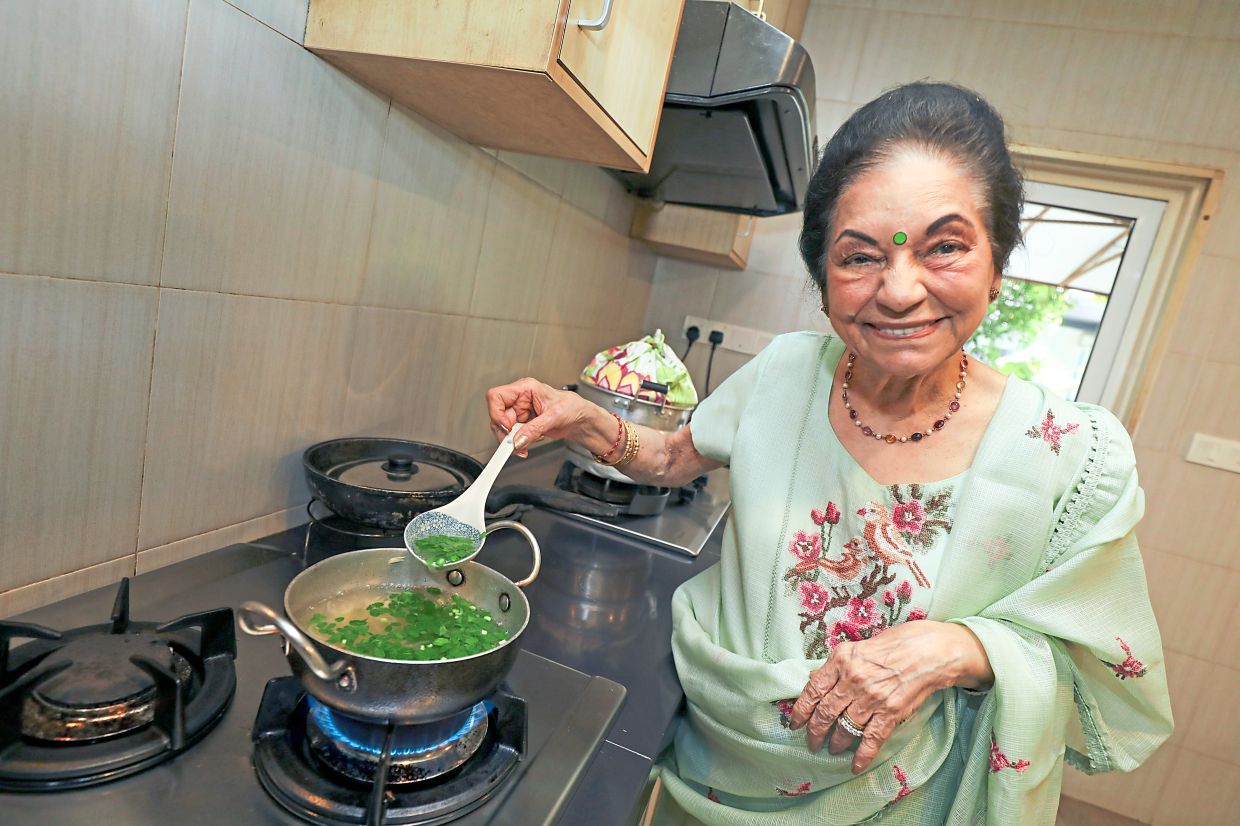
By 2006, all three of her sons had graduated and begun lives of their own. For the first time in decades, Mohana found herself with something she had never really had before: time.
“I realised I was 70, and for the first time, I had time to do something purely for myself,” she recalls. “Don’t misunderstand me. I loved everything I’d done, but it had always been for my husband or my sons.”
So she asked herself a simple question: “What can I do?”
Friends suggested writing a cookbook, an idea Mohana initially dismissed.
“There are already 50,000 cookbooks in the world. Do we really need another one?”
It did not take her long, however, to realise that perhaps the world did not need another cookbook. It simply needed a different one.
“My husband loves fruit, and we always had fruit at home,” she says. “I began researching and realised there weren’t many books dedicated to fruit.”
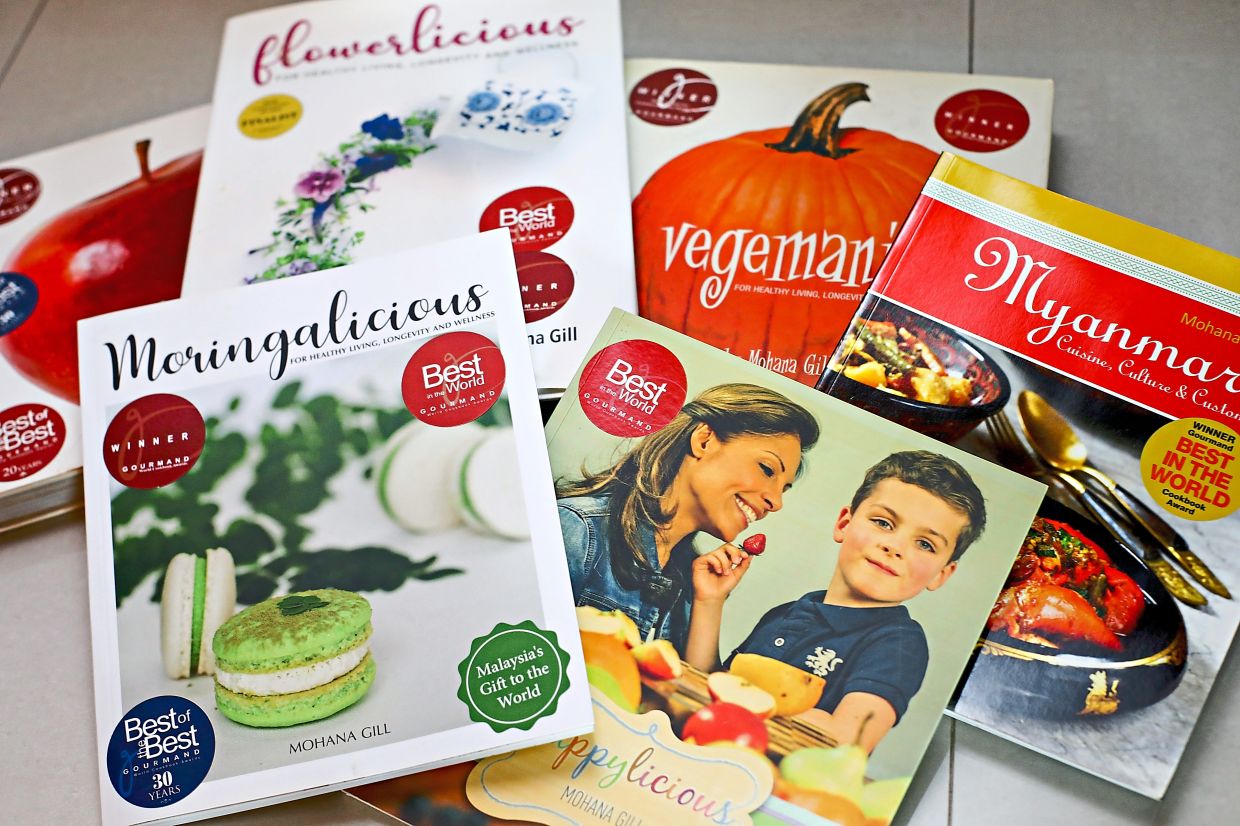
She decided to take a chance. The result was Fruitastic!.
Interestingly, it was – by her own admission – an experiment.
Though stepping into the world of publishing with no experience in writing a book and little knowledge of the industry, Mohana was certain of one thing: It would not be just another conventional cookbook.
Instead, she deliberately designed Fruitastic! as something of an encyclopaedia. Each chapter introduced a different fruit, weaving together its history, nutritional value, cultural significance and stories, before ending with recipes inspired by it.
“It wasn’t just a cookbook,” she says. “I wanted people to learn something as well.”
Looking back on the experience, Mohana likens writing a book to another kind of pregnancy.
“For nine months you carry it with love. You don’t know what the baby will look like. You don’t know whether people will love it. But when it’s born, you love it with all your heart.”
As it turned out, readers loved it too.
Fruitastic! went on to win three Gourmand World Cookbook Awards, widely regarded as the Oscars of the culinary publishing world.
Years later, it was named “Best of the Best” during the Gourmand Awards’ 20th, 25th and 30th anniversary celebrations – an honour few authors can claim.
If Fruitastic! gave Mohana Gill a name, her second book confirmed that she had found her voice.
Vegemania!, built around vegetables, was named Best Vegetarian Cookbook in the World.
“Then I knew I was doing something right,” she says with a laugh. “And the rest is history.”
Telling her stories
When one of her sons announced that he had become a vegetarian, Mohana’s first thought was purely a practical one: What am I going to cook for this boy who loves food, especially home-cooked food?
She began researching and experimenting in the kitchen, reimagining familiar family dishes by replacing meat with vegetables, such as swapping chicken filling for vegetables in her signature yam baskets.
The result was Vegemania!. It was another book that reflected Mohana’s firm belief that food is never just about food.
For her, cookbooks tell stories – about people, places, memories, culture and health benefits, not merely ingredients or measurements.
“Technically they’re cookbooks,” she says. “But they’re much more than recipe books.”
Every recipe, she believes, deserves a story. For her, recipes are not rules that must be followed exactly.
“They are simply an idea. It is like giving you a tray of colours. You experiment, mix and match. The recipe belongs to you once you start cooking it,” she says.
“Someone may never cook a dish featured in the book, but they may enjoy reading the story behind it.”
That philosophy became even more evident in her third book, Myanmar: Cuisine, Culture & Customs, an affectionate tribute to her homeland.
“The recipes are only one part of the experience,” she says.
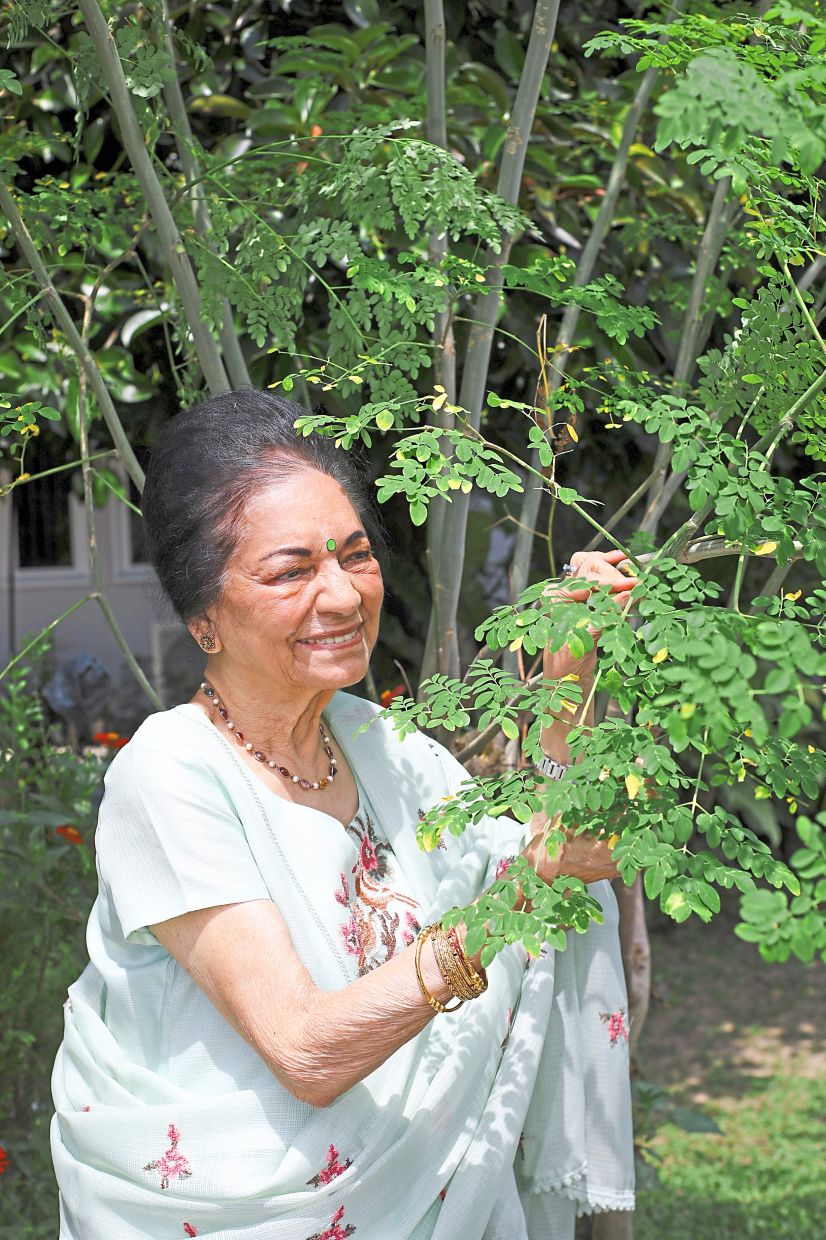
Over the years, Mohana continued expanding that philosophy. Eight years after publishing Vegemania!, she went on to write another five cookbooks, the latest being Moringalicious: Malaysia’s Gift To The World, published three years ago.
Today, she sees writing not only as a form of self-discovery but also as a way of leaving something meaningful behind.
“It is something I want to leave behind for my children, my grandchildren, and anyone interested in reading the kind of books I write,” she says. “Writing is my living legacy – a blend of heritage, health and hope.”
That is why every one of her books, regardless of its subject, carries the same underlying message – celebrating culture and heritage while encouraging healthy living, wellness and longevity.
“My books are a bridge between health and hope,” she says. “If we have health, we have hope. If we lose our health, everything changes.”
Healthy eating
Writing, for Mohana, is also about empowerment.
“If I’m still writing and creating in my nineties, then surely somebody in their sixties can’t say, ‘I’m too old’,” she says. “You can, but you must have the will.”
That determination stems from her belief that she can still make a difference, especially in the lives of children.
“Children are our future. We have to nurture them while they’re young,” she says.
Her conviction grew even stronger when parents began approaching her for advice on encouraging their children to eat more fruits and vegetables.
Around the same time, Mohana welcomed her first grandchild. It inspired a new chapter in her writing journey.
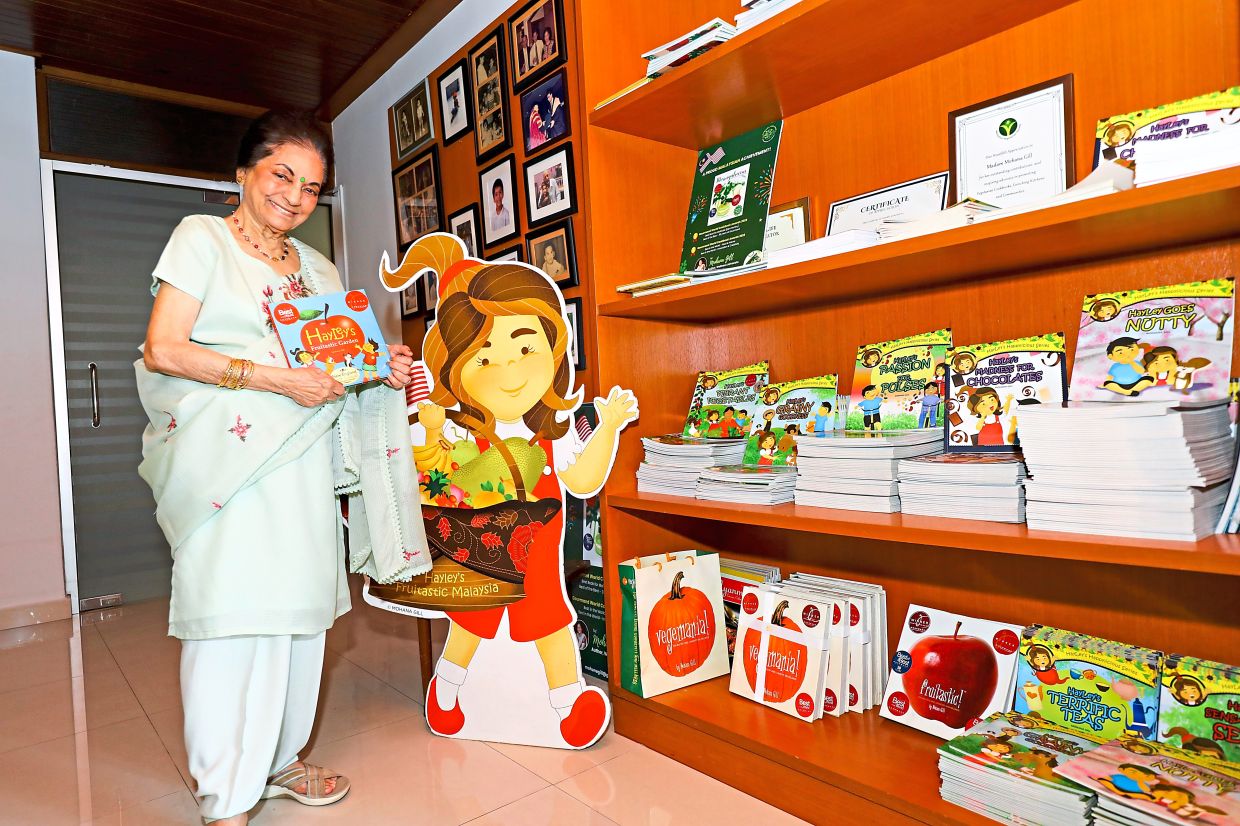
In 2010, she published the first book in her children’s series, Hayley’s Garden, named after her granddaughter.
Far from being typical children’s books, the series adapts Mohana’s signature style for younger readers.
Through stories, colourful illustrations and familiar characters, she introduces children to food, culture and healthy eating in ways they can relate to.
Each book concludes with simple recipes, from smoothies and omelettes to pancakes, encouraging children to cook alongside their parents and enjoy the food they have prepared together.
“If you want children to eat healthier food, bring them into the kitchen,” she says.
Since turning to children’s literature in her seventies, Mohana has published three children’s series – Hayley’s Garden, Hayley’s Happylicious and Hayley’s Malaysian Series – comprising 14 books in just 14 years.
Now, the grandmother of two is working on yet another collection.
Having introduced Malaysian animals in her latest series, her upcoming books will celebrate the country’s four major festivals: Hari Raya, Chinese New Year, Deepavali and Christmas.
“I’m very passionate about introducing Malaysian children to our country,” she says. “I want them to appreciate our fruits, our food and our animals. I also want them to respect each other’s festivals.”
For Mohana, every book she has written is deeply personal. Her first cookbook was inspired by her husband and children. Vegemania! grew out of her eldest son’s decision to become a vegetarian. Her children’s books, meanwhile, are inspired by her grandchildren.
“I never compare my books with anyone else’s,” she says. “Your book is your book. Mine is mine. They’re apples and oranges. We do what makes us happy.”
Growing older, gracefully
One thing is certain: Mohana is not one for sitting still. Barely 15 minutes into the interview, she was already on her feet, leading the way from one room to the next – showing off her collection of books and awards, her office (that looked like how one would imagine a writer’s den to be), and finally, her beautifully manicured garden.
It quickly becomes clear that, for Mohana, longevity is less about chasing youth than embracing life.
She laughs when asked about her secret to remaining sharp at 92.
“I’ve never exercised,” she says, almost mischievously. “I don’t go walking. I don’t do physio.”
Instead, her days are filled with ordinary routines that keep both her hands and mind occupied.
She begins each morning simply with coffee and toast before retreating to her home office to check on her emails and go through her schedule or to-do list for the day.
She will only hit the keyboard to work on her book at night, after all the day’s affairs are done.
Before she writes, however, Mohana has a ritual. She spends a little time crocheting – a quiet way of winding down before replacing yarn with words.
Some nights she writes for only an hour. On others, she continues until two or three in the morning, stopping only after completing the chapter she had set herself to finish.
Or when she’s confronted by a familiar intruder: Her 12-year-old cat, meowing from the bedroom doorway.
“I think she’s calling me to bed,” Mohana says with a soft laugh, counting it among the small pleasures she has learnt to hold close.
“You have to find these little things in life,” she says. “Otherwise, you can spend the whole day complaining that your knees hurt, your back hurts, your hands hurt.”
Ageing, she believes, is inevitable. Complaining about it is optional.
“Your hair will turn white. You’ll get wrinkles. That’s life. Deal with it as it comes.”
There is another ritual Mohana refuses to abandon. She keeps her weekly appointment – a visit to the salon for her hair, manicure and pedicure.
Not because she feels obliged to look younger, but because, for her, looking after herself is another way of respecting the life she has been given.
Health, she says, is among life’s greatest blessings.
“I don’t take supplements or vitamins,” she says. “I eat good food, keep myself busy and stay grateful.”
If one word threads through almost every conversation with Mohana, it is share.
Whether it is sharing a meal, a recipe, knowledge, stories or simply encouragement, she believes everyone still has something meaningful to give.
“Don’t do something because you think it will make you money. Do it because it makes you happy,” Mohana says.
Perhaps that is why, more than two decades after Mohana Gill the writer was born, she is still writing.
“There are still stories waiting to be told,” she says with a smile.