What do you do when a loved one is mentally ill?


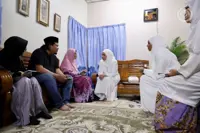
When there is a serious mental illness involved, such as psychosis, the journey can be long and stressful not just for the person concerned but also their family members. Photo: Filepic

Hanna Fernandez, 24, is just like any other typical young Malaysian girl. She still lives at home with her parents and goes to work on weekdays, and she has friends whom she hangs out with during weekends.

But unlike other young girls, she has never invited her friends to her home, except for a few times when she was a child. This is because Hanna’s mother suffers from mental illness, and exhibits symptoms of psychosis.

“It’s not easy to have a ‘normal life’ with my mum’s condition. Even though she appears normal, when she has one of her episodes, she can say distressing and even terrifying things that might upset people,” says Hanna, who works as an accounts executive in Johor Baru.

“So while I used to hang out at my friends’ homes while growing up, it was rare for my friends to come over to my home. I always told them that ‘my mum doesn’t really like it and will nag’,” she says.

But it was actually because it was difficult to deal with the embarrassment and stigma of having a family member that has a mental illness who might say or do things deemed as “socially inappropriate”.

According to Thrive Well (a social enterprise that offers mental healthcare services) clinical psychologist Anum Sofea Muhamad Fadzli, the love and support of family and friends is vital to persons going through mental illness.

“It’s important to try and understand thoroughly what the mentally ill person is going through – by learning about their mental illness – and to provide the necessary love and support to help them cope,” says Anum Sofea.

What is psychosis?

Psychosis is a medical term to describe experiencing reality in a different way from others. Photo: Filepic
Psychosis is a medical term to describe experiencing reality in a different way from others. The person may exhibit symptoms such as hallucinations (seeing and hearing things that others don’t), delusions (untrue beliefs of grandeur such as they’re the king), or paranoia such as people are trying to kill them), or disorganised thinking and speech.

While some may experience these symptoms at certain points in their lives, others live with it for most of their lives.

The main treatment offered for psychosis at the moment is a medication called antipsychotics, which is usually prescribed by a psychiatrist. But the medication doesn’t cure the psychosis, it only helps to reduce and control the symptoms so that the person can feel more “stable” and lead a “normal” life.

Hanna’s family doesn’t know what caused her mother’s psychosis and the symptoms weren’t always so “severe”.

“According to Dad, while he and Mum were dating, her symptoms weren’t so obvious. He used to tell me, when she wasn’t ‘unwell’, she’s a very nice person and she still is,” recalls Hanna, who is an only child.

“So, even when he knew she wasn’t ‘normal’, Dad decided to propose to and marry Mum because he loved her and was willing to go through life with her,” she says.

When Hanna was younger, her mother appeared “normal” to many: she was fairly independent, able to drive herself around, and she even held an office job although she became a full-time housewife after she got married.

Feeling the stigma

Hanna reveals that their family started to feel the stigma as her mother’s symptoms became worse.

“Initially relatives and close friends would visit us but those visits became less frequent, like only once or twice a year on special occasions, because they were all ‘scared off’ by the things that Mum said or did,” she says.

“There were a few religious groups who came to visit Mum and tried to help, but it was very difficult. Although Mum would seem ‘normal’ when they were around, her episodes would start again after awhile,” she adds.

Because of the stigma associated with mental illness and people’s fear of what they can’t understand, the person may become increasingly alienated from others and this may cause his/her condition to become worse. Photo: Filepic

Hanna’s family rarely accepts social engagements because of her mother’s condition.

“Dad doesn’t bring us out as a family to parties or to visit friends and relatives. He did initially when I was younger but he stopped because Mum would say strange things, or scold and shout at people, even strangers, so it was very distressing,” she reveals. “It could be also very embarrassing, especially since some of the stuff she says sounds ‘plausible’ and people might mistakenly believe it to be true when it isn’t.”

Hanna says that things that other families often take for granted such as going out to a restaurant or parties, or on a holiday tour were often “traumatic” experiences for her and her father.

“We always had to be prepared for shocked stares or looks of disapproval from people if Mum had one of her episodes while we were out,” she says.

“But, Mum can be very convincing in the things she says, especially to people who don’t know about her condition.”

There was one time during a tour that also involved Hanna’s aunt and uncle, where her mother called them up to tell them that the tour guide had changed the meeting time for a particular morning tour. "So you can imagine how upset they were, waiting at the lobby at 7am when the tour was actually at 9.30am,” says Hanna.

Hanna’s family rarely accepts social engagements because it was difficult to deal with the embarrassment and stigma of having a family member that has mental illness. Photo: Filepic

Communication is key

Often, because of the stigma associated with mental illness and people’s fear of what they can’t understand, the mentally ill person may become increasingly alienated from others and this may cause his or her condition to become worse, says Anum Sofea.

So, having an open conversation – where the family talks to their close friends and relatives about the person’s condition so that they will not be afraid to stay in touch with them, will help, she advises.

“Showing our openness to talk about it, and relaying our understanding of it can help diminish the stigma behind mental illness. By talking about it, family and friends can also ask for helpful guidelines on how they can help or respond in the situation,” she says.

“It’s also a good idea to have the person with mental illness enjoy life like others. Help them socialise and integrate into society whenever possible,” she adds.

Anum Sofea says that this is where one’s ability to understand the mental illness can be very helpful.

“If, for example, going to very crowded or noisy areas is distressing to the person, then avoid those venues. But never deny them the freedom to be a person. It’s also important for family members to know some strategies to help the person cope if a situation is too much,” she says.

“And it’s good for the family members to learn to be calm in trying situations. For example, if the person starts to say things that may embarrass them in public, being calm and not getting agitated can help them decide rationally what they should do next. A calm frame of mind also helps them explain the situation to people if they need to,” she adds. “It may sound easy, but it takes a lot of practice to be able to do this well.”

It’s a good idea to have the person with mental illness enjoy life like others. Help them socialise and integrate into society whenever possible, says Anum Sofea. Photo:  Unsplash/Nani Chavez
It’s a good idea to have the person with mental illness enjoy life like others. Help them socialise and integrate into society whenever possible, says Anum Sofea. Photo: Unsplash/Nani Chavez

Other concerns

Hanna reveals that the family also has to take extra precautions where valuable documents or belongings are concerned because of her mother’s condition.

“Mum lost my IC when I was a child. She said that she was afraid ‘someone would steal it and make use of it’ so she hid it and subsequently, nobody could find it,” she says.

“It was a pain trying to get a replacement because when we went to the Jabatan Pendaftaran Negara (National Registration Department), Mum would tell the officer ‘strange’ things that actually made them believe that I wasn’t a Malaysian, so it was a long time before I could get my IC replaced,” she reveals.

After that, important documents were all kept under lock and key, and the key in a place unknown to her mother.

“I also dread the day when I’ve to bring my boyfriend home to meet my parents, because I can imagine how awkward that would be,” says Hanna, who is currently still single.

Family members should support the mentally ill loved one through the whole process – from the decision to go for treatment, to the referral, to the treatment, right up till the end, says Anum Sofea.

Refusal to get treatment

Even though Hanna’s father did try to get her mother to see a psychiatrist, she refused to go for treatment.

“The psychiatrist, who is a family friend, offered to get Mum admitted for more tests and treatment. He even offered Dad a bed so that he could stay with Mum at the hospital. But she became quite hysterical and refused to go, saying that she isn’t crazy and that people were trying to kill her,” reveals Hanna.

“The psychiatrist also prescribed some medicine (to suppress the delusions and help her lead a ‘normal’ life) but Mum threw the pills away, saying that people were trying to poison her,” she adds.

According to Anum Sofea, in such a case where the mentally ill person is reluctant to go for treatment at a hospital, the family can first get a referral letter from a doctor or psychologist and bring the letter either by themselves or together with their mentally ill loved one to the psychiatric or psychology department of the hospital to request for treatment. The staff will help the family with the process, she says.

After that, assessments start. The mental health professionals will ask relevant questions to understand the support that the person and family needs. And, the family can discuss the possibility of house calls or home treatment, and the SOPs involved, for persons who refuse to go to the hospital for treatment, she adds.

Anum Sofea stresses the importance of the family members equipping themselves with some knowledge of the type of mental illness their loved one is going through and the treatment procedures.

“This is so that they will know what to expect and can then help ease the anxiety that the person might have when going into treatment.”

“Family members should never use a hands-off approach, but rather always be with the mentally ill loved one throughout the whole process – from the decision to go for treatment, to the referral, to the treatment, right up till the end,” she says.

It takes a lot of resilience and bravery to be kind and patient to the person who needs it the most, and it’s really commendable to be a caregiver for a mentally ill loved one, says Anum Sofea. Photo: Filepic

But for now, Hanna and her family have decided to “live with it”.

“All these years, we’ve lived with it – all the stresses, annoyances and difficulties. We didn’t want to see her admitted to a hospital against her will,” says Hanna.

“It’s not easy but Dad has accepted his fate and so have I, and we’re all still together as a family unit. And Mum is still Mum, we respect her as that.”

“Some days are better than others, we try not to let it get to us so much and we try to ‘live’ as normally as much as possible. Dad has his golf to take his mind off things - at least for a couple of hours - and I have my friends whom I hang out with during weekends,” she says.

“When the people we love go through tremendous struggles, it is expected that we, as their family, partner or friends, will feel great pressure to help them ‘get back to where they were’. But when there is a serious mental illness involved, such as psychosis, the journey can be long and stressful. In fact, oftentimes the family or the caregivers need support as well,” says Anum Sofea.

“It takes a lot of resilience and bravery to be kind and patient to the people who need it the most, and it’s really commendable to be a caregiver for a mentally ill loved one, so never think that what you’re doing as a waste. With your support and continued efforts, your loved ones may have a chance for recovery,” she concludes.

Get 20% OFF The Star Digital Access

Monthly Plan

RM 13.90/month

RM 11.12/month

Billed as RM 11.12 for the 1st month, RM 13.90 thereafter.

Best Value

Annual Plan

RM 12.33/month

RM 9.87/month

Billed as RM 118.40 for the 1st year, RM 148 thereafter.

Follow us on our official WhatsApp channel for breaking news alerts and key updates!

Next In Family

Study suggests women who do strength training will live a longer, healthier life
Are we failing neglected seniors in Malaysia?
It's time for parents to adopt these Japanese child upbringing approaches
Families in Sri Lanka are bearing the cost of the Middle East conflict
Why parents should step back and allow kids learn on their own
Helping single mothers get back on their feet
Helping single mothers build financial resilience and community
A platform for women entrepreneurs to lead and give back
Doctors observe a higher rate of paediatric visits, especially for anxiety
Here's how to ensure your children stay safe when enjoying water parks

Others Also Read