



New York's Metropolitan Museum of Art is exhibiting the earliest written fragment of the Greek epic poem The Odyssey amid the popularity of the film on show in much of the world.
People have loved Homer’s poem through the millennia thanks to its "timeless themes of bravery, loyalty, perseverance, and cunning," the museum says.
"From vase painters in ancient Greece and Rome to contemporary filmmakers like Christopher Nolan, artists have continually retold The Odyssey across mediums."
"Countless paintings, ceramics, and statues relate to Odysseus’s ten-year journey home to Ithaka, where he ruled as king alongside his wife, Penelope," the Met notes, offering visitors a series of objects from its collection that bring the epic to life.
The papyrus fragment on display dates from around 285 to 250 BC, and is considered the earliest written fragment of The Odyssey to be discovered.
"This fragment is beautifully inscribed using a combination of charcoal and water via a stylus on papyrus-one of the most popular materials for writing in antiquity-and contains three lines that do not exist in today’s standard text," the museum says.
"While the story of The Odyssey has been presented in many ways over centuries, one crucial yet often-overlooked aspect is that it was originally recited by bards in oral performances," the Met notes. "As such, there were many different versions of the epic poem."
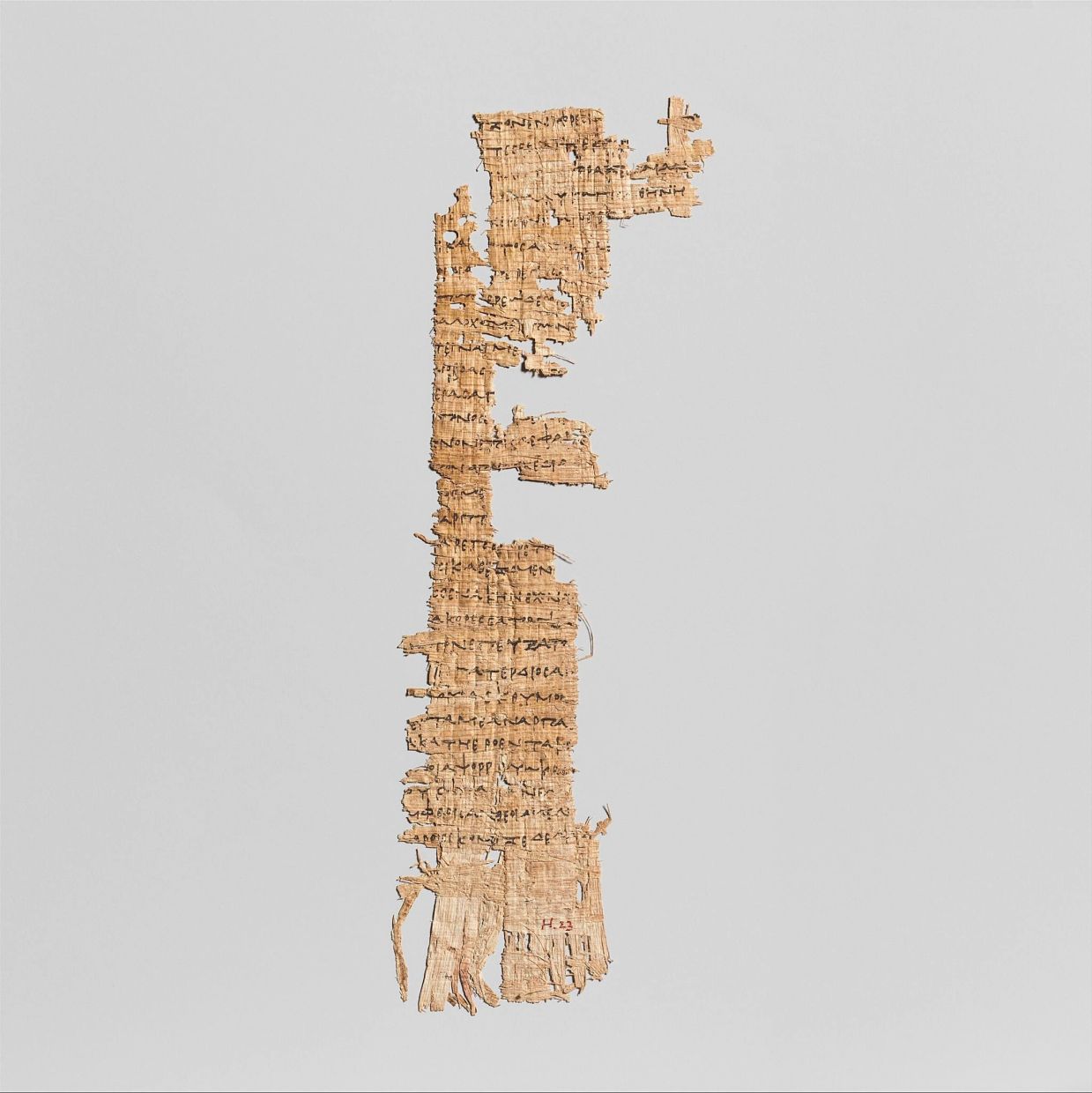
"Like the Greek warrior, this object reminds us that the telling of The Odyssey itself has taken its own distinct journey through history."
The book fragment, measuring just under 20cm, was excavated in 1902 at the necropolis of el-Hibe in Egypt and came into the possession of the museum - founded in 1870 - in 1909 as a gift from the Egypt Exploration Fund.
The most significant collection of Homeric texts in the Hellenistic world was housed in the Library of Alexandria in Egypt, the first comprehensive public library ever, the New York museum says.
Record-breaking adaptation on screen
Alongside The Iliad, another epic dating back to Ancient Greece, The Odyssey ranks among the oldest and most significant texts in world literature.
The two epics attributed to Homer date back to the eighth century BC and tell of the Late Bronze Age - a period stretching back centuries further - using material passed down mainly through oral tradition.
Today, the film adaptation The Odyssey is breaking records in terms of viewers as people crowd to cinemas to watch Homer’s epic on the silver screen.
Matt Damon plays the Greek hero Odysseus in the new film by Christopher Nolan. It describes his years-long journey home after the Trojan War, a time marked by battles, storms and mythical monsters. - dpa
