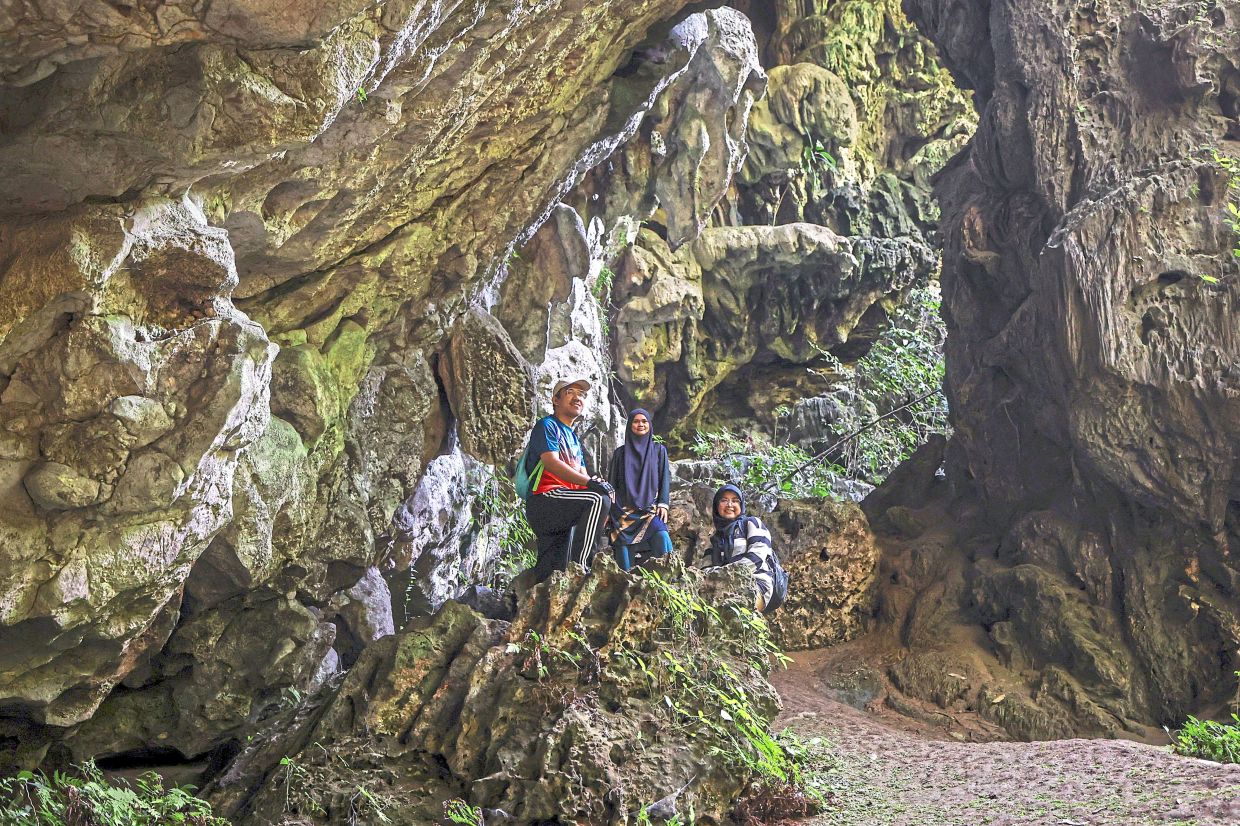
The Kota Gelanggi cave complex, located about 25km from Jerantut town, Pahang, is far more than just an ordinary limestone formation. It is a natural heritage site that is nearly 150 million years old, rich in biodiversity and has great geological and archaeological significance. Not only that, the area is also steeped in local myths.
Covering an area of 147.3ha, the cave complex houses over 100 limestone caves, though only a few are accessible to the public, including Gua Balai, Gua Terang Bulan, Gua Penyu, Gua Angin, Gua Kepala Gajah, Gua Gajah, Gua Sanding, Gua Potret and Gua Tongkat.
Managed by the Federal Land Development Authority (Felda) through Felda Residence Tekam since 1998, Kota Gelanggi has been gazetted as a National Heritage Site by the Department of National Heritage and is now one of Pahang’s key geotourism assets.
According to Azmi Baharudin, recreation manager at Felda Residence Tekam, visitors who wish to explore the caves must go through a 3.5km off-track trail through the jungle and narrow passages, as well as undertake a physically and mentally demanding climb.
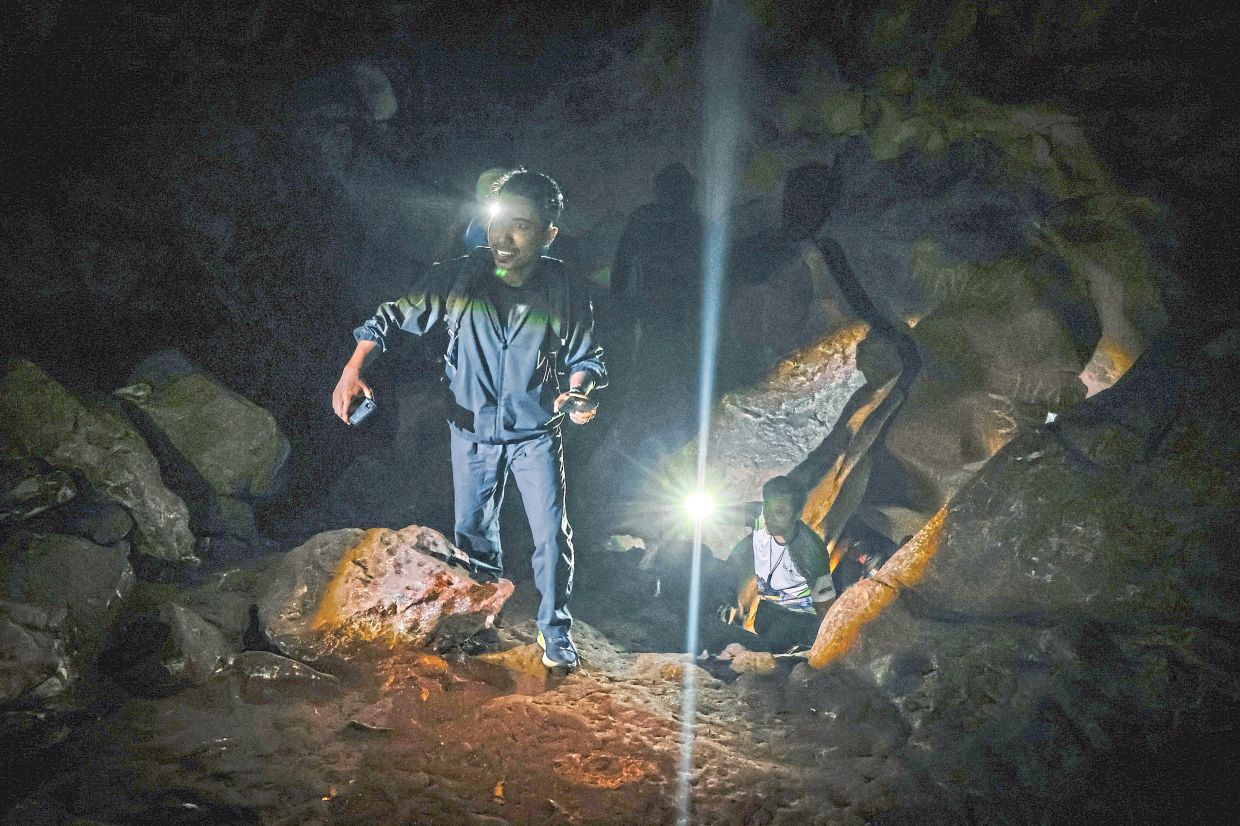
"The trail has been left in its natural state, with fallen trees, tangled roots, muddy ground and slippery areas ... elements that enhance the experience for those seeking a true tropical rainforest adventure,” he said during the Geopark Odyssey: Heritage & Archaeo Tourism expedition organised by Tourism Malaysia Eastern Region.
Wild boars and folklore
Azmi said one of the stops along the trail is a wild boar "den”, which serves as a habitat for the animals and is crucial to the forest ecosystem. It also provides an opportunity for visitors to get to know more about the importance of biodiversity balance.
"Wild boars play an important role as natural tillers of the soil, dispersing seeds and indicating the land’s natural fertility, which in turn helps maintain the earth’s pH balance,” he explained, adding that the geological structures within the Kota Gelanggi complex attract both researchers and tourists.
The caves, meanwhile, are also linked to folklore passed down orally by local communities.
"These old stories add value to the natural beauty of the caves. According to folklore, some formations are said to be the result of ancient curses, while certain caves were believed to have served as hiding spots for Malay warrior Mat Kilau during colonial times,” he said.
Among the caves associated with ancient legends is Gua Sanding, which features rock formations resembling a bridal couple, a reclining woman, a bearded man, a child with the face covered and a frog – believed to be connected to a tale of a curse from the ancient Kalang Kio kingdom.
There are also formations resembling a double-curved keris and a sword, symbolising Malay warrior spirit and reflecting traditional Malay customs and identity.
Prehistoric trail
Azmi said Gua Tongkat is among the caves that can be accessed by vehicles and is often used as a rest stop, particularly for lunch breaks, meetings or group activities in a natural cave setting.
He added that archaeological researchers made significant discoveries in 1998, including that of a human skeleton and artefacts such as pottery, cooking tools, wooden and glass beads, and soot marks on the cave walls.
"These findings support the theory that Kota Gelanggi was once inhabited by prehistoric humans and served as one of the earliest settlements in the region,” he said, adding that the artefacts have since been sent to the Pekan Museum for research and documentation.
To further strengthen the site’s position as an educational and heritage-based tourism product, several initiatives are being planned, including providing facilities for all-terrain vehicle (ATV) routes, paintball activities, abseiling, night walks and bird watching.
"We also plan to add two more campsites and are evaluating the potential for developing a mountain bike trail around the outer cave areas,” he said, adding that the initiatives will be carried out in phases, with priority given to ecosystem conservation and involving the local community as guides and service providers. – Bernama