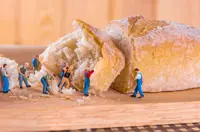
We live surrounded by structure. It is there in the buildings we walk through, the cars we drive, the railway networks and city grids we take for granted, and the timetables we quietly obey.
But for every visible wall and walkway, there are unseen counterparts. Structures that govern societies, institutions, habits, and relationships are often invisible, yet they are just as rigid as buildings.
As Marshall McLuhan observed, the fish does not see the water in which it swims. We do not notice these unseen systems when they hold. We only notice them when they give way.
And when structures and systems give way, it is rarely a gentle event. It may begin with a slight tremor, a hint of strain, a tiny inconsistency that feels easy to dismiss. But it too often ends in a sudden and wild collapse.
Ernest Hemingway captured this dynamic succinctly: “How did you go bankrupt? Two ways. Gradually, then suddenly.”
The pattern extends far beyond personal finance. Consider a market crash, a political crisis, a personal burnout, the sad unravelling of a relationship. These events feel abrupt, but they are not. They are the final outcomes of pressures within unbalanced systems that have been building invisibly over time.
We tend to call such moments bad luck. It is a convenient explanation because it absolves us from blame, and from examining the underlying system.
In truth, these are the final stages of structural failure, the visible consequences of a system that has drifted out of alignment with reality.
In engineering, failure rarely comes from what is missing. It comes from what was tolerated until it became intolerable, such as small inefficiencies, ignored limits, mismatched assumptions. Over time, they accumulate. A system does not break at the moment of impact; it breaks at the moment its internal architecture can no longer absorb the stress.
Nature itself runs on these principles. The seasons impose a relentless tempo. Growth, ripening, harvest, and decay are not random events but fixed points within a cycle. A plant does not decide its shape; it unfolds according to the constraints embedded in its DNA, guided by light, gravity and the search for equilibrium.
Animals breathe, digest and regulate, each function embedded in a larger system that maintains the balance of life. Life persists not because it is free from rules, but because it operates within them.
What we often describe as freedom begins to look different under this lens. Spinoza put it bluntly: freedom is the recognition of necessity. This is not a denial of free will, but a reframing of it. True freedom is not the ability to act without constraint, but the ability to act coherently within the system, and to move with reality rather than blindly against it.
Perhaps the most vivid illustration of all this lies in the kitchen. Ingredients embody structure. A carrot holds the results of photosynthesis, of slow accumulation and cellular order. Meat reflects a history of movement and metabolism.
Grain stores time and sunlight, compressed into starch. When we cook, we do not create these structures; we modify them. We combine them, break them down, rearrange them, and/or stabilise them into something new. Cooks who understand this do not impose their will arbitrarily. They enter into a dialogue with the material.
Heat softens, but can also destroy. Acid brightens, but can easily destabilise. Fat carries flavour, but can overwhelm and turn a dish greasy. Good technique is not simply a collection of tricks or recipes. It is also a profound awareness of limits.
An emulsion holds until it does not. Fermentation deepens until it turns into rotting. Yeasty dough rises only within a narrow time window where structure and CO2 are held in precise tension. These are not vague intuitions; they are structural boundaries. A cook’s role is to understand them, sense them, respect them, and work within them.
When a sauce splits, a bread collapses, or a dish tastes incoherent, it is rarely an accident. The outcome was already encoded in the process. Something was misaligned; temperature, proportion, timing, sequence. The failure is simply the moment when the underlying structure reveals itself. You cannot argue with a split sauce. You cannot persuade a collapsed loaf to rise. The feedback is direct and unambiguous. The kitchen is unforgiving in this respect. It does not negotiate, and it does not respond to good intentions. It responds only to reality.
This mirrors our own lives more closely than we would often like to admit. We often prefer to attribute outcomes to luck because it preserves a sense of independence. If success and failure are random, then we remain in control, at least in principle. It is not our fault. Or, we got lucky.
But most of what happens is neither fully planned nor truly random. It emerges from the interaction of structural constraints, many of which we barely perceive. Our habits are sequences shaped by these limits. Our relationships, like shared meals, depend on timing, balance and mutual adjustment.
Misalignment rarely causes immediate collapse. Instead, it introduces small distortions that accumulate over time. A conversation avoided, a signal missed, a tension left unresolved. Gradually, then suddenly, the structure fails.
At a larger scale, the same applies to institutions like governments, markets, and organisations. They are structured systems composed of rules, incentives and feedback loops. Winston Churchill once said that we shape our buildings, and thereafter they shape us. The same recursive dynamic applies here.
We design systems, but once established, they begin to condition our behaviour. If they are well aligned with reality, they appear stable, invisible, and comfortable. If not, they become increasingly fragile, irritating, capable of functioning for a time, but always storing up trouble for the future.
Structures often also have a time dimension, a period when they are most effective.
New structures pop up practically every day, as people manipulate or tinker with old boundaries. This results in ideas and products which become fads, fashions and popular movements of various kinds. Or they may be rules imposed by a new boss at work.
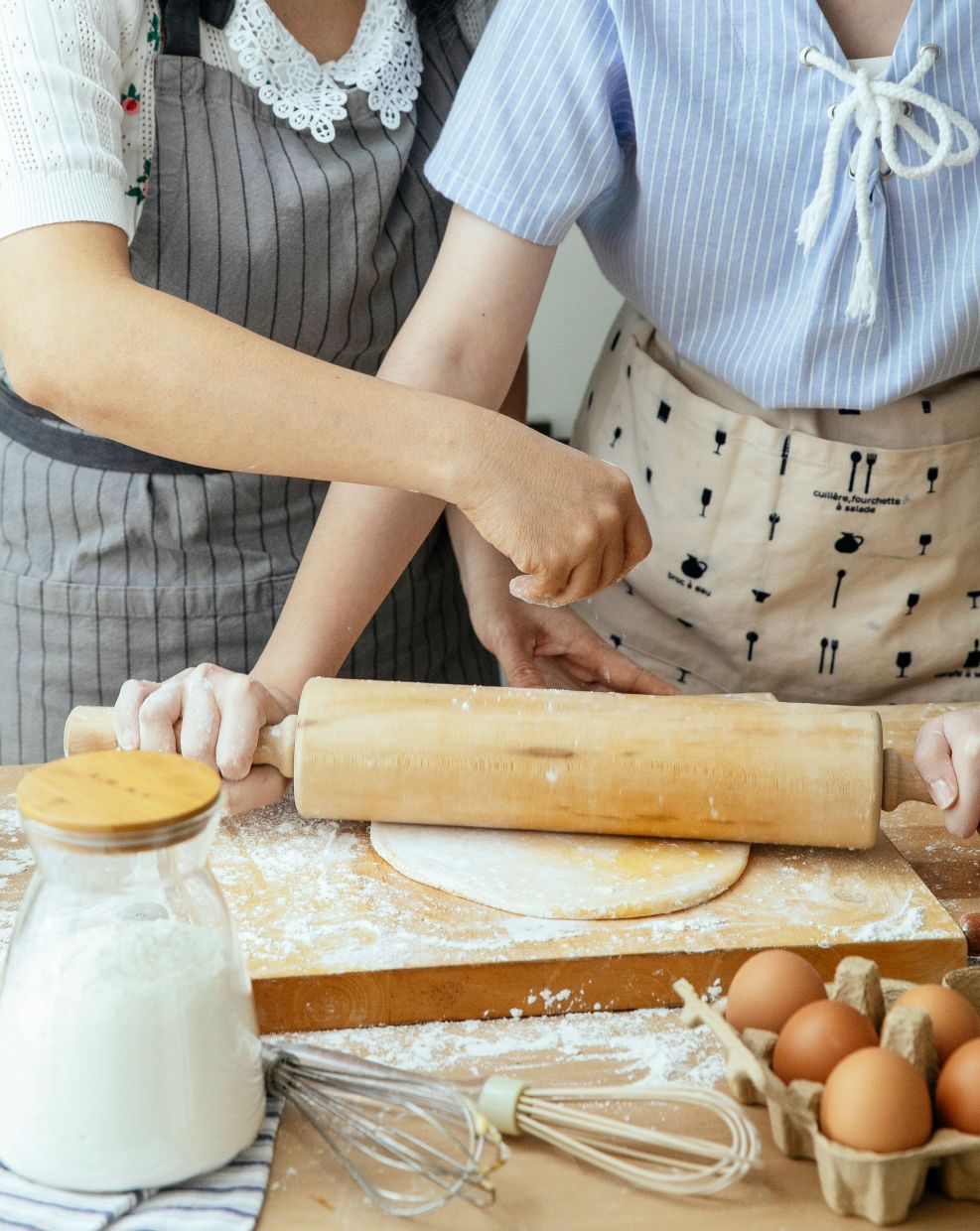
These structures exist until they become unworkable or unpalatable. And then newer structures will inevitably replace them, like the latest songs on the radio.
There is a philosophical discomfort in all of this. It challenges a deeply held intuition that we are fully equipped with free will, capable of acting independently of constraint. Instead, it suggests that our freedom is local, conditional, and embedded within larger structures.
And yet, there is oddly a great clarity in this perspective. It becomes evident that reasoning is most reliable when it reflects the structure of the systems it seeks to understand. Structured thinking is not rigid thinking – it is recognising relationships, feedback, consequences, causes and limits rather than regarding the world as a series of disconnected events.
Recognising structure therefore does not eliminate free will; it sharpens it. It tells us where and when intervention is feasible and where and when it is futile. Involvement is not always needed everywhere, and need not be applied infinitely, but only at the points where it makes a positive contribution. The illusion of total freedom is replaced by something more useful: an awareness and understanding of reality.
This is where creativity truly lives. Structure does not eliminate expression; it makes it possible. Without constraint, there is no coherence, just noise. Without coherence, there is no meaningful variation.
Two cooks, working with the same ingredients and equipment, can produce entirely different results because they navigate the structural boundaries of food differently. One may push the heat, another may favour time. One may emphasise acidity, another fat.
The constraints do not disappear – they become navigable based on the cook’s imagination and experience. To understand the shape of systems well enough to act effectively is the deepest form of practical wisdom.
In the end, the kitchen offers a quiet philosophy that extends far beyond its walls. It asks us to replace the reliance on luck with the practice of alignment. It requires us to pay attention to process rather than outcome, to relationships rather than isolated variables, to timing rather than impulse.
To cook well, and to live well, is to accept that reality has a shape. It is not a rigid cage, but a set of conditions within which meaningful actions become possible. Success usually comes not from resisting this shape, but from working with it, recognising where flexibility exists and where it does not.
Disorder, whether on a plate or in life, is rarely pure chaos. It is structure ignored, misread, or pushed beyond its limits. And clarity, when it comes, is seldom dramatic. It is the quiet recognition that the system was always there, patiently waiting to be understood.
The views expressed here are entirely the author’s own.