Despite the unrelenting bad news on Earth’s water resource, there is hope. The solutions are not mysterious – just politically difficult and economically inconvenient for powerful interests. But they exist.
The single largest lever is agriculture. Drip irrigation (delivering water directly to the root zone instead of flooding a field) can cut consumption by 30-70%.
Areas adopting this halved agricultural water use per unit of output. Precision agriculture using sensors in the soil, satellite monitoring, variable-rate application can trim another 15-25%.
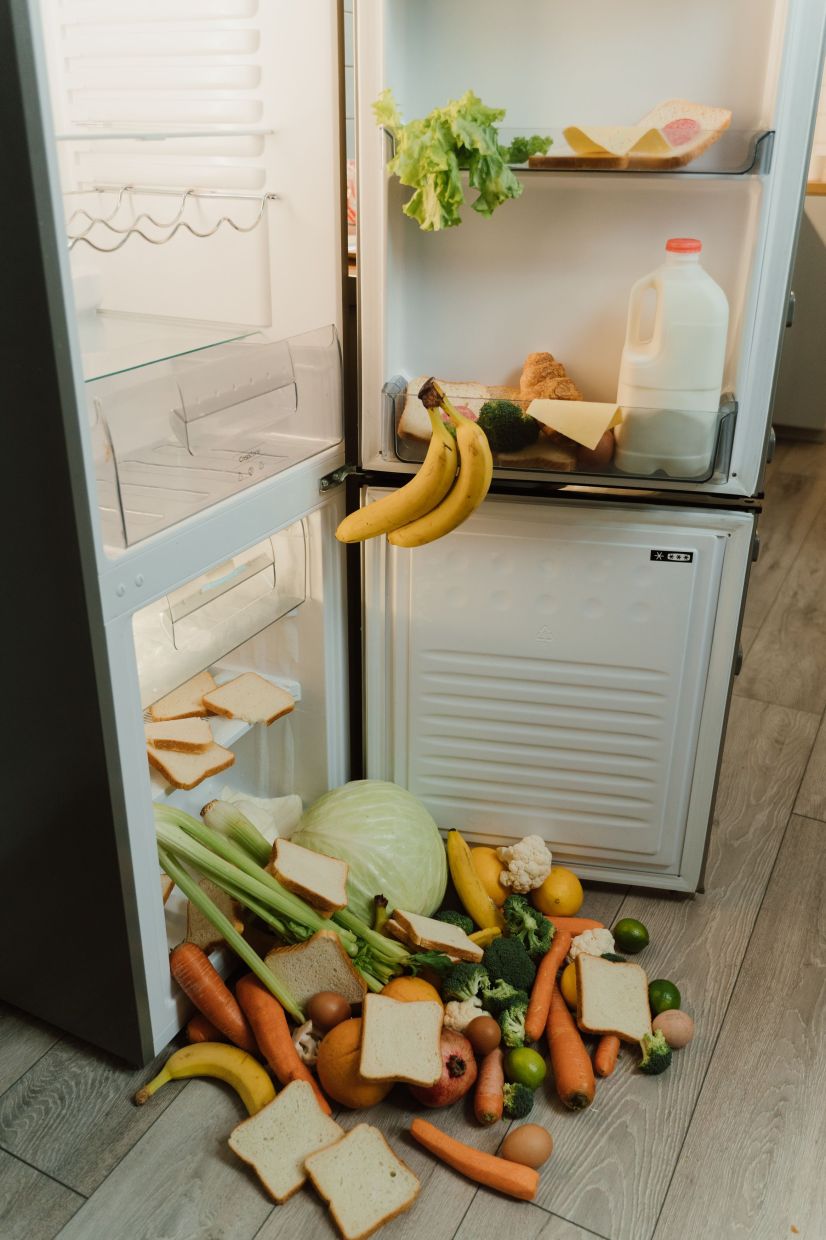
And then there is the simplest intervention of all: wasting less food. Thirty percentage of the food produced globally is never eaten, and the water wasted each year on growing that food is equal to two and a half times the annual flow of the Nile River.
In cities, the answer begins underground. In 2018, water distribution systems lost an estimated 126 cubic kilometres a year through leaks. But Tokyo managed to reduce its leakage rate from 27% to 3%, without requiring exotic technology, just systematic pressure management and a sustained programme of pipe replacement. It is unglamourous infrastructure maintenance, and it works.
We can restore the natural systems that can manage water for free. Floodplains, wetlands, and riparian zones are not just pretty scenery; they are hydrological infrastructure. They absorb floodwater, filter pollutants, and recharge aquifers. And all without electricity.
The restoration of 1,100 square kilometres of floodplain along the lower Danube has measurably reduced flood peaks while improving water quality and biodiversity.
Green infrastructure in cities, such as permeable pavements, bioswales, green roofs, urban wetlands, etc, can capture and clean stormwater at its source instead of channelling it into overwhelmed sewers.
And at the policy level, we need to stop treating water as though it is free like air, and start pricing it as the finite, essential, non-substitutable resource it actually is.
When agricultural water is free or heavily subsidised, there is no incentive to use less. Australia’s Murray-Darling Basin water market, for all its imperfections, allows farmers to trade allocations so that during drought, water flows to the highest-value crops rather than vanishing into the lowest-value ones.
Markets are not a complete solution as water is a human right, not merely a commodity, but markets are a tool, and we should use every tool available.
On pollution, the principle is straightforward: it is much cheaper and easier to keep contaminants out of water than to extract them once they are in.
That requires industries to be required to treat wastewater at source. It also means precision fertiliser application by farmers so that nitrogen and phosphorus stay on fields instead of running into rivers.
And more importantly, it requires phasing out non-essential PFAS and investing in technologies that can destroy these compounds at source rather than ejecting them from factories into water, the environment, and eventually into our bodies. And it means building wastewater treatment plants that can remove microplastics and other pollutants before effluent is discharged.
No alternative
Water is not like oil. Oil has substitutes, such as solar panels, wind turbines, nuclear reactors, batteries. Water has none. There is no alternative to water for drinking, for growing food, for sanitation, for most industrial processes.
A world without adequate clean water is a world without adequate food, without public health, without political stability.
The window for adapting our infrastructure is limited. Dams, treatment plants, and distribution networks are designed to last 40 to 100 years. Much of what we depend on today was built in the mid-twentieth century, for population levels and climate patterns that no longer exist and will not return. Replacing it will cost trillions, and the bill grows with every year of delay.
Water stress is what national-security analysts call a threat multiplier. It does not create conflict from nothing, but it amplifies every existing tension: between cities and farms, between upstream nations and downstream nations, between the demands of today and the needs of tomorrow. Various studies have identified water stress as a destabilising factor in 14 of the 19 countries monitored for conflict risk.
No grace
Ecosystems do not degrade gracefully. They hit thresholds and things collapse quickly from that tipping point. The Aral Sea, once the world’s fourth largest lake, has lost 90% of its volume due to irrigation diversions. The exposed dry seabed, laced with decades of pesticide residue, now generates toxic dust storms that sicken millions. The Aral Sea will not come back. Lake Chad has shrunk by 90% since the 1960s. The Colorado River no longer reaches the sea. These are not temporary conditions. They are permanent losses.
El Niño is back
Making matters worse, the Pacific Ocean is sending a signal, and this time it is more ominous than anything seen before. El Niño is the climate phenomenon that periodically turns the world’s weather upside down and it is almost certainly returning this year. Forecasters at the World Meteorological Organization believe it could be the most powerful ever recorded.
El Niño is not a storm. It is a shift in the entire climate system. Every few years, the trade winds that normally push warm surface water westward across the Pacific weaken or reverse. A vast pool of heated water sloshes back toward South America like water tilting in a bathtub. Sea surface temperatures in the central and eastern Pacific climb. The atmosphere responds, and the consequences ripple across the planet.
What makes 2026 different is the baseline. The world is already 1.2°C to 1.4°C warmer than pre-industrial times. The oceans have absorbed 90% of that excess heat and they are now the warmest they have been in recorded history, in some parts around 6°C higher than normal. When an El Niño develops on top of that already superheated ocean, the result is not a gentle nudge but a sledgehammer.
Climate models project sea surface temperatures in the critical central equatorial Pacific Ocean monitoring region could exceed 3°C above average. That would surpass even the monster events of 1997-98 and 2015-16.
Those two El Niños pushed global temperatures to record highs, triggered mass coral bleaching across the Great Barrier Reef, unleashed droughts that sparked wildfires in Indonesia and the Amazon, and caused floods that submerged parts of Peru, Kenya, Brazil, China, and other parts of the world.
The 2026 event, running on a warmer planet, threatens to be worse on every measure.
The human cost will be measured in crops and lives. El Niño typically perturbs the Indian monsoon, the lifeline for hundreds of millions of farmers. It brings drought to southern Africa, Southeast Asia, and Australia, while dumping catastrophic rains at the same time elsewhere. Global food prices, already strained by conflict and inflation, will face renewed pressure.
The last major El Niño contributed to large-scale food insecurity, widespread malnutrition among children in drought- stricken regions, and huge spikes in diseases.
For the world’s coral reefs, 2026 could be a death sentence. Coral cannot survive prolonged exposure to water more than 1-2°C above normal. It bleaches, starves, and then often dies.
The Great Barrier Reef has already bleached six times since 1998. A supercharged El Niño could deliver a blow from which some reef systems simply cannot recover.
There is no stopping El Niño. It is a natural feature of the Earth, older than civilisation. But the ferocity of this one is not natural. It is fuelled by decades of accumulated greenhouse gases that have turned the Pacific into a loaded spring.
What happens when that spring releases will test our food systems, our disaster response networks, and our ability to cooperate across borders in ways no previous El Niño ever has.
The forecast window is closing. The time to prepare, to shore up food reserves, to reinforce flood defences, to pre-position humanitarian supplies is now, not when the rivers rise, the rains fail, or both. The Pacific is warning us. The question is whether anyone is listening.
No new water
I sometimes think about Barcelona – the sea, the dry taps, the paper plates in restaurants. In the evenings, I often wandered towards the sea to cool down. And yet this great city was on the verge of rationing water because the rains failed and the reservoirs were empty.
That was almost two decades ago. The drought ended, eventually. The rains returned. But what stayed with me was the realisation that the distance between abundance and scarcity can be measured in a few months of dry weather, and that the margin between the two keeps getting slimmer as the climate becomes more extreme.
There is no new water coming. The teaspoon is all we have. What we do with it, how carefully we use it, how carefully we protect it, how intelligently we share it, can define this century perhaps even more than how we handle climate change.
Certainly, water, or the lack of water, will be setting the agenda for how people and countries can live together. The solutions are on the table. What remains to be seen is whether we have the collective discipline to reach for them before the teaspoon runs dry.
The views expressed here are entirely the author’s own.