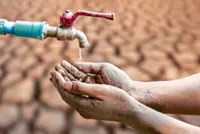
As humans take water out of the system faster than the hydrological cycle can replenish it, we are also polluting our water with chemical cocktails that water treatment plants were never designed to handle.
Modern water treatment is built around the contaminants of the mid-twentieth century: sediment, bacteria, and other organic matter that makes water cloudy and unsafe. Add a coagulant, let it settle, run it through sand filters, add chlorine. For most of the 20th century, that was enough.
It is no longer enough.
Consider PFAS (per- and polyfluoroalkyl substances), a class of more than 12,000 synthetic chemicals used since the 1940s in non-stick pans, waterproof jackets, firefighting foam, and food packaging.
Their carbon-fluorine bond is among the strongest ever created, and completely synthetic. They do not break down. Not in soil, not in water, not in the human body, hence the nickname “forever chemicals.”
They are in the drinking water of over 200 million Americans and in the blood of over 97% of the population. The US Environmental Protection Agency’s 2024 limits for two of the most common PFAS compounds are four parts per trillion (ppt). This is the lowest enforceable drinking-water standards the agency has ever set.
For context, four ppt is equivalent to a needle in a haystack the size of a six-storey housing block. And conventional treatment plants cannot remove them at all.
Or consider microplastics. They are in tap water, bottled water, rainwater, Arctic sea ice, and the deepest ocean trenches. Studies in 2024 found them in every single human placenta sampled and in arterial plaques from heart-surgery patients.
The same year, a paper in the New England Journal of Medicine reported that patients with microplastics in their carotid plaques were 4.5 times more likely to suffer a heart attack, stroke, or death over a three-year follow-up period. We are, quite literally, clogging our arteries with the packaging of our consumer society.
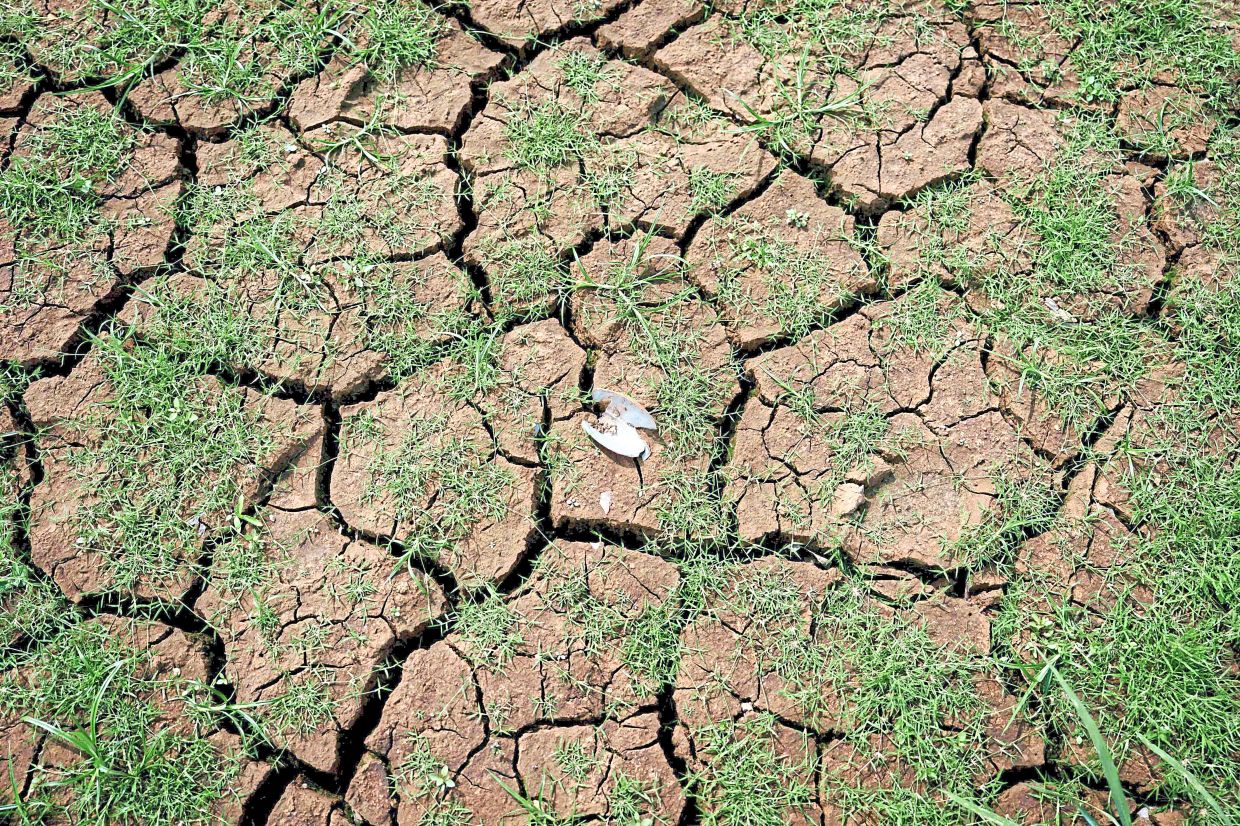
Then there are the old poisons that never went away. Eight hundred million children worldwide have lead blood levels above the safe threshold, mostly from corroded pipes. Arsenic naturally occurs in the groundwater beneath South and Southeast Asia, affects around 60 million people in Bangladesh alone, causing cancers that take decades to develop.
Mercury, cadmium, nitrates from fertiliser runoffs are invisible poisons in drinking water for millions. Pharmaceuticals such as antibiotics, hormones, antidepressants, etc, that our bodies excrete and our treatment plants cannot fully eliminate, are recycled into tap water. They have impacts on human fertility, and then they flow downstream to damage reproductive development in marine life too.
And at the most basic level, the oldest waterborne threat of all remains: pathogens. Two billion people (a quarter of all humans alive today) drink water contaminated with faeces.
Diarrhoeal diseases kill roughly 485,000 people a year, the majority of them children under five. This is not a problem of insufficient technology. This is a problem of insufficient political will.
Our machines are not enough
We do have machines that can clean almost anything. Reverse osmosis membranes, the workhorses of advanced water recycling, push water through pores so fine that they reject more than 99.9% of dissolved contaminants. Facilities in Singapore, in Orange County, California, in Windhoek, Namibia, etc, have been recycling wastewater into drinking water since 1968, and we know they work.
But these machines are expensive and energy-hungry. Producing a cubic metre of recycled water costs up to US$2 (RM8), compared with about 10 to 50 cents for treating water from a clean river.
The energy required for a cubic metre is roughly equivalent to running a refrigerator for a full day. And the process produces a concentrated brine stream – a toxic sludge of everything the membranes rejected – that has to go somewhere. And usually that somewhere is the ocean, where it settles in dense plumes that smother marine life on the seafloor.
Desalination, meanwhile, supplies roughly a percentage of the world’s drinking water – over 95 million cubic metres a day. The technology has been transformative for coastal, water-poor nations.
Cyprus was Europe’s most water-stressed nation and now gets 80% of its water from the Mediterranean. Saudi Arabia, the UAE, and Kuwait would be uninhabitable without it.
But desalination typically consumes three to six kilowatt-hours of energy per cubic metre, produces roughly 1.5 cubic metres of hypersaline brine for every cubic metre of freshwater, and costs more than most farmers can pay.
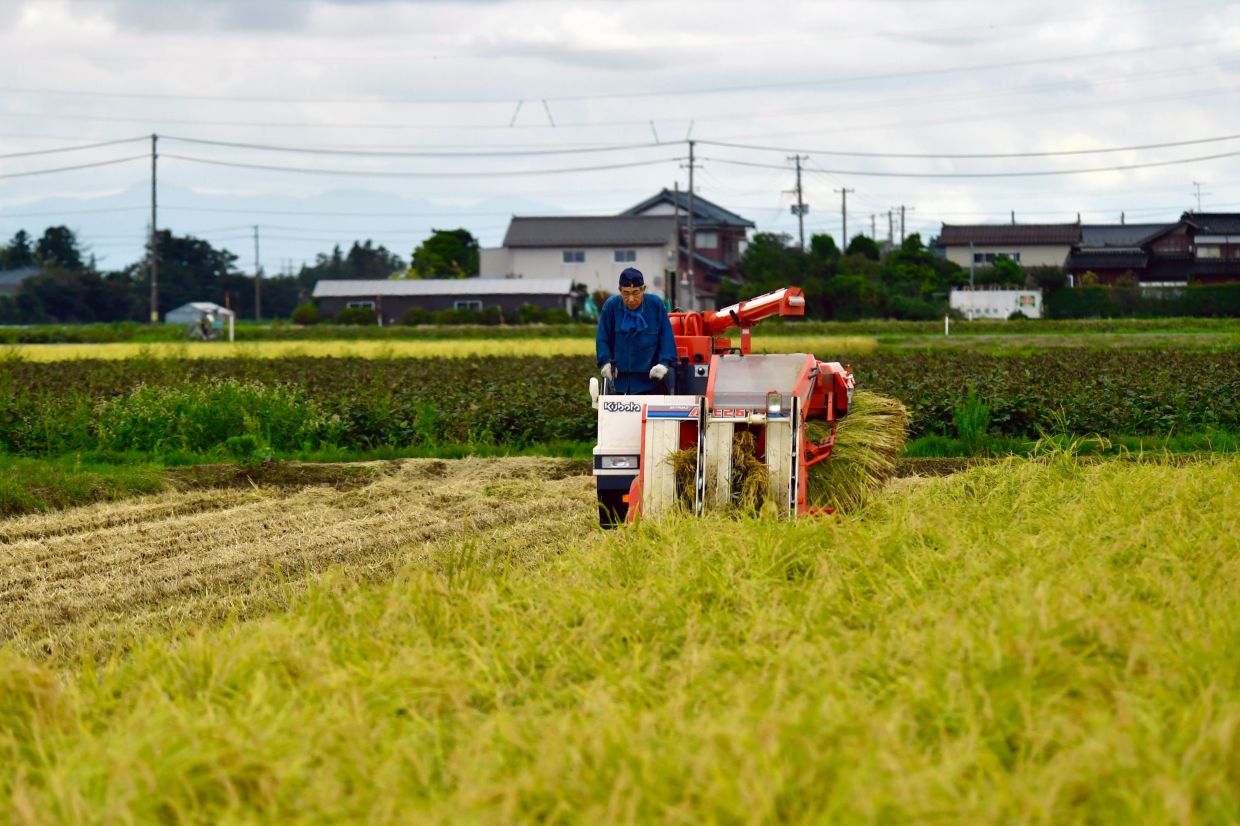
Since farming uses 70% of the world’s water, desalination, for all its value, cannot solve the agricultural problem. You cannot irrigate a field with desalinated seawater at even 50 cents a cubic metre because the economics simply do not work.
So we are left with a gap: between the water we need and the water we have, between the contaminants we produce and the treatments we deploy, between the infrastructure we built and the climate that is arriving. That gap is widening.
Collateral damage, and it’s bad
When water fails an ecosystem, it fails fast.
The Amazon rainforest, which generates a significant fraction of its own rainfall through the moisture its trees release, has now been hit by four “once-in-a- century” droughts since 2005.
Scientists increasingly worry that the southeastern Amazon is approaching a tipping point, a transition from rainforest to savanna that, once crossed, cannot be reversed. The consequences for global climate would cascade.
The boreal forests of Canada, Alaska, and Siberia – the great green belt that rings the Northern Hemisphere – are simultaneously drying, browning, and burning.
Canada’s 2023 wildfire season consumed 18.5 million hectares, an area larger than the whole of Cambodia, and roughly double the previous record. Smoke plumes turned the skies orange over New York, 1,000km away. Siberia’s fires are burning on permafrost, releasing carbon that has been frozen since the Pleistocene.
In California’s Sierra Nevada, an estimated 174 million trees died between 2010 and 2020 – victims of drought compounded by bark beetles, which multiply faster when winters are too warm to kill them. Forests of ponderosa pine that had survived for centuries collapsed within a few dry years.
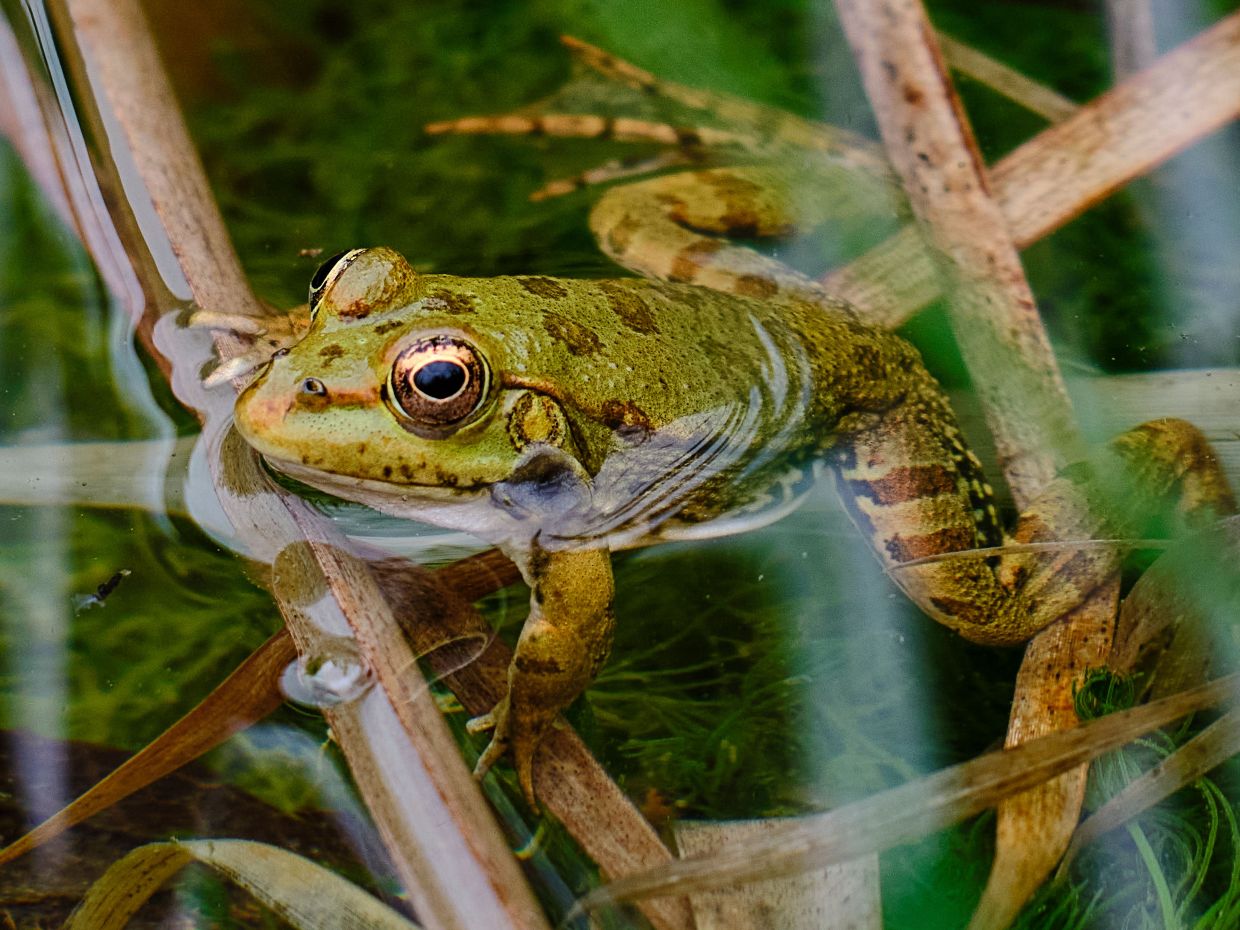
Freshwater wildlife is suffering the worst of any group on Earth. According to the World Wildlife Fund’s Living Planet Index, monitored populations of freshwater vertebrates – fish, amphibians, reptiles, birds, mammals – have declined by an average of 83% since 1970. That is not a mistake. Eighty-three percent.
Amphibians, exquisitely sensitive to water quality, are the most threatened vertebrate class: 41% of their species face extinction, not just decline.
Migratory fish – salmon, sturgeon, eels – have collapsed by 76% globally, and by 93% in Europe; their routes hampered by dried or polluted riverways, or severed by dams.
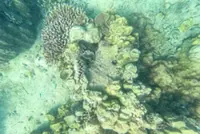
Coral reefs, the rainforests of the sea, have now experienced four global mass bleaching events since 1998. The Great Barrier Reef alone has bleached six times.
Bleaching is what happens when water temperatures rise enough that the corals expel the symbiotic algae that feed them, turning bone-white as they starve. If temperatures drop quickly enough, they can recover. Increasingly, they do not.
For context, reefs support roughly a quarter of all marine species and provide food and coastal protection to about a billion people. A superheated ocean puts all of that at risk.
Forced to move
And where ecosystems collapse, people move.
The World Bank projects that climate change, driven substantially by water stress and agricultural failure, could force 216 million people to migrate within their own countries by 2050. Sub-Saharan Africa alone could see 86 million internal migrants, South Asia 40 million.
This is not a distant forecast; it is a statistical extrapolation from trends already underway. The Internal Displacement Monitoring Centre has recorded an annual average of 21.5 million people displaced by weather-related disasters over the past fifteen years. Floods displaced 19.2 million people in 2022 alone.
Cross-border tensions are also rising as water becomes an issue of national security. Egypt depends on the Nile for 90% of its freshwater, and Ethiopia’s new dam on the Blue Nile has created an existential dispute that diplomacy has not resolved. The Indus Waters Treaty between India and Pakistan, one of the few agreements between the two countries which has survived multiple wars, is now strained by declining Himalayan glaciers. 153 countries share transboundary river basins. 592 aquifers cross international borders and almost none have binding management agreements.
The UN recently published a sobering 70-page study called “Global Water Bankruptcy”, about the global use of fresh water. It states that humans are taking out water from rivers, lakes and the ground faster than it can be renewed or recycled. In money terms, it is like spending our savings faster than our earnings.
And it is not a warning about some future calamity, but explicitly in its own words, “a declaration that the world is already living beyond its hydrological means and that many human–water systems are operating in a state of water bankruptcy.”
The next part will offer some cautious hopes and plausible, existing solutions.
The views expressed here are entirely the author’s own.