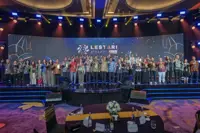
Organised by KG Media, the Lestari Awards recognise sustainability initiatives by businesses in Indonesia, from large enterprises to SMEs. Now in their third year, the awards span 14 categories covering environmental, social and broader sustainability efforts.
Here, members of the judging panel reflect on this year’s entries and the approaches to sustainability emerging across Indonesia.
Title: Mainstreaming sustainability: Indonesia's new direction for green innovation
THE sustainability movement in Indonesia has moved beyond the phase of being mere jargon or rhetoric on paper. The Lestari Award 2026 serves as tangible proof of how corporations and communities are starting to integrate sustainability principles into the very heart of their operations. In the midst of this wave of change, Satrio Dwi Prakoso, one of the judges for the Lestari Award 2026, shared his reflections on the new direction of green innovation in the country.
From charity to core strategy
When evaluating 43 submissions in the Large Enterprise category for environmental issues, Satrio observed a crucial paradigm shift.
Sustainability is no longer viewed merely as fulfilling corporate social responsibility (CSR) obligations, but has instead shifted to become an integral part of long-term business strategy.
Themes such as the circular economy, sustainable ecosystems and waste management no longer stand in isolation; rather, they are tightly interwoven with economic and social value.
“Sustainability is starting to become part of business strategy, not just a CSR activity. This is evident from the sheer number of innovations directly linked to company operational processes as well as community empowerment,” expressed Satrio.
An interesting aspect highlighted by Satrio is how the most transformative solutions often originate not from complex laboratories, but from simple everyday problems.
Programmes such as PepsiCo Sustainable Agriculture and Nathabumi demonstrate circular economy integration applied directly to core business processes, rather than functioning merely as end-of-pipe waste management at the final stage of the production chain.
“The best innovations actually often stem from simple, everyday problems. The solutions are not always complex, but their impact can be huge,” he emphasised.
The major challenge
Although many participants are beginning to confidently present measurable impact metrics, this progress is not without its challenges.
Satrio stressed that the greatest obstacle for innovators today is no longer a lack of ideas, but rather the readiness of business models and access to a supporting ecosystem that can help them scale up.
“The biggest challenge now is no longer about finding ideas. What is needed is more access to funding, investors and markets so that these innovations can expand further and endure over the long term,” Satrio explained.
Without appropriate funding schemes, investor networks and market penetration, great innovations risk stalling at the pilot project stage.
The key to long-term resilience lies in the ability to marry environmental impact with self-sustaining economic schemes.
The diversity of participants involved sends a strong signal that this movement is no longer exclusive to a handful of entities, but has become a mainstream force across various layers of industry and society.
“From large corporations to community-based initiatives, everyone shows that the sustainability movement in Indonesia is maturing and increasingly becoming part of the mainstream,” Satrio concluded.
Satrio Dwi Prakoso
Chairman of Indonesian Society of Sustainability Professionals (IS2P),
Director and principal consultant of Sustainahaus
Title: Harmonising technology and humanity for true sustainability
AMIDST the rapid tide of modernisation and the onslaught of technology, the sustainability movement frequently gets trapped in cold technical solutions. However, the Lestari Award 2026 highlighted a different perspective.
For judge Ratna Hartien, the true measure of sustainability lies in an innovation’s ability to address the human dimension and nurture the surrounding social ecosystem.
Balancing two core pillars
Upon examining the array of participants, particularly in the Small Enterprise category, Ratna identified a compelling common thread.
The success of the top participants was not driven by technological dominance alone or isolated community management, but by successfully striking a balance between the two.
Technology serves to empower, while human beings are the driving force behind that change. “No participant won simply by managing technology or human capital alone. Both must remain present and balanced,” Ratna asserted.
Driving multiplier effects at the grassroots
Trends emerging this year show rapid advancement in crucial issues like circular economy, waste management and sustainable agriculture.
Interestingly, participants did not just focus on the impact of their environmental improvements, but also designed solutions capable of unlocking tangible economic opportunities for local communities. The solutions offered are increasingly holistic and human-centred.
“Many solutions attempted to answer more than one challenge at once – for instance, creating environmental impact while simultaneously opening up economic opportunities for the community. Humans are also placed at the centre of the proposed solutions, rather than it strictly being about the technology,” she shared.
Overall, Ratna noted a significant improvement in the quality of innovation compared to the early days.
Participants are now increasingly adept at translating environmental stewardship into actionable schemes backed by sound business viability and sustainability potential.
“The quality of innovation this year is quite promising. We are seeing more participants who not only care about environmental issues but are also capable of translating that concern into more mature solutions. I am confident we can shine at the regional level!” Ratna stated optimistically.
Optimism of young innovators
The passion and determination of young innovators in putting their ideas into action give Ratna confidence in the future of the country’s green ecosystem.
Sustainability is no longer mere classroom theory, but now entails the courage to experiment and collaborate on the ground.
“What inspires me most is seeing an increasing number of young innovators who understand that sustainability is not merely an environmental issue, but also about creating solutions that are economically viable, socially impactful and capable of continued growth,” she concluded.
Ratna Hartien
Senior advisory lead
Angin Dampak Jaya
Title: Defining credible impact in sustainability innovation
CORPORATE enthusiasm for adopting the sustainability agenda deserves appreciation. However, amidst the surge of green campaigns, it is important to clearly distinguish between genuine innovation and what is simply routine operations.
For judge Angga P. Putra, the event serves as an important opportunity to reflect on how effectively the ideas presented can deliver meaningful innovation.
In evaluating the range of submitted initiatives, Angga observed that the majority of proposals centred on community collaboration programmes.
While their intent and direction are positive, he highlighted a common limitation encountered on the ground, particularly when it comes to the economic viability of programmes after they are handed over to the community.
“Innovations co-managed with communities are often limited to production, without a business plan to support them. Ideally, innovation should be developed alongside a business plan, and in this regard, communities do not yet have sufficient capabilities,” Angga said.
Defining meaningful impact
One of the most critical findings during the judging process was the tendency of participants to claim significant impact too quickly, even though their programmes had only been running for a matter of months.
Angga stressed the importance of methodological honesty and clearly distinguishing between initial results and long-term impact.
“Innovation should not always be associated with impact, because impact can only be established after an innovation has been sustained over a certain period. If it has only been running for a few months or less than a year, proving its impact is quite difficult,” he emphasised.
Looking ahead, Angga urged companies to move beyond treating sustainability programmes as simply a means of fulfilling compliance requirements.
There needs to be a deeper, shared understanding of the essence of innovation itself, as well as how ESG considerations can be integrated with tangible business value.
“In general, participants are already carrying out projects geared towards innovation, but there is still limited understanding of what innovation itself entails. As most participants are companies, ESG considerations should ideally be one of the key components linked to innovation,” he remarked.
These critical and evaluative observations are not meant to discourage progress, but to serve as a catalyst for Indonesia’s green ecosystem to become more mature and grounded in integrity.
With clear timeline indicators and robust verification tools, every step towards sustainability can be properly accounted for.
“Moving forward, there need to be clear timeline indicators if impact is what is being measured. If the focus is on implementation and results, a timeframe of less than a year can be used as a reference,” Angga concluded.
Angga P. Putra
Acting Climate and Market Transformation Programme director
WWF Indonesia