
AIR travel is a carbon-intensive form of transport.
A round trip from Kuala Lumpur to Los Angeles, with a stopover in Dubai, generates 2,404 kg of carbon dioxide equivalent (CO2e), which is about 80% of the emissions from electricity usage for a three-person household in Selangor for the whole year.
Globally, domestic and international air travel account for about 2.4% of anthropogenic emissions of CO2, according to the Intergovernmental Panel on Climate Change.
Given its reliance on fossil fuel, the aviation sector is hard to decarbonise.
Despite this, it has committed to net zero carbon emissions by 2050. Airlines – including Malaysia Airlines and AirAsia – are adopting newer technologies and renewing fleets, besides looking into scaling up sustainable aviation fuel (SAF) and purchasing carbon credits as right to emit.
Costly to operate, the aviation industry is also highly exposed to operational risks such as fuel price volatility and regulatory changes. External shocks, including the Covid-19 pandemic and the ongoing conflicts in the Middle East, bring about significant uncertainty, making decarbonisation even more challenging.
In an earlir interview with StarESG, Malaysia Aviation Group (MAG) group chief sustainability officer Philip See shared that aviation decarbonisation remains constrained by the limited availability of SAF and Carbon Offsetting and Reduction Scheme for International Aviation (Corsia) eligible carbon credits, as well as associated economic considerations.

“Supply concentration, tightening eligibility criteria and implementation challenges continue to elevate compliance risk and cost uncertainty, underscoring the complexity of achieving decarbonisation targets in practice,” he said.
Corsia offsets
In October 2022, the International Civil Aviation Organisation (ICAO) set a goal to cap international aviation emissions at 85% of 2019 levels from 2024 to 2035.
The annual sector’s growth factor is published by ICAO, which will be used by each country in calculating the amount of CO2 emissions required to be offset.
For the first time since the adoption of Corsia in 2016, the 2024 emissions officially exceeded the baseline by about 15.4%, triggering compliance obligations for airlines around the world.
Now in its voluntary phase, Corsia will become mandatory for the 130 participating states – including Malaysia – beginning 2027. Certain least-developed, landlocked and small island developing countries are exempted.
Airlines can compensate for their emissions with Corsia Eligible Emissions Units (EEUs) from emissions unit programmes approved by its council. The International Air Transport Association (IATA) forecasts that the global demand for EEUs in Corsia’s first phase (2024-2026) to be between 146 million and 236 million.
MAG has so far procured approximately 10,000 EEUs through the IATA procurement programme to build internal capability and practical experience in carbon trading.

The immediate conundrum, said AirAsia chief sustainability officer Yap Mun Ching, is that there are no homegrown EEUs in Malaysia. Yap chairs Malaysia’s Corsia taskforce and is a technical expert of the ICAO Committee for Aviation Environmental Protection’s working group on Corsia.
“For a company the size of AirAsia, we’re talking about US$40mil (RM158.6mil) to US$50mil (RM198.2mil). It’s a net outflow of climate finance if we cannot produce EEUs here,” she said.
A portion of the cost would go to the government, which can then utilise the new revenue to accelerate the growth of the carbon market ahead of the implementation of the Emissions Trading Scheme, Yap added.
She said airlines prioritising domestic credits, rather than being overly dependent on a single type of credit from one region, should be the approach in climate action.
“The carbon credits needed for Corsia are high-end, which not many companies in the domestic market will buy.
“If we can work out a strategy to offer these high integrity credits to airlines first, it can help balance the needs of the industry. After all, the financial health of aviation is essential to many parts of the economy, including tourism,” Yap said.
Reduction or greenwashing
Corsia has faced criticisms for potentially constituting greenwashing, as it allows airlines to purchase carbon credits rather than reducing emissions.
Responding to this, Yap stressed that carbon credits – one of the four avenues to decarbonise – are a legitimate mechanism for hard-to-abate sectors to decarbonise, and carbon funds from the sale help many industries that have more affordable and accessible technologies to do so progressively.
“This mechanism is especially important to generate international climate financing for developing countries such as Malaysia that are just embarking on their climate transitions,” she said.
The anti-carbon credit lobby, Yap observed, came from two directions.
One is a valid concern over the quality and integrity of the credits, which can be addressed by tightening standards and criteria – an approach already taken by Corsia. Corsia credits are regarded as high quality, she added.
The second concern reflected a broader debate around the allocation of responsibility for international climate financing, Yap noted.
“Without carbon credits, all developing countries will have to rely on their own financing to decarbonise, regardless of their historical contribution to carbon emissions.
“This aims at overturning developing countries’ attempt to secure climate financing from developed countries that have contributed much, much more to historical emissions. This is central to the ongoing negotiations at the United Nations Framework Convention on Climate Change (UNFCCC) Conference of the Parties meetings.”
Carbon fee
While airlines want to make sure air travel is accessible to the average person, low airfares are not consistent with decarbonisation, Yap said.
A carbon fee will be introduced this year, she added.
“If we want to talk about climate actions, we have to accept that there is a cost, and this is not a full cost pass-on,” she said.
Airlines are already investing in fleet upgrade and other technologies, and the carbon fee represents a form of shared responsibility between airlines and passengers.
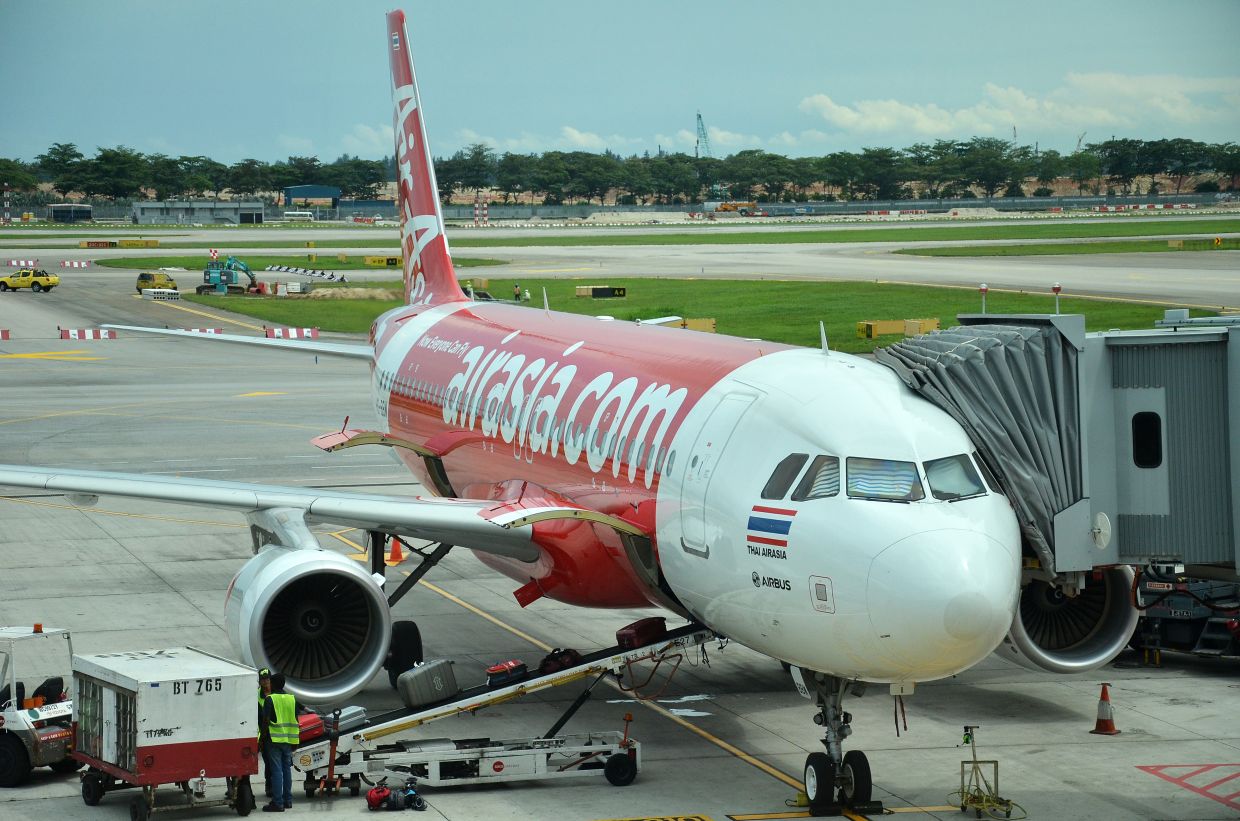
Yap said AirAsia will decide when to implement the carbon fee after sorting out Capital A’s PN17 issue.
The amount will not be “shocking” or take away the joy of travelling, she stressed, adding that it was not introduced to burden the consumers.
“We are not a monopoly market in Malaysia, and there’s no reason for us to overcharge.
“The other thing that we are also doing to make sure that the carbon fee is minimal to our passengers is that we are aiming to introduce it as broadly as possible,” Yap said.
In AirAsia’s latest episode of Positive Altitude podcast, Yap explained that the proposed carbon fee will be calculated based on a flight’s block time (from when an aircraft starts moving for departure to when it stops at the arrival gate), segmented into 30-minute intervals.
Geopolitical conflicts
With drones and missiles dominating the skies, geopolitical conflicts such as the ongoing Iran war can negatively affect commercial aviation.
These conflicts and the resulting airspace closures have a direct impact on aviation efficiency and emissions, MAG said.
When airspace is restricted, airlines are required to operate longer alternative routes, leading to increased fuel burn per flight, higher emissions intensity, less optimal flight paths and additional fuel uplift requirements, it added.
“Collectively, these factors reduce operational efficiency and increase overall emissions, despite ongoing decarbonisation efforts.”
Geopolitical instability also often contributes to higher global fuel prices, which in turn increases the cost of SAF, MAG noted.
This creates a dual challenge – higher baseline emissions due to longer routing and increased financial barriers to SAF adoption.
“While these factors are externally driven and largely unavoidable, MAG continues to mitigate its impact through operational efficiencies such as Direct Track (DCT) and ongoing fleet modernisation with more fuel-efficient aircraft.
“These measures ensure that, even in a volatile operating environment, MAG remains on track with its broader decarbonisation strategy.”