Employee safety and benefits, partner suppliers and future investments: When it comes to these key operational areas, Philippine companies are now influenced by expert insights provided by sustainability reports—documents that, once upon a time, were treated as simple paperwork exercises.
It is a change that is visible across industries.
Water utilities, for one, are issuing blue bonds to finance infrastructure, while property developers are sourcing steel that cuts emissions by 84%.
Telecommunications companies are blocking millions of websites linked to child exploitation, and conglomerates are extending paternity leave to 30 days—more than four times the legal requirement.
An even greater influence on these changes is regulatory pressure. The Securities and Exchange Commission (SEC) is requiring sustainability-related financial information and climate-related disclosures aligned with international standards, while the Department of Environment and Natural Resources (DENR) is enforcing escalating plastic waste recovery targets.
In terms of workplace safety, the Department of Labour and Employment (DOLE) has implemented stringent rules, with daily penalties reaching 100,000 pesos (RM6,970) for violations.
While the SEC postponed implementation of its new Sustainability Reporting Form initially planned for 2025, continuing to use existing sustainability reporting guidelines under Memorandum Circular No. 4, Series of 2019 for fiscal year 2024, the commission approved last July the adoption of Philippine Financial Reporting Standards S1 and S2, with phased implementation starting in 2026.
The tiered approach requires companies with market capitalisation over 50bil pesos (RM3.5bil)—Tier 1 companies—to report starting 2027 for fiscal year 2026. Tier 2 companies with market cap between 3bil pesos (RM209mil) and 50 billion pesos must report in 2028. Tier 3 companies with market cap under 3bil pesos will follow later.
The standards require internationally comparable climate-related disclosures, including mandatory limited assurance for Scope 1 and Scope 2 greenhouse gas emissions.
The SEC has developed a digital platform with Komunidad (komunidad.global) for ESG management, climate risk assessment, and online training. It also introduced the Philippine Green Equity Label and Memorandum Circular No. 13, Series of 2025, promoting sustainable finance and mandating ESG disclosures for listed companies.
The Philippine Sustainability Reporting Committee oversees integration of International Financial Reporting Standards into local practice. Meanwhile, Senate Bill No. 2765 proposes further expansion of mandatory ESG reporting to all SEC-registered corporations with progressive penalties for violations.
Plastic recovery, ‘green finance’
The DENR’s Extended Producer Responsibility (EPR) Act sets escalating recovery targets: 20% in 2023, 40% in 2024, 50% in 2025, 60% in 2026, 70% in 2027, and 80% by 2028.
As of May 2024, 917 companies had registered under the EPR programme—129 large enterprises and 298 micro, small and medium enterprises (MSMEs)—representing a 37% increase from 667 companies in 2023. In 2023 alone, participating companies collected close to 570 million kilogrammes of plastic packaging, achieving the 20% recovery target.
Department Administrative Order 2024-04 provides compliance reporting and audit guidelines. Companies must submit an annual EPR Compliance Audit Report, including an EPR Compliance Report and certification by an independent third-party auditor. Supporting documents include schedules of plastic packaging placed on the market and recovery activities, plus a sworn statement from the company president or authorised representative.
Penalties are substantial: First offense violations carry fines of 5mil pesos (RM349,000) to 10mil pesos (RM697,000); second offenses range from 10mil pesos to 15mil pesos (RM1mil); and third offenses reach 15mil pesos to 20mil pesos (RM1.4mil).
The law applies to companies with assets over 100mil pesos (RM7mil) and provides fiscal incentives including tax benefits and deductibility of EPR expenses.
Focusing on the financial sector, the central bank of the Philippines, Bangko Sentral ng Pilipinas (BSP), has embedded sustainability into regulation through its Sustainable Finance Taxonomy Guidelines, approved in February 2024.
The guidelines, incorporated into the Manual of Regulations for Banks Section 153, help banks identify environmentally and socially sustainable activities.
After an observation period through the end of 2024, data collection began this year. As part of its sustainability efforts, the BSP offers concrete incentives for green finance, such as a 15% top-up for banks on single borrower limits for green projects. It has also reduced reserve requirements for green bonds from 3% to 0%.
BSP Governor Eli Remolona has emphasised an iterative approach, calibrating guidelines to Philippine economic conditions. The framework supports the Philippine Sustainable Finance Roadmap and 11-point Sustainable Central Banking Strategy.
The Financial Sector Forum, composed of the BSP, SEC and Insurance Commission, collaborated on developing the taxonomy to ensure consistency across financial regulation.
Employee rights, benefits
DOLE, for its part, took a harder line on workplace safety with Department Order No. 252-25, which took effect on May 16. The order revised implementing rules and regulations of Republic Act (RA) 11058, the Occupational Safety and Health Standards law, imposing progressive fines and daily penalties of 100,000 pesos for willful non-compliance.
Companies must now submit annual medical reports, work accident/illness exposure data and other compliance documents through online portals.
RA 11058 expanded worker protections, granting employees the right to know about workplace hazards, refuse unsafe work and report accidents without fear of retaliation. Mandatory safety drills and health committees are now required across workplaces.
The government broadened its occupational safety approach in October 2024 with the National Occupational Safety and Health Strategy 2024-2028, extending coverage beyond formal employment to include informal sectors. The strategy incorporates pandemic response protocols and climate change considerations into workplace safety planning.
The Civil Service Commission, Department of Health and DOLE had earlier issued Joint Memorandum Circular No. 1, Series of 2020, establishing occupational safety standards specifically for government workplaces.
In response, Philippine corporations are not just appointing compliance officers and publishing sustainability reports, but are embedding ESG principles into business strategy, capital allocation, and operations.
Some are moving faster than regulations require, adopting international frameworks years before deadlines. Others are using sustainability initiatives to differentiate themselves in competitive markets or unlock new financing mechanisms.
The corporate examples that follow demonstrate how this transformation is playing out across sectors—from conglomerates and utilities to telecommunications and infrastructure operators.
Early disclosure pioneer
SM Investments Corporation, a leader in the country’s retail, property and banking sectors, takes pride in its publication of sustainability reports long before it became mandatory.
The company has aligned its reporting framework with IFRS S1 and S2, ensuring communication of both financial performance and broader impact, said Frederic DyBuncio, SM Investments Corp president and CEO.
In partnership with the DENR, SM invests in renewable energy generation via the Philippine Geothermal Production Company and circular waste management through SM GUUN Environmental Company, Inc., a joint venture with Japanese environmental solutions company GUUN.
SM allocates 10% of SM Prime’s capital expenditure to sustainable and resilient designs, with 23 malls equipped with water catchment facilities. The company also designs its properties to serve as safe spaces during natural calamities.
BDO and China Bank have provided 72 billion pesos (RM5bil) in MSME loans, while SM offers affordable leasing, business mentoring, and financial inclusion programmes. The company has granted over 16,000 scholarships, renovated 415 health centers, built 2,850 schools, and trained 49,000 farmers.
With over 130,000 employees — 63% women — SM has achieved 58% women representation in executive roles. The company has received 16 consecutive Platinum Awards for ESG excellence from The Asset.
Air quality benchmarks
Manila Electric Company (Meralco), which adopted the International Integrated Reporting Framework this year, began reporting in accordance with IFRS S2 Climate-related Disclosures ahead of regulatory deadlines.
It is now conducting a comprehensive Climate Risk Assessment to quantify operational and financial impacts of climate-related risks, supporting SEC sustainability guidelines compliance.
Meralco PowerGen Corporation operates ISO 14001:2015-certified thermal plants that meet air quality benchmarks, while the distribution utility has installed advanced sewage treatment systems in key facilities. The company adheres to DENR standards through responsible facility operations and supports the Department of Energy’s Renewable Portfolio Standards and Coal Moratorium.
Meralco maintains strict compliance with DOLE regulations and invests in occupational health and safety programs. The company’s governance includes a Sustainability Office established in 2019, led by a chief sustainability officer and guided by a board-level sustainability committee chaired by Manuel V. Pangilinan.
Its Long-term Sustainability Strategy aims for coal-free operations by 2050, targeting a 9% reduction in Scope 1 emissions and 14% reduction in total emissions versus projected 2030 levels.
Through its Race to Zero Waste programme, Meralco achieved a 95% waste diversion rate in 2024, up from 17% in 2019. Its ban on single-use plastics, now in its sixth year, has reduced SUPs in the waste stream by 57%.
‘Industry Mover’
Telecommunications provider PLDT published its first sustainability report in 2016 – also ahead of the SEC requirement in 2019, and reports using international frameworks.
As a publicly listed company on both the Philippine Stock Exchange and New York Stock Exchange, PLDT upholds standards covering financial, operating and ESG performance through annual and sustainability reports, plus periodic reports on human rights, gender equality, and materiality and impact assessment.
It is the only Philippine company included in the S&P Global Sustainability Yearbook 2025 and was named “Industry Mover” in the global telecommunications industry. The company is an active participant of the United Nations Global Compact.
PLDT identifies sustainability as a key driver of performance and business strategy, integrating it into employee key performance indicators and Board oversight through its Governance, Nomination, and Sustainability Committee.
The company’s sustainability roadmap focuses on four pillars — Connection, Conservation, Concern, and Commitment — underpinned by 12 material topics.
The company follows a decarbonisation roadmap targeting 40% reduction of Scope 1 and Scope 2 greenhouse gas emissions by 2030 from its 2019 baseline.
As of end-June, PLDT’s fiber footprint reaches 1.2 million cable kilometers, reaching 19 million homes in 74%of the country’s towns and 91% of provinces.
PLDT’s “Be Kind. Recycle.” programme has activated more than 200 e-waste collection sites nationwide.
From July 2023 to end October 2025, the company collected approximately 29.3 metric tonnes of e-waste that were then turned over to DENR-accredited facilities for proper treatment and disposal, avoiding approximately 11.9 metric tonnes of carbon — equivalent to carbon absorbed by 545 mature trees over 10 years.
Its Child Protection Platform Solution has blocked more than 2 million URLs and online content linked to online sexual abuse and exploitation of children as of end September 2025, demonstrating compliance with Republic Act 11930.
The company also partners with Madiskarte Moms PH, an online community enabling women entrepreneurs to develop digital skills for livelihood opportunities.
Net zero by 2050
Another corporation that is staying ahead of mandatory requirements is Ayala Corporation, which has adopted multiple reporting frameworks — Global Reporting Initiative, Integrated Reporting, International Sustainability Standards Board and Sustainability Accounting Standards Board. The conglomerate has set a net-zero greenhouse gas target by 2050.
Ayala Land now sources at least 24% of its steel from SteelAsia’s “green steel” made from recycled rebars and manufactured using renewable energy, achieving 84% lower emissions compared to conventional steel plants.
Globe Telecom operates 24% of its facilities on renewable energy, generating 10% savings. Both companies are the only Philippine publicly listed firms to have net-zero targets validated by the Science-based Targets Initiative.
As of 2024, 56% of the Ayala Group’s electricity comes from renewable energy sources. The group has raised over 365 billion pesos (RM25.4bil) in sustainable financing, including ACEN Renewable Energy Solution’s Energy Transition Mechanism — the world’s first such structure — and AC Health’s Social Bond.
Every Ayala group company maintains a dedicated Sustainability Committee at the board level.
The company recently approved an Environmental Policy alongside a Human Rights Policy and a group-wide Leadership Commitment to Diversity, Equity and Inclusion.
In November, Ayala Corporation received a WELL v2 Platinum Certification for its headquarters at Ayala Triangle Gardens Tower 2 — the first such certification for a head office in the Philippines and among the few in South-East Asia.
The company recorded zero work-related fatalities in 2024 while significantly reducing both non-disabling and disabling work-related injuries.
Transport sustainability
Operating major expressways in Luzon and Visayas, the MVP Group’s Metro Pacific Tollways Corporation (MPTC) has installed rooftop solar panels, energy-efficient LED lighting systems and rainwater harvesting facilities across its expressway network.
The Cebu-Cordova Link Expressway features a wastewater treatment facility processing liquid waste prior to discharge into the sea, ensuring compliance with environmental regulations.
Oil interceptors filter petroleum-based substances such as grease and oil from vehicles from stormwater runoff to protect marine ecosystems.
The expressway supports the adjacent mangrove area and the Mangrove Propagation and Information Center in Cordova, Cebu, in partnership with Metro Pacific Investments Corporation (MPIC).
Through collaboration with Maynilad under the Plant for Life programme, MPTC has nurtured 4,000 native trees across 10ha in the Ipo watershed since 2021, contributing to long-term reforestation and water sustainability efforts.
MPTC also invests in programmes that make roads safer and communities stronger through road safety education for school children, driver training programs promoting responsible and safe driving, and infrastructure improvements to minimise road incidents and enhance mobility.
MPIC’s portfolio companies likewise demonstrate sector-specific ESG integration across infrastructure operations.
The Light Rail Manila Corporation (LRMC) operates under MPIC’s Sustainability Framework with a dedicated Sustainability Committee comprising personnel from health, safety, environment, quality, human resources and other departments, with some committee members receiving training on global frameworks.
The company has secured a Power Purchase Agreement for solar panels at its depot with 605 kW total peak capacity from Phase 1 and 2 installations, while trains use regenerative braking energy storage systems to capture and reuse excess energy.
LRMC tracks Scope 1 and Scope 2 emissions monthly.
It has also adopted 500m of Estero de Tripa de Gallina through DENR’s Adopt-An-Estero Program (an anti-poverty project) and has conducted clean-up drives in Metro Manila cities.
The company participates in International Coastal Clean-up and World Ocean Day activities and conducts annual tree and mangrove planting.
LRMC also complies with DOLE Department Order 252-25 on workplace safety and maintains ISO 45001:2018 Occupational Health and Safety Management System certification. Safety standards are embedded in operations, governance, and decision-making, with key safety indicators tracked through operational scorecards.
Its KaligtaSakay Program, now in its third year, promotes safety and disaster preparedness in communities along the LRT-1 route, partnering with seven elementary schools.
The programme teaches students essential safety skills through modules on train safety, proper handwashing, fire safety, electrical safety and basic first aid.
LRMC’s Emergency Response Team was awarded Champion of the 6th Pasay City Fire Olympics 2025, marking its second consecutive win. The company actively participates in the National Simultaneous Earthquake Drill.
Employee safety programs include SabadOSH monthly Saturday safety drills at stations, MESH Training mandatory 8-hour safety and health training for all employees, and monthly occupational health webinars on ergonomics, mental health, stress management and disease prevention.
For employee development, the company offers structured learning programmes including Leadership Empowerment for Achievement Programme, Supervisor Training for Excellence and Performance, and Elev8 Personal Development Series, following the 70-20-10 learning model combining experience, coaching, and formal training.
“We align our operations with global ESG standards and the MVP Group’s call for responsible business,” said lawyer Cynthia Casiño, chief corporate governance and risk officer at Metro Pacific Tollways Corporation (MPTC).
“For us, building better roads means building a better future.”
Blue bond
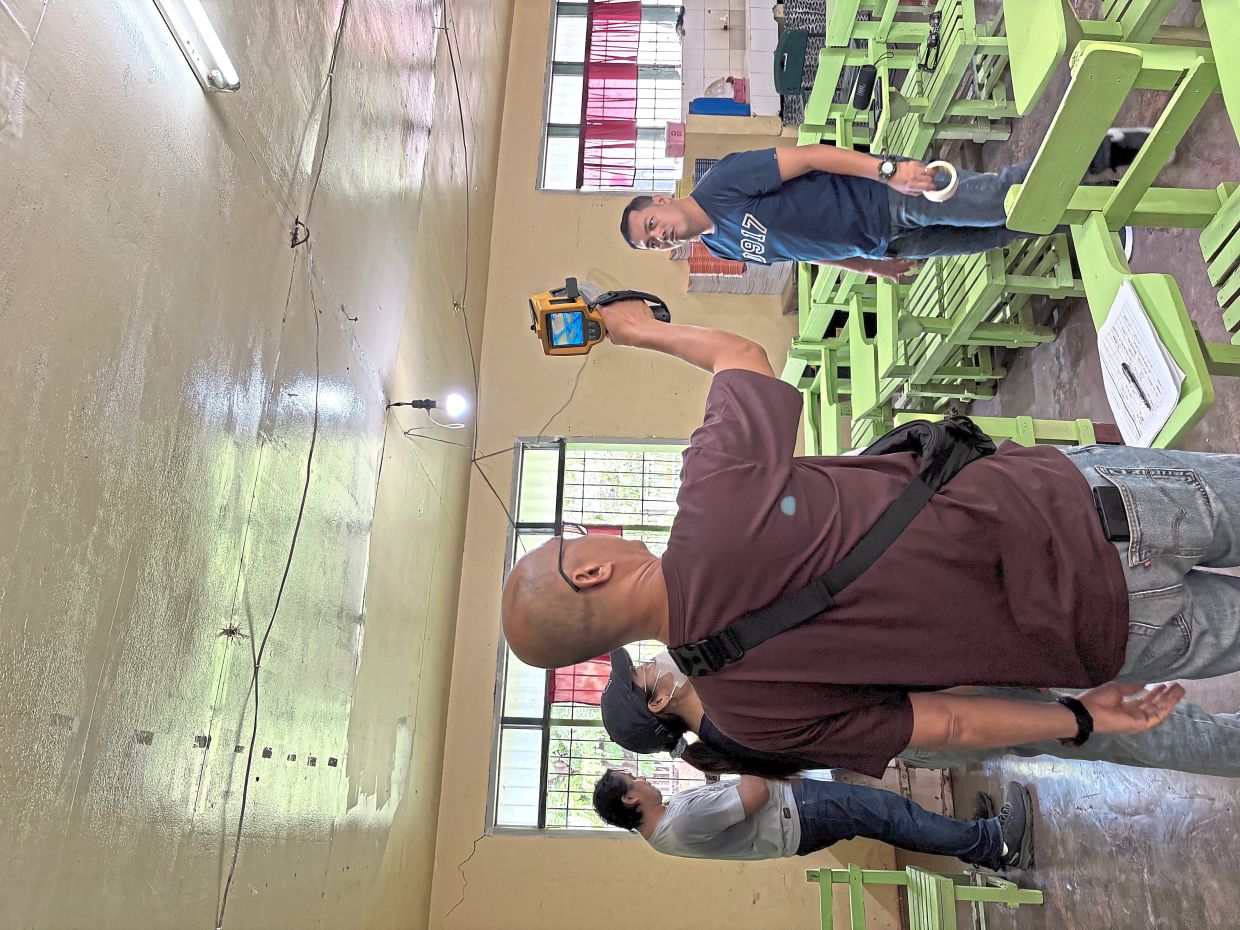
In a milestone for sustainable finance, Maynilad Water Services launched the Philippines’ first publicly issued Blue Bond, raising 15bil pesos (RM1bil) to fund climate-resilient water and wastewater projects.
Targeting climate neutrality by 2037 through its Decarbonisation Roadmap, Maynilad, in 2024, brought water system losses down to 39% from 43% through AI-assisted leak detection, acoustic sensors, and predictive maintenance. By 2030, it aims to reduce losses to 20%.
Maynilad is the first Philippine company to receive the SEC’s Philippine Green Equity Label, affirming adherence to SEC Memorandum Circular No. 13, Series of 2025, which established the Philippine Green Equity Guidelines.
The company’s governance structure includes a sustainability council and a chief sustainability officer.
What’s next?
As regulatory requirements tighten, Philippine corporations are conducting intensive and comprehensive assessments in preparation for IFRS S2 compliance starting in 2026.
The SEC’s digital platform with Komunidad will centralise ESG management and climate risk assessment, while the Philippine Sustainability Reporting Committee continues developing guidance for companies navigating the transition to international standards.
The changes represent more than regulatory compliance.
They signal a transformation in how Philippine businesses create value, with ESG principles becoming integral to competitiveness and stakeholder trust.