
As the world navigates the triple planetary crisis—climate change, biodiversity loss, and pollution—the way communities are built must evolve. With growing populations and changing lifestyles, the demand for housing and infrastructure is inevitable.
However, real estate and development must be approached with intention, balancing progress with responsibility towards the natural world. This challenge places developers at the forefront of transformation, with the power to shape not just homes, but environments where both people and nature can thrive.
Sime Darby Property Bhd (SDP) embraces this responsibility. As one of Malaysia’s leading developers, SDP is committed to building places where people and nature can flourish together.
It does not view development and biodiversity as opposing forces, but rather sees them as partners in creating healthier, more liveable townships.
With over 100,000 homes delivered across 26 townships, SDP is guided by its sustainability policy in which zero rainforest removal is emphasised.
Its developments focus on regenerating these landscapes, transforming them into biodiverse, nature-rich environments over time. Studies have shown that tree canopies can reduce urban temperatures, green spaces can boost mental and physical health, and children thrive in nature-rich environments.
Thus, SDP’s approach—which is rooted in national frameworks like the National Biodiversity Policy—reflects a deep belief: that building homes for people also means caring for the planet. Sustainability, for SDP, is a lasting journey towards resilient, inclusive communities that stand the test of time.
Facilitating climate resilience
The practice of weaving biodiversity into urban planning offers a wide range of benefits, from ecological to economic and social. It’s about more than just adding greenery; it’s a strategic approach to building better communities.
Ecologically, this integration protects natural habitats, restores degraded land, and creates vital ecological corridors that connect ecosystems. The result is a more balanced and healthier environment for all. Economically, nature-positive developments are a strategic advantage. Thoughtfully planned green spaces enhance property values, reduce long-term infrastructure costs through natural flood mitigation, and even create opportunities for eco-tourism.
Socially, the benefits are equally significant. Access to green spaces strengthens community ties, improves well-being, and fosters a sense of belonging. Features like riparian buffers and wetlands help manage water flow and reduce the risk of urban flooding, while native tree canopies and other green infrastructure cool our cities and combat the urban heat island effect.
Furthermore, pollinator-friendly landscapes play a crucial role in food security. SDP has been a leader in this field for over a decade, championing biodiversity in its townships long before it was a widespread industry practice.
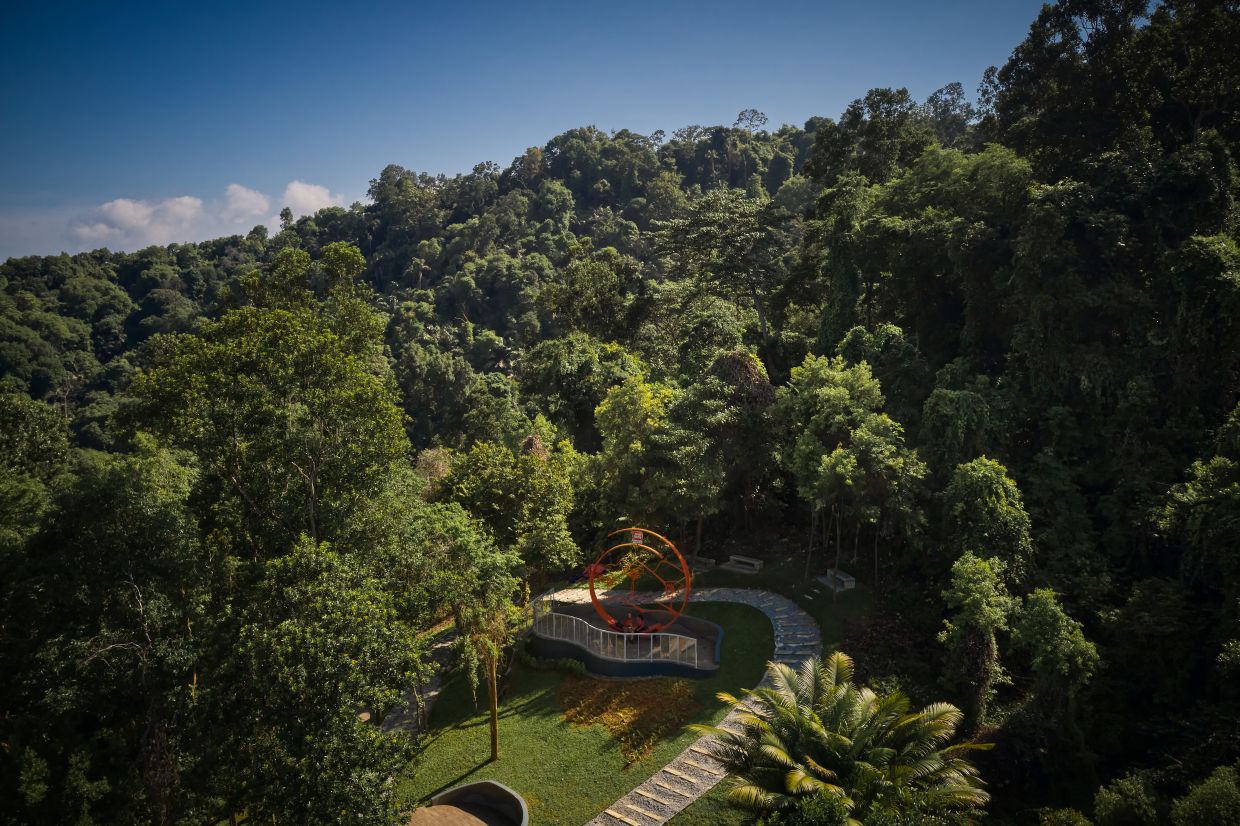
The company’s developments intentionally include urban forests, wetlands, and multifunctional green spaces that act as natural carbon sinks, and water sponges, actively helping to combat climate change while simultaneously improving the daily lives of residents.
Reaching for the ARC
For SDP, its commitment to nature isn’t just talk. It’s guided by a clear strategy: the Urban Biodiversity Framework and Guideline and the ARC Framework—Avoid, Restore, Conserve.
These principles are used at every stage of development, ensuring that nature is a central part of the plan.
This isn’t a one-size-fits-all approach. The framework is flexible and adapted to the unique environment of each township, with impressive results. For instance, in Bandar Bukit Raja, the townpark was designed to mimic a natural wetland, a clever solution that helps with water retention and supports local wildlife.
At KL East Park, the company carefully developed the area while respecting the sensitive ecology of Bukit Tabur and the Klang Quartz Ridge, creating a continuous green corridor with the surrounding forests. Meanwhile, at Hamilton Biodiversity Park and Nilai Impian Wetland Park, large-scale regeneration projects have turned these spaces into thriving hubs for biodiversity and nature-themed recreation, proving that green infrastructure can benefit both the environment and the community.
SDP’s goal of sustainable development is to meet present needs without compromising the ability of future generations to meet their own.
This involves making conscious decisions in all areas of operation and striving to create developments that can grow and thrive over time.
The company believes that successful sustainable practices in one area can serve as a model for broader implementation, helping to ensure that efforts today will continue to enhance quality of life well into the future.
Power in shared purpose
SDP’s commitment to green initiatives goes beyond its own projects. The company actively collaborates with external partners to support ongoing regeneration and conservation efforts, as well as to implement community education programmes.
One such partnership is the Wanderlab Explorer Programme, which aims to raise awareness and foster resilient communities. Other key initiatives include the Tropical Rainforest Conservation and Research Centre (TRCRC), Yayasan Sime Darby (YSD), Elmina Rainforest Knowledge Centre (ERKC), Elmina Urban Biodiversity Centre (EUBC), and Elmina Business Park (EBP).
Through initiatives like these, SDP is working to create durable, biodiverse urban environments while minimising disruption to critical habitats. Ultimately, by making biodiversity a priority in its urban planning, SDP is doing more than just building cities—it’s forging a path for people and nature to coexist.
This approach ensures future generations inherit a world that is both sustainable and climate-resilient. Building nature-positive communities requires collaboration with local authorities, partners.
Together, SDP aims to amplify its impact and become a stronger force for good. Through cooperation, ambition is turned into action, and challenges into lasting sustainable change.