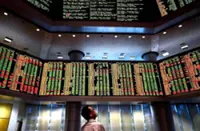
PETALING JAYA: Malaysia’s equity market is expected to remain resilient despite heightened geopolitical tensions in the Middle East.
However, investors will have to contend with greater volatility as inflation risks, currency movements and global monetary policy shape sentiment.
The outlook suggests that while fundamentals remain supportive, external uncertainties could continue to dictate the market’s short-term direction.
Despite the ongoing risk, MBSB Research maintained its year-end target for the FBM KLCI at 1,770, while Apex Securities Research retained its target of 1,787.
According to MBSB Research, financial markets are reacting not only to the possibility of an escalation in the US-Iran conflict, but also to the knock-on effects on global trade and inflation.
“Markets are pricing bottlenecks, not only explosions,” it said, adding that markets do not need “a full closure of the Strait of Hormuz or Bab el-Mandeb before repricing risk”.
The brokerage noted that slower maritime traffic alone could unsettle investors, as crude oil, liquefied natural gas, freight rates, insurance costs and delivery schedules are all forward-looking indicators.
“Oil above US$100 per barrel changes the market conversation,” it said, cautioning that a sustained rise in crude prices above that level would fuel inflation concerns, complicate the US Federal Reserve’s (Fed) interest rate trajectory, and squeeze corporate margins as well as consumer spending.
It added that the broader concern lies in higher costs filtering through global supply chains, while shipping disruptions could further amplify inflationary pressures.
“When shipping routes become riskier, insurance costs rise. When vessels reroute, delivery times lengthen.
“When delivery times lengthen, inventory buffers rise,” MBSB Research explained, noting that these developments collectively increase supply chain costs and leave central banks with less flexibility in responding to inflation shocks.
The brokerage also highlighted the interaction between geopolitical tensions and trade policy, describing the Fed as “the bridge between war and tariffs”.
“The Iran conflict can lift oil, freight and insurance costs, while tariffs can lift import costs and disrupt supply chains,” it said.
If both inflationary forces materialise simultaneously, the Fed may have little choice but to keep monetary policy restrictive for longer, limiting the scope for equity market re-rating.
For Malaysia, MBSB Research expects the ringgit to remain the primary transmission channel of global uncertainty.
“Geopolitical risk, tariff uncertainty and US rate expectations can keep pressure on emerging-market currencies, including the ringgit,” it said, adding that while exporters may benefit from a weaker currency, importers, retailers and manufacturers relying on foreign inputs would face higher costs.
It also cautioned that foreign participation could remain subdued despite attractive market valuations.
Nevertheless, MBSB Research believes the current conflict is unlikely to be prolonged.
“Our base case remains a short conflict window,” it said, expecting a possible three- to four-week period before containment, negotiations or a lower-intensity phase becomes more likely.
Apex Research also expects market volatility to remain elevated, even as it keeps its FBM KLCI year-end target unchanged.
“We believe investors should prepare for an environment where sharp market swings become increasingly common,” it said, citing Middle East tensions, shipping disruptions, renewed US tariff measures, uncertain Fed policy expectations and slowing China’s demand as concurrent drivers of sentiment.
“One day markets may rally on easing geopolitical concerns, only to reverse sharply following renewed attacks or policy announcements,” it said, adding that this “headline-driven” environment is likely to persist over the coming months.
As a result, the research house continues to characterise current market conditions as a “Kangaroo Market”, marked by frequent swings without a sustained trend.
Apex Research advised investors to stay selective rather than react to every geopolitical development, recommending accumulation of fundamentally strong companies during periods of excessive weakness while maintaining sufficient liquidity to navigate heightened volatility.
Meanwhile, one analyst said while geopolitical risks are creating a more volatile investment landscape, they do not necessarily derail the longer-term earnings outlook for quality Malaysian companies.
As such, he said: “Investors should stay disciplined and focus on fundamentally resilient stocks, as periods of heightened uncertainty often create selective buying opportunities.”