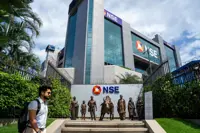
SINGAPORE: Singapore has taken over Indonesia as South-East Asia’s largest stock market, signalling investors’ endorsement of the city-state’s market reforms and their diminishing confidence in its neighbour’s economic management.
Singapore’s market capitalisation has climbed to US$645bil, while that of Indonesia has fallen well over 30% from a peak in January to US$618bil, according to data compiled by Bloomberg.
The city-state’s equities have benefited from economic and political stability, as well as government-led initiatives aimed at reviving a previously lacklustre market.
In contrast, investor sentiment has soured toward Indonesia in recent months amid uncertainties over a potential equities reclassification to frontier markets, as well as credit rating outlook downgrades by Fitch Ratings Inc and Moody’s Ratings.
“Wealth is a key driver for earnings growth and together with the strong Singapore dollar, we expect more funds to flow into the market,” said Carmen Lee, head of equity research at Oversea-Chinese Banking Corp.
The Straits Times Index climbed to a record on Tuesday as investors sought defensive havens during volatility sparked by the Iran war.
The island republic’s stocks are on pace to outperform their Indonesian peers by the most on record in 2026, even as Singapore’s US$660bil economy trails Indonesia’s US$1.5 trillion based on the International Monetary Fund’s figures.
“Markets are recognising that the Singapore equity market is a structural net beneficiary of geopolitical uncertainty, with expectation of continued safe haven flows benefiting the financial sector,” said Kenneth Ong, a portfolio manager at Lion Global Investors Ltd.
Singapore has stepped up efforts in recent years to restore the appeal of its stock market, including a multi-billion-dollar programme to encourage select funds to invest in local stocks.
In addition, the city-state’s central bank tightened its monetary policy settings last month, becoming the first in Asia to respond to rising inflation risks from the energy price surge. The Singapore dollar’s resilience, outperforming South-East Asian peers since the war’s onset, has also contributed to the market’s rise.
Meanwhile, foreign deposits in Singaporean banks climbed to S$659bil in March, the highest level since records began in 2021.
The momentum may not be in Indonesia’s favour at the moment, said Soh Chih Kai, a portfolio manager at Lion Global Investors Ltd. Still, a revival in the future should not be ruled out, he said.
“Nevertheless, this reinforces the relative standing of the Singapore market as capital flows continue to reward certainty amidst global policy uncertainty,” Soh said.
A sell-off of nearly US$360bil in Indonesian stocks this year highlights the growing challenges facing President Prabowo Subianto as he tries to push through ambitious growth targets and restore investor confidence.
Surging energy cost may weigh on consumer sentiment, while a weaker rupiah is making imported raw materials more expensive.
Global investors have withdrawn more than US$4bil from emerging South-East Asian equities this year, with Indonesia accounting for more than half the amount, according to data compiled by Bloomberg.
MSCI Inc’s decision to delete local stocks, including PT Barito Renewables Energy and PT Dian Swastatika Sentosa, from its indexes is expected to trigger outflows of as much as US$2bil later this month, according to analysts.
Indonesia’s authorities have ramped up a broader set of reforms in recent months, such as doubling minimum float levels to 15%, with a phase-in period of up to three years for some companies, to avert a downgrade. Meanwhile, economic growth has so far remained resilient.
For Indonesian equity investors, the focus now turns to MSCI’s review of its market status next month where the index compiler will decide if the country’s latest measures are enough to retain its status as an emerging market.
Recent equity-market reforms are directionally positive, but the MSCI worry, fiscal concerns and currency pressure can keep investors cautious, said Sufianti Sufianti, an equity strategist at Bloomberg Intelligence. — Bloomberg