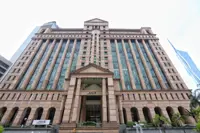
PETALING JAYA: Regional markets continue to see a bloodbath as investors turn risk-off and take profits, with bourses including the FBM KLCI in red, although the local premier index did well to hover around the 1,700 psychological level.
The FBM KLCI was down 0.8% yesterday to 1,698.22.
Analysts commented that the performance appeared to be “insulated” compared to regional counterparts.
Meanwhile, other markets faced steeper losses. Stock Exchange of Thailand dropping by 5.6%, Indonesia’s IDX Composite also retreating 4.6%, the Nikkei 225 lower by 3.6% and Singapore’s Straits Times Index down 2.4%. The Hang Seng was also down 2% but the biggest loser appeared to be the Korea Composite Stock Price Index, which fell 12%.
Head of equity sales at Rakuten Trade Vincent Lau believes investors remain in risk-off mode and Malaysia was not spared.
However, he noted that the country’s status as an energy exporter amid rising oil prices could have provided some form of cushion. “Malaysia’s strong economic fundamentals are also a mitigating factor,” he told StarBiz.
Investment strategist at IPP Global Wealth Mohd Sedek Jantan observed that escalating geopolitical tensions have dampened investor sentiment, with reports that US President Donald Trump has threatened to impose a full trade embargo on Spain after the latter refused to allow the US military to use its bases for operations linked to potential strikes on Iran.
“This development has heightened concerns that the conflict may widen beyond the Middle East, raising geopolitical and trade uncertainties that prompted investors to reduce exposure to equities, including in Malaysia,” he said.
Interestingly, Mohd Sedek said foreign investors remained net buyers in Bursa Malaysia over the past two trading sessions, including Monday and yesterday.
This suggests that some funds continue to view the recent pullback as a potential entry opportunity despite rising global uncertainty.
Assistant manager of research at iFast Capital Kevin Khaw said US-Iran tensions have sparked global uncertainty and profit-taking across regional and emerging markets, yet Malaysia’s FBM KLCI has demonstrated notable resilience.
“We expect this stability to persist, driven by robust local institutional support in heavyweight sectors that insulates the market following last year’s foreign capital outflows.
“Malaysia’s geographic distance from the conflict zone provides a secure safe haven, while Bursa Malaysia constituents, particularly the banking sector, maintain solid corporate fundamentals,” he said.
Consequently, Khaw highly favours Malaysian equities as a top strategic pick, offering an attractive proposition for risk-averse investors seeking low-volatility, income-generating portfolios.
Elaborating, he told StarBiz that while large-cap blue chips had led the FBM KLCI’s initial recovery, investors should now look toward mid- and small-cap counters.
“These segments are expected to generate greater alpha as the market momentum broadens, supported by significant upward earnings revisions after overly pessimistic downgrades in 2025,” he added.
Khaw continues advocating for banks, as they benefit from a stable rates environment and improving corporate earnings outlook. He also favours construction stocks driven by government policy tailwinds and an infrastructure focus.
“We also like the consumer industry, as it is supported by increased cash aid and a healthy labour market boosting domestic spending, while the property and real estate investment trusts have already shown leadership in the recent recovery on the back of the strengthening ringgit,” he pointed out.
Khaw’s comments come in light of “report card” analysis for the financial year ended 2025 from other research houses, with Kenanga Research highlighting that dividend payouts beating expectations was the standout theme.
Roughly 70% of stocks in its coverage either met or beat estimates – stable from the previous quarter – but the real surprise came from dividend, particularly in banks as well as oil and gas.
Malaysian stocks now offer yields ahead of Indonesia and Thailand, trailing only Singapore, as Kenanga research sees structural tailwinds ahead.
“Structural improvement in dividend payout outlook comes at an opportune time as guidance is mixed,” it noted, pointing to the new Basel III capital regime for banks from July 2026 that could unlock excess capital, especially for Public Bank Bhd .
.
The research house raised its end-2026 FBM KLCI target to 1,760 from 1,750, even as it trimmed 2026 earnings growth forecasts to 4.4% from 6.9%.
New top picks include CIMB Group Holdings Bhd and Public Bank.
AmBank Research struck a more guarded tone in its same-day strategy note, maintaining a “neutral” call.
“The market feels like it is walking on thin ice,” it said.
“Rallies do not last, earnings misses get punished quickly, and at times, selling can feel unprovoked.”
With cash levels at just 5.5% of assets under management in January 2025, the research house doubled its banking exposure in its model portfolio to match the FBM100’s 35% weight.
“Banks continue to offer the easiest source of comfort: liquidity, defensiveness and a familiar place to park money.”
Both houses converge on banks as the safest harbour, with CIMB featuring prominently in both top-pick lists, while Kenanga Research’s dividend champions – including RHB Bank Bhd, TIME Dotcom Bhd and LBS Bina Group Bhd – echo AmBank Research’s preference for yield and capital return stories.