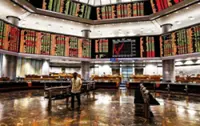
PETALING JAYA: Despite a broad-based decline across Bursa Malaysia so far this year, a couple of sectors have managed to weather the storm.
Year-to-date (YTD), only the real estate investment trusts (REITs) and construction sectors posted gains – up 6.2% and 0.8% respectively – even as the benchmark FBM KLCI, which tracks the 30 largest companies on the local bourse by market capitalisation, fell 6.5%, according to CIMB Research.
Yesterday, the FBM KLCI fell 0.58%, or 8.97 points, to close at 1,528.54 and YTD the benchmark index is down 6.93%.
The biggest laggards were healthcare, down 28.9%; technology, down 19.1%; and industrial production, down 12.7% – underscoring investor caution amid macroeconomic uncertainty and shifting foreign fund flows.
The rest of the year, market watchers say, will hinge on clarity surrounding global tariff developments.
But overall, they believe Malaysia remains well-positioned relative to the region, buoyed by domestic resilience.
Among the sectors drawing the most attention for the second half are construction, financial services, technology and property – all seen as potential beneficiaries of policy support, rate cuts, or recovery themes.
“Malaysia is in a good place compared with its neighbours,” said former managing director of Aberdeen Asset Management Sdn Bhd, Gerald Ambrose.
The retired fund manager expects healthy domestic demand and private sector investment to drive economic activity in the second half, with key policy rollouts such as the New Industrial Master Plan and National Energy Transition Roadmap gaining momentum.
“Less than half of the government’s annual investment is done in the first half – hence more than half will be done in the second half,” Ambrose said, pointing to potential upside for construction.
On the banking sector, he noted: “This pickup (in investments) is going to be reflected in banks. So the financial sector, which is cheap by most measures, will do well.”
Ambrose also sees room for a rebound in healthcare and believes the recent overnight policy rate cut to 2.75% may improve housing affordability at the margins, supporting property stocks as excess inventory continues to fall.
However, he flagged concerns over Trump’s tariff policy and transshipment risks, particularly for ports: “They are going to be looking very closely at stuff that comes from China... That’s what they’re really going crack down on. So the ports business could be tricky.”
Meanwhile, Tradeview Capital Sdn Bhd founder and chief executive officer Ng Zhu Hann said the local stock exchange performance will largely depend on the outcome of the US tariff policy.
“It’s very, very clear that the stock market will perform only on the basis that this Trump’s tariff is resolved, especially for Malaysia because we’re a trading nation,” Ng said.
He added that any loosening of artificial intelligence (AI) chip export controls by the US could trigger a tech rebound, given Malaysia’s large electrical and electronics export base.
On the healthcare sector, he noted that the glove sub-sector was dragged down by falling demand and tariff concerns but could benefit from a reversal in trade tensions.
REITs, however, he said may lose some shine due to the expanded sales and services tax (SST), which affects leasing activities.
“That has a cost impact to the tenants of the malls, for example,” Ng said, adding that while lower interest rates help, the SST expansion “sort of negates that positive capitalism.”
Still, Ng favours yield-based plays such as utilities and financials for their steady domestic-driven performance.
Areca Capital Sdn Bhd executive director and chief executive officer Danny Wong Teck Meng echoed similar sentiments, noting that market direction in the second half will depend on global tariff developments.
“The outcome of the tariff would bring clarity,” Wong said, adding that this would be key for investor confidence.
If global trade risks stabilise, he expects export-heavy sectors like tech and industrials to rebound.
Wong also likes the banking and construction sectors, the former for its resilience following the recent rate cut and the latter for being largely shielded from external shocks.
“We actually employ a two-point approach,” he said. “One is to focus on domestic-driven names like banks and construction companies. The other is to look at those that are badly hit by external factors.” These are stocks where prices have fallen sharply to very attractive levels, despite the companies having solid fundamentals, he explained.
Rakuten Trade head of research Vincent Lau is also cautiously optimistic on a second-half rebound, especially if tariff uncertainties subside.
“My view is that those that have dropped a lot — the chance of it, some good news, it will probably bounce back. The tech sector is one of them. I think that it is possible to bounce back because this is the predominant key sector of exports,” he said.
He said banks are another key component: “For FBM KLCI to go 1,600, the banks need to do well because they carry heavy weightage,” he added.
While the financial services sector makes up just 3.4% of the 1,073 listed companies on Bursa Malaysia, CIMB Securities Research said it accounts for 24% of total market capitalisation – or RM433.2bil out of RM1.83 trillion.
Maybank Investment Bank Research, in its latest strategy note, maintained a focus on banks, construction and consumer sectors.
While it sees limited catalysts for banks, it said the sector remains too cheap to ignore.
“Our forecasts for banks have taken into account one Overnight Policy Rate cut, slower loan growth and higher credit costs amid the expected rate cut and softer macro outlook in the second half of 2025,” it noted.
“While banks still sum up to be the largest weighting in the FBM KLCI, investors felt that the sector lacked catalysts – however, to some, the sector is too cheap to ignore.”
Besides banks, Maybank IB remains upbeat on construction and consumer stocks.
The research house also flagged ports and utilities / renewable energy as alternative plays amid global uncertainty.
Meanwhile, Apex Securities Research expects the FBM KLCI to remain in consolidation mode “with a downward bias in the near term, as investors continue to tread cautiously amid the absence of fresh catalysts.”
“We continue to advocate for selective accumulation of fundamentally resilient stocks, particularly those with greater domestic exposure and clear earnings visibility,” it said.
It advocated investors to rotate into defensive sectors such as REITs and hospital operators, “which tend to offer earnings resilience during periods of macroeconomic uncertainty.”
“In addition, buying interest may emerge in gold-related stocks as investors shift towards safe-haven assets following Trump’s move to further escalate the global trade war.”
Foreign fund flows remain volatile, with net outflows of RM516.3mil recorded last week — snapping a two-week buying streak.
This brings YTD net foreign selling to RM12.4bil, according to CIMB Securities Research.
In contrast, local institutional investors continued to accumulate, recording net purchases of RM322.7mil last week, bringing their YTD net buying to RM10.07bil.
Local retail investors also turned net buyers with RM52.8mil in inflows last week, lifting their YTD net buying position to RM1.38bil.
CIMB Securities Research noted that local nominee accounts have bought RM968.2mil YTD, while proprietary traders posted a net outflow of RM18.6mil.
By sector, financial services saw the largest YTD net foreign selling at RM5.28bil, followed by healthcare at RM1.44bil.
The only sectors that recorded net foreign buying YTD were construction at RM223.8mil, REITs at RM103.4mil, and telecommunications and media at RM14.7mil.