THERE are just three days left before 2025 is upon us, and it will likely be another year of uncertainties amid intensifying trade protectionism in the West.
For an open economy like Malaysia, changes in trade and monetary policies of major trading partners such as the United States, Europe and China will have a considerable impact on exports, growth and the ringgit.
While many risks are tilted to the downside, Malaysia’s economy is expected to remain resilient, barring any major external shocks.
Based on the official forecast, the gross domestic product (GDP) is projected to grow by 4.5% to 5.5% in 2025, not too different from the upgraded prediction for 2024.
Key growth drivers in 2025 are expansion in household spending, sustained strength in investments as well as higher exports and tourist spending, according to Bank Negara.
Is the growth forecast achievable? Or is it too ambitious? The article explores issues that would affect the Malaysian economy in 2025, both positively and negatively.
TAILWINDS
Resilient domestic demand
DESPITE external economic uncertainties, Malaysia’s domestic demand remains the engine of growth, supported by an accommodative interest rate environment and higher disposable incomes that fuel household spending.
The central bank is expected to maintain the overnight policy rate (OPR) at 3% with inflation expected to remain manageable, amid the easing global cost conditions and the absence of excessive domestic demand pressures.
The OPR has remained unchanged since May 2023, after it was raised by 25 basis points from 2.75%.
Moving into 2025, the central bank also expects growth to expand by between 4.5% and 5.5% underpinned by expansion in household spending, sustained strength in investments along with higher exports and tourist spending.
Strong private consumption will be supported by an upsized cash transfer budget (RM13bil in 2025 from RM10bil in 2024), Phase 1 of the civil servant salary hike from December 2024 and the minimum wage hike to RM1,700 from February 2025 (a 13% increase from the current RM1,500).
CIMB Securities says these measures could lift disposable income by RM13bil and contribute up to 0.4% to GDP growth, assuming marginal propensity to consumption of 0.7 for lower-income households.
Sunway University professor of economics Dr Yeah Kim Leng says global uncertainties and risk scenarios would determine whether the country undershoots or overshoots the projected growth rate.
He says changes in the geopolitical landscape – like the ongoing armed conflicts in the Middle East and the Russia-Ukraine war – could shift global outlook and trigger a risk-off or risk-on global investment environment.
“Another major uncertainty is the extent and severity of the trade war that incoming President Trump could unleash.
“Major policy shifts by Trump could either improve or worsen US economic imbalances with downside risks more likely due to his proclivity towards protectionist and inward-looking policies,” Yeah tells StarBiz 7.
Nonetheless, he feels Malaysia’s strong trade and investment growth momentum this year would spill over into 2025 and enable the economy to hit the upper end of the projected GDP growth range.
“As China pivots from the United States to Asia and other regions, the rise in regional trade and investment are upside risks to Malaysia’s growth in 2025,” he says.
Meanwhile, the potential uplift to private consumption next year also warrants a close eye on the risk of a build-up in demand-pull inflation.
Yeah says that while demand-pull inflation is anticipated to rise on the back of higher-than-expected economic growth, it remains manageable due to heightened global uncertainties in 2025.
However, domestic growth sources can only offset external headwinds partially, given the country’s exposure to global trade and investment flows, he adds.
“Key shields include the country’s strong banking and financial sector, diversified economy, adequate foreign reserves and current account surplus.
“Malaysia also has monetary policy flexibility – and to some extent, fiscal space – to mitigate any major external shocks such as a slowdown or downturn in one or more of the world’s largest economies,” says Yeah.
Promising investment outlook
THE country’s journey towards a more investment-driven economy is gaining momentum.
Private investments are making a bigger impact on GDP, but while the numbers look promising, economists say there’s more beneath the surface.
The Malaysian Investment Development Authority (Mida) reported RM254.7bil in approved investments for the first nine months of 2024, a 10.7% rise from the previous year. Domestic investments accounted for 58.1% of this total.
Bank Muamalat Malaysia Bhd chief economist Mohd Afzanizam Abdul Rashid believes private sector spending is becoming increasingly central to economic growth.
He points out that private investment’s contribution to the economy has grown significantly, expanding from a mere 17.1% in the final quarter of 2023 (4Q23) to 45.2% in 3Q24.
“It goes to show that private sector firms have been spending to upgrade production capacity in anticipation of higher demand,” he says.
However, challenges remain, especially when it comes to ensuring that private investments translate into long-term benefits.
Economist Geoffrey Williams points to a critical gap – the slow pace of domestic private sector growth.
“One reason the government encourages government-linked investment companies (GLICs) to invest locally is due to sluggish private sector investment. This needs to be promoted in 2025,” he says.
Williams says that even for foreign investments, the benefits don’t always stay within Malaysia.
“For every dollar of new FDI, three dollars of profits are taken out by foreign companies. Spillovers in terms of employment, investment and local supplier engagement remain a challenge,” he adds.
Meanwhile, external risks are looming.
Global political dynamics, such as the Trump administration’s expected protectionist policies, could disrupt trade and investment flows.
Additionally, China’s economic slowdown poses risks to regional economies, including Malaysia.
Internally, Malaysia’s Purchasing Managers’ Index (PMI) has hovered below the 50-point threshold since September 2022 and Afzanizam says “this is where the role of government is key to ensuring that the private sector appetite to invest will remain positive”.
This, he says, requires more than just tax incentives.
“Reducing bureaucracy and ensuring a seamless experience for investors are critical. At the same time, investment in human capital is necessary to provide a skilled talent pool, though this takes time,” Afzanizam notes.
While private investments are poised to play an even bigger role in driving GDP growth, the real challenge lies in creating an ecosystem where both domestic and foreign investors feel confident about reinvesting in the country.
The road ahead may not be easy, but the groundwork laid this year offers hope for Malaysia.
Accommodative inflation pressure
FROM the second half of 2025, some Malaysians will have to pay market prices for RON95 petrol as the targeted subsidy scheme kicks in.
Like it or not, this will contribute to inflation, although economists widely believe the impact will be limited and manageable.
Prime Minister Datuk Seri Anwar Ibrahim has previously said the RON95 petrol subsidy rationalisation will only affect 15% of the population or the so-called “ultra rich”. The move is also expected to save about RM8bil for the government.
This RM8bil amount is in addition to the savings made from the diesel subsidy rationalisation. Altogether, the reduction in subsidy bill trims the national fiscal deficit position, providing a boost to investor sentiment.
Amid tax and subsidy reforms as well as external risks such as global commodity prices that may drive up price pressures at home, the government is expecting Malaysia’s headline inflation to range between 2% and 3.5% in 2025.
The International Monetary Fund, on the other hand, projects a headline inflation of 2.6% next year.
While this is higher than the full-year forecast of 1.5% to 2.5% for 2024, the market largely believes that next year’s headline inflation will remain under control, in line with the country’s accommodative monetary policy.
Bank Negara is projected to keep its OPR at 3% throughout 2025, keeping borrowing costs stable.
A manageable price pressure and stable borrowing cost will support Malaysia’s economic growth next year, amid the continued flow of private investments from domestic and foreign sources.
With inflation under control, Malaysians will be able to enjoy the benefits of the minimum wage hike to RM1,700 and the increase in civil servants’ salaries.
CIMB Research said past episodes of minimum wage hikes indicate the pass-through of higher labour costs to consumers is contained, as affected businesses undertake a combination of profit margin compression, cost-cutting, cost-passing and productivity-enhancing measures.
“Consumer price index ex-fuel rose by 0.4% to 0.7% in the three months after minimum wage hikes in January 2013, July 2016, and January 2019.
“This was broadly in line with the average quarterly increase of 0.5% quarter-on-quarter since 2013,” it said in a note.
HEADWINDS
Global economic slowdown
A softer growth outlook is expected in 2025 with the International Monetary Fund forecasting a global gross GDP growth of 3.2% for 2025, below the pre-Covid-19 pandemic average of 3.5%.
Nomura Research attributed this to Trumponomics slowing semiconductor sales and softer domestic demand, and added that lower commodity prices, below-trend growth and China’s overcapacity will also support faster disinflation.
“We expect global GDP growth to moderate to 3% year-on-year (y-o-y) in 2025 from 3.2% in 2024, with “Trump 2.0” resulting in macro and policy divergences,” the research house says.
However, Nomura Research expects growth outperformance in Asian economies like Malaysia which has stronger domestic demand buffers, particularly the data centre boom, supply chain shifts and public infrastructure projects.
The research house raised its 2025 GDP growth forecast for Malaysia to 5.7% from 4.5%, sustaining the strong growth in 2024, which it forecast at 5.8%.
“We expect the strong investment-led growth to be sustained despite rising external uncertainty, reflecting the impact of reform implementation, the infrastructure rollout and surging FDI inflows. We think the improvement is becoming more structural, and potential growth is rising,” Nomura Research said.
Meanwhile, Bank Muamalat’s Mohd Afzanizam is confident that the domestic economy should be able to offset external weaknesses.
“The federal government is still prescribing expansionary fiscal policies.
“Moreover, investment activities are picking up and the labour market is in full employment.
“Hence, Malaysia should be able to clock in growth of around 5% in 2025,” he tells StarBiz 7.
Nonetheless, Mohd Afzanizam says there seems to be a pullback from consumer spending.
“Perhaps, households have become more cautious in respect to higher cost of living.
“With a cautious sentiment among consumers, inflation would be driven by the upward adjustment in cost rather than demand.
“Therefore, we believe the central bank might keep the OPR steady to promote the domestic engine,” he says.
Centre for Market Education (CME) chief executive officer Dr Carmelo Ferlito says the slower consumption trend is not too concerning, so long as the country can maintain a good pace in private investments.
“There is too much anticipation about what Trumponomics could be, but very little is clear at the moment. I would not jump to conclusions.
“Malaysia’s economy has shown a promising path in terms of investment growth in 2024 and hopefully that can persist. It is important that the country keeps on diversifying its international trade,” he said.
Radical trade policy impact
MALAYSIA’s export-driven economy is poised to face a mixed bag of opportunities and challenges in 2025.
With global trade dynamics expected to evolve under a Trump 2.0 presidency, Malaysia has to navigate through radical trade policy shifts and rising competition from Asean peers like Vietnam and Indonesia.The fear of heightened protectionism looms large, with potential US tariffs and import restrictions escalating US-China tensions.
RHB Research foresees minimal direct impact on Malaysia’s export-oriented sectors from US protectionist policies under Trump, as the US trade deficit with Malaysia is relatively small.
However, it notes that “the knock-on effects through China could be substantial.”
“As a key supplier in China-centric supply chains, Malaysia could face significant negative impacts, especially in its electrical and electronics exports,” RHB Research adds.
Economist Geoffrey Williams echoes this concern, highlighting Malaysia’s structural limitations compared to Vietnam and Indonesia.
“Malaysia is one-third the size of Vietnam in population and one-ninth of Indonesia. Competitiveness is not the issue for Malaysia since it cannot compete on size. The economy is growing at 5%, so the challenge is distribution to ensure this value-added is shared in higher incomes,” he says.
Despite potential headwinds, CIMB Securities Research highlights Malaysia’s improving terms of trade (TOT) in 2024, supported by a stronger ringgit and export recovery.
It points out that exports to key markets such as the US and Taiwan recorded double-digit growth.
Looking ahead, the research firm predicts export and import growth of 5.3% and 5.6%, respectively, for 2025, aligning with its gross domestic product (GDP) growth forecast of 5.0%.
CIMB Securities Research says the renewed US-China trade war under Trump could potentially accelerate the China Plus One strategy, “benefitting Malaysia through higher investments and enhanced export potential, particularly in sectors such as electronics, machinery, and palm oil.”
“With escalating US-China trade tensions, Malaysia could see increased export demand from US companies looking to source products outside China, creating export growth opportunities in high-value sectors,” it notes.
“FDI in Malaysia is expected to rise as companies seek stable manufacturing bases in the ASEAN region, with Malaysia emerging as a competitive destination owing to its infrastructure and relatively lower production costs.”
CIMB Securities Research points out that during the US-China trade war 1.0, approved FDI into Malaysia surged 47.2% in 2018, with significant boosts from both China (411%) and the US (189%).
To mitigate risks and maximize growth potential, economists recommend focusing on structural reforms.
“Structural reforms must focus on raising incomes, subsidy rationalisation, pension reform, and addressing underemployment,” says Williams.
RHB Research suggests Malaysia to strengthen ties with economic blocs like RCEP, BRICS, and Asean “to diversify trade and mitigate potential losses in US market access.”
Looking ahead, the consensus among economists is cautiously optimistic.
While the Trump 2.0 presidency introduces uncertainty, Malaysia’s multi-year infrastructure projects and targeted policies in technology, tourism, and export-oriented industries provide a solid foundation for growth.
As Williams points out: “If Donald Trump’s policies improve global growth and trade, then Malaysia should benefit.”
Overall, Malaysia’s ability to adapt to global trade shifts and harness new opportunities will be key to sustaining its export-driven growth in 2025.
Fiscal consolidation challenges
MALAYSIA has been running a fiscal deficit for 27 straight years, largely due to its massive subsidy bill.
Despite constant reminders from experts, political expediency has limited successive governments’ ability to narrow the gap between revenue and expenditure.
The fiscal consolidation drive started by former Prime Minister Datuk Seri Najib Razak was interrupted by the change in government back in 2018 and the Covid-19 outbreak in 2020.
However, the Datuk Seri Anwar Ibrahim government has embarked on a renewed fiscal consolidation push that will lower the deficit to 3.8% of gross domestic product in 2025.
Cutting expenditure alone will not bring fiscal deficits down. The government also has to raise its tax and non-tax revenue collections.
The Anwar administration has stayed away from reintroducing the goods and services tax, at least for the time being. However, it introduced several other tax measures that would result in individuals and businesses paying more.
For example, a 2% tax was introduced in Budget 2025 on dividend income exceeding RM100,000.
The scope of the sales and service tax was also expanded to include business-to-business commercial service transactions such as fee-based financial services as well as non-essential basic necessities. This will take effect from May 1, 2025.
In addition, carbon tax will be imposed on the iron, steel and energy industries beginning 2026.
While the tax measures introduced are not drastic, they may present a slight risk to growth.
The dividend tax, for example, has received criticism from the Small and Medium Enterprises Association (Samenta).
Samenta said the tax will discourage SMEs from growing their business or turning in higher profits.
Other critics also warned that the dividend tax may render Bursa Malaysia less appealing than other markets, potentially causing investors to gravitate toward foreign markets that offer favourable conditions for long-term dividend investing.
For now, it remains to be seen whether the new or expanded taxes will have a significant impact on growth in 2025.
However, as long as the Malaysian GDP grows as expected, the impact of taxes should be manageable for local players.
The impact of fiscal consolidation does not stop at new taxes alone.
The government’s hesitance in embarking on new mega projects due to fiscal capacity concerns also limits the growth potential of the nation.
When tabling Budget 2025, Anwar said that “now is not the time to implement mega projects”, pointing out that the government prioritises essential infrastructure instead.
However, channel checks by StarBiz found that the business community are still hoping for new mega projects that would present huge multiplier effects on economic activities.
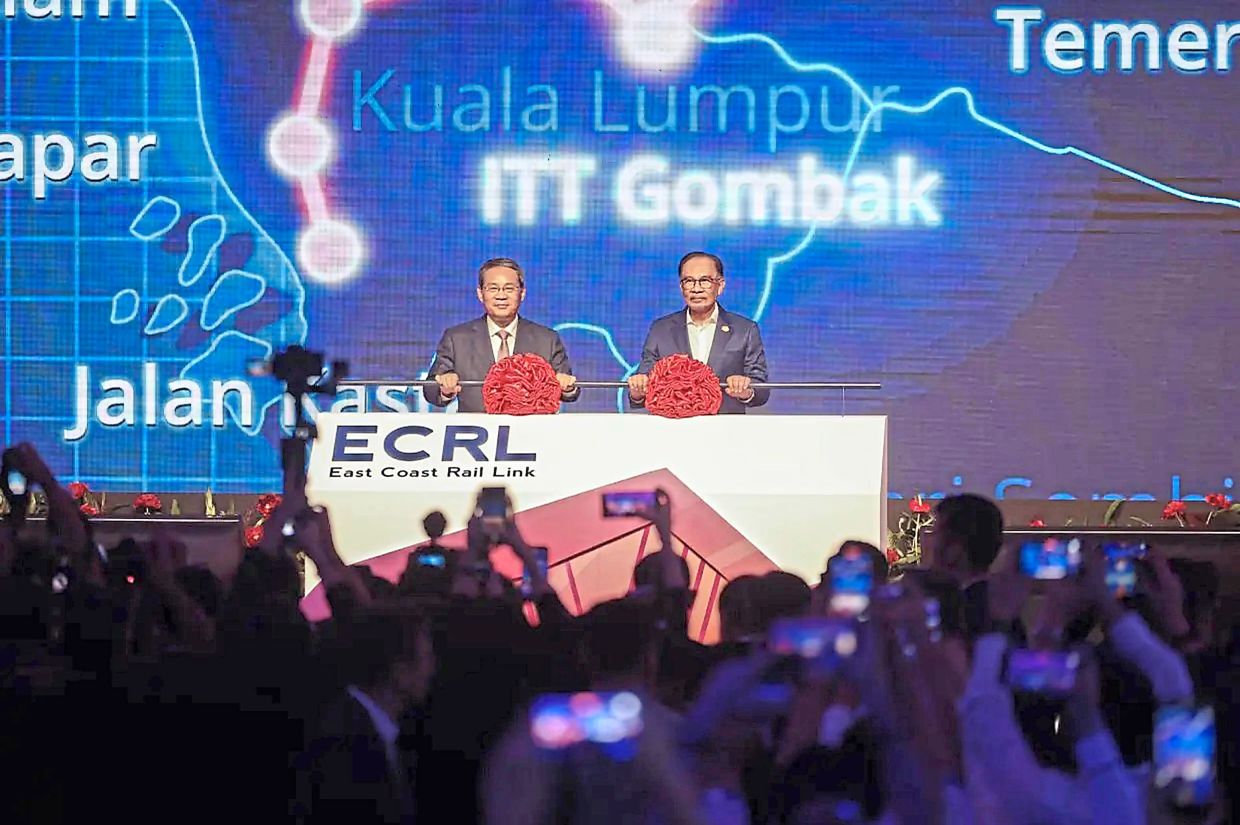
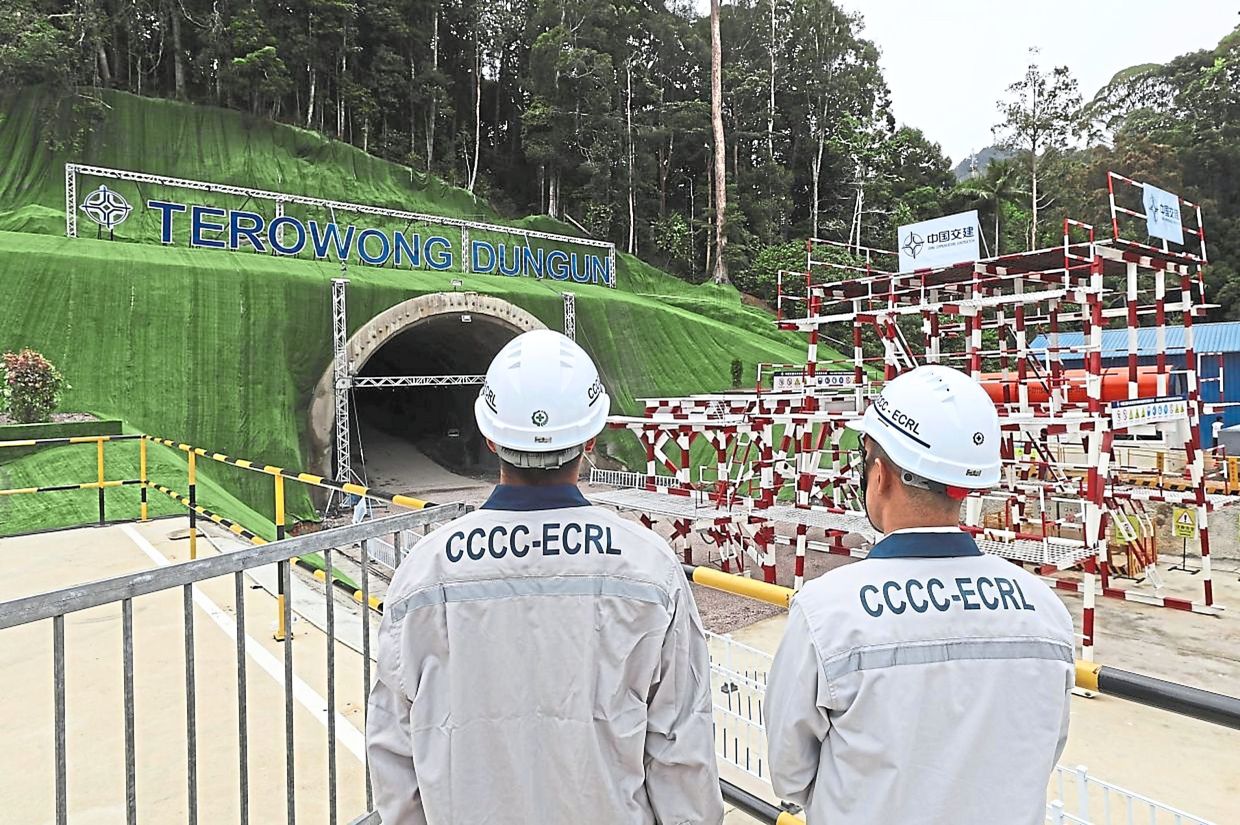
The bulk of ongoing mega projects currently are those rolled out under the Najib administration such as the East Coast Rail Link and the Light Rail Transit 3 line.
Ultimately, a stretched fiscal position of the country limits the development ability of Malaysia.
It is, therefore, hoped that the country’s debt and fiscal deficit levels can be brought under control sooner-than-expected, enabling the government to once again resume large-scale projects that are also necessary for national development.
Already a subscriber? Log in
Get 20% OFF The Star Digital Access
Cancel anytime. Ad-free. Unlimited access with perks.







Much better year for car sales
ECRL2