Carlsberg Group in for the long haul


Despite the challenging times facing most businesses, Carlsberg Group remains upbeat about its prospects in Asia. It is noteworthy that Carlsberg Brewery Malaysia Bhd (Carlsberg Malaysia) is the first brewery built outside of Copenhagen, Denmark.

Speaking in an exclusive interview with StarBizWeek, Carlsberg Group chief executive officer Cees ‘t Hart enthuses the fact that Asia remains a key focus. Hart’s visit to Malaysia coincided with Carlsberg Group’s 175th anniversary and the 50th anniversary of the first Carlsberg Danish Pilsner manufactured locally in the Shah Alam brewery.

He says Asia will continue to provide growth opportunities for the Carlsberg Group especially its premium beer segment and alcohol free brews plans that fall within the group's five-year corporate SAIL’27 strategy.

"It's very important for us that we grow further in Asia, which is our growth region. And we have been pretty successful over the last couple of years and we want to continue that. In Malaysia, we've gained market share. We grew significantly in India and in China. We are going to invest in Vietnam. We have a stable but very healthy business in Laos. We will focus further on Cambodia. So we have significant investment plans in Asia," he says.

The group's five-year corporate SAIL’27 strategy, announced in February this year, targets an organic revenue growth rate of 3% to 5%, and an organic operating profit growth above revenue growth.

Hart points out that SAIL’27 has clear choices for brands, categories, markets and capabilities, and steps up the group's ambitions for top and bottom-line growth.

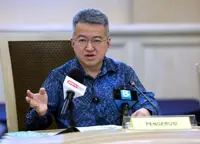
Carlsberg Group CEO Cees ‘t Hart - GLENN GUAN/The Star

He noted that in Vietnam, while the group has a relatively small business, it sees opportunities to gain market share via an organic growth plan.

"In the second half of the year, we will introduce our 1664 Blanc beer brand with support for our Carlsberg and Tuborg brands - so we will have a broader portfolio in Vietnam. In Cambodia, we have had some difficulties the last couple of years, and I think we have stabilised the business and will grow our business further," says Hart.

The Carlsberg Group’s portfolio of brands features Carlsberg, Tuborg, France’s premium wheat beer 1664 Blanc, Grimbergen Belgian abbey beers, European cider Somersby, United States award-winning craft beer Brooklyn Brewery as well as local brands in Asia like Wusu and Chongqing in China, Huda in Vietnam and Beerlao in Laos.

Regarding the growth potential of Vietnam, Cambodia and Laos, Hart points out that the trio of countries have young populations and beer markets that are not very well-developed.

"We have opportunities to grow further in the premium segment," he says.

As for the group's alcohol free brews, Hart says while the idea of such beers is still very new in Asia, the group has seen "promising starts" with growing concerns over binge drinking and driving safely.

"Three decades ago in Europe, people did not appreciate the taste or like the concept of alcohol free beers. But over the years, slowly, people started to understand better that if you don't want to have too much alcohol in an evening, but like the taste of beer, it's good to have alcohol free beer. If you compare the quality of alcohol free beer now and 20 years ago, it is significantly better," he says.

Hart notes that in Europe, the alcohol free beer market is growing very fast at a 10% to 12% annual growth rate.

"The segment (alcohol free) is 4% or 5% of the total beer market (in Europe). But it's very different in Asia, where this idea might be a bit too early," he says, adding that in Malaysia, the group offers products such as the alcohol-free Somersby Apple 0.0.

Since 2015, the group has more than doubled its alcohol-free brew (AFB) sales volumes (114% growth) including 17% growth in 2021 alone.

Carlsberg Brewery Malaysia Bhd

Overcoming obstacles

Regarding the challenges for the group, Hart says there are three “storms” namely Covid-19, the Ukraine-Russia war, and global inflationary pressures.

In late March, the group announced that it would fully sell its business in Russia, which it believes "is the right thing to do in the current environment."

In 2021, Carlsberg Group's business in Russia reported revenue and operating profit of Danish krone 6.5bil (RM4.04bil) and Danish krone 682mil (RM423.73mil) respectively.

The group has 8,400 employees in Russia.

"The war is impacting our business because we have sizeable operations in both Russia and Ukraine. The 10% to 12% increase in the costs of goods also has an impact on our business," says Hart.

"Luckily, we are financially very healthy and have an extremely robust, strong balance sheet. So we are very optimistic about the future. But on the other hand, we need to deal with these storms," he says.

Regarding the rising interest rate environment in Europe, Hart points out that the group is not too concerned as it had "reduced its debts significantly."

As at Dec 31, 2021, the group recorded a net interest-bearing debt and earnings before interest, taxes, depreciation, and amortisation (Ebitda) of 1.24 times (2020: 1.51 times).

"The rise in interest rates comes from a very low level. We are concerned about the impact of increased interest rates on the development of economies, but not so much with regards to the finance costs (of the group). Let's see in the long term what happens with the interest rates. Let's hope that in two or three years the situation changes again," he says.

Carlsberg brewery tour

As for mitigation measures, Hart says as global markets recover from the Covid-19 pandemic, the group had "come out better and faster out of the storm" due to its programmes which focus on "people foremost".

Regarding logistics disruptions and commodities' shortages, Hart says while the group is facing some challenges regarding the supply of raw materials, it is not affected by logistics issues.

"In terms of what other companies face - they can't get their products that are being produced in China, or can't get transported to western Europe - these are problems we don't have because in most of the countries where we do business in, we have our own breweries, and produce close to our markets," he explains.

Hart says the group is impacted by the rise in prices of raw materials and energy costs, as well as labour shortages, truck drivers for example, in some markets.

"With between 10% and 12% increase in our costs, we need to increase our prices.

So we do value management and make sure of brand propositions that are attractive and suitable for the spending power of consumers. We have a range of mitigating actions to make sure that we come through this," he adds.

Hart also points out that the group is on track to achieve the 2022 and 2030 targets of its transformative "Together Towards Zero" programme.

In its environment, social and governance (ESG) report 2021, the group pointed out that it had recorded a 40% reduction in carbon emissions per hl (hectolitre or 100 litres) of beer since 2015 – including a 2% year-on-year reduction in 2021 – on the way towards its target of a 50% reduction by 2022 and its ambition of zero carbon brewing by 2030.

The group has also seen a 21% reduction in water use per hl of beer since 2015 – including a 4% year-on-year reduction in 2021 – on the way towards its targets of a 25% reduction by 2022 and a 50% reduction by 2030.

Carlsberg Group has also achieved a 35% reduction in water use at breweries in areas of high water risk since 2015.

In 2021, it opened a new state-of-the-art water-recycling plant to radically improve water efficiency at its Fredericia brewery in Denmark, and also launched partnerships to conserve critical freshwater ecosystems in Nepal and to provide clean water, toilets and handwashing facilities at schools in India.

"To reduce water usage and carbon emissions, we keep investing in our breweries," says Hart.

Cheers to reopening of borders

Carlsberg Malaysia should see better quarters ahead, due to the reopening of international borders and entertainment outlets resuming operations, according to equity analysts.

In a recent report, Kenanga Research says the easing of Covid-19 restrictions will be key drivers in speeding up the group’s earnings, with Singapore scraping its Covid-19 curbs in the second quarter and Malaysia transitioning into the endemic phase whereby businesses such as the hospitality and food and beverages industries are allowed to resume normal operating hours.

"With entertainment outlets in Malaysia operating starting mid-May, this should further help the group recover revenue from their on-trade channels which previously contributed an estimated two-third to the group sales," says the research unit.

Major sporting events this year such as FIFA World Cup in Qatar and Asian Games should further spur the growth in on-trade channels.

While the current economic crisis in Sri Lanka may result in lower associate contribution moving forward - their contribution to group pre-tax profit is immaterial at 5%, says Kenanga Research.

The research unit also says while escalating commodity prices may raise costs pressure which may be passed on to consumers, this may not be exceedingly disruptive to earnings due to the inelastic nature of beer demand.

"With unchanged excise duties on beers and reopening of the economy and tourism sectors, we are optimistic of the group’s outlook," says Kenanga Research.

CLICK TO ENLARGE
CLICK TO ENLARGE

Kenanga Research upgraded Carlsberg Malaysia's stock to an "outperform" call (from "market perform") with a higher target price of RM28.05 (from RM23.10) based on its financial year ending Dec 31, 2023 (FY23) estimated price-to-earnings ratio (PER) of 26 times.

The risks to the research unit's call include weaker-than-expected sales volume, and higher-than-expected operating expenses.

Kenanga Research notes that in the first quarter ended March 31, 2022 (1QFY22), Carlsberg Malaysia's revenue grew by 23% year-on-year to RM653.9mil, thanks to higher sales volume due to the successful execution of the Chinese New Year campaign and the relaxation of Covid-19 restrictions driving sales in both Malaysia (27% higher) and Singapore (14% higher) operations.

With an increase in marketing investments and consumer promotions, the group’s core brands, Carlsberg Danish Pilsner and Carlsberg Smooth Draught, returned to growth in 1QFY22.

Meanwhile, the group’s associate Lion Brewery recorded a 70% increase in associate contribution to RM6.8mil.

However, due to the devaluation of the Sri Lankan rupee in 1QFY22, the rupee foreign exchange conversion with ringgit plunged by 40% resulting in an unrealised foreign exchange loss of RM28.7mil.

Thus, after adjusting for the unusual unrealised foreign exchange loss, the group’s core net profit rose by 55% to RM94.5mil (from RM61.1mil a year ago).

Kenanga Research notes that on a quarter-on-quarter basis, the group’s revenue rose by 21% (Malaysia: 15% higher, Singapore: 35% higher) which boosted core net profit by 41%.

Meanwhile, RHB Investment Bank Research says looking ahead, it expects the encouraging momentum (from 1QFY22) to be sustainable taking into account the reopening of international borders to facilitate foreign tourist arrivals whilst entertainment outlets resuming operations from mid-May should further aid volume recovery.

"Seemingly, the average selling price hike has not deterred volume significantly considering the inelastic demand for beer whilst the ongoing economic recovery and pent up demand should have also helped," says RHB Research.

However, the research unit notes that the elevated margin in the first quarter could taper off going forward as Carlsberg Malaysia may restart some of its brand-building marketing campaigns in order to spur consumer spending and strengthen its market share.

RHB Research maintained its "neutral" call on Carlsberg Malaysia's stock and dividend discount model-derived target price of RM23.80 (inclusive of a 4% ESG premium), which implies FY22 estimated PER of 25 times (excluding prosperity tax impact).

The research unit says it refrained from being overly aggressive with its valuation considering the regulatory risks.

Meanwhile, Affin Hwang Investment Bank Research maintained its "buy" call on Carlsberg Malaysia's stock, with an unchanged discounted cash flow-derived target price of RM25.

Affin Hwang Research says Carlsberg Malaysia's earnings growth is expected to be driven by tourists’ arrivals, increasing on-trade consumption with reopening of entertainment outlets in mid-May, and sustainable operating margins due to better premiumisation mix and lower operating costs.

The research unit also notes that Carlsberg Malaysia has allocated new capital expenditure of RM110mil for FY22 to expand its capacity, improve operational efficiencies and build a more ESG friendly operation which is expected to be completed by the end of 2022.

Affin Hwang Research says the stock's downside risks include a surge in raw material input costs, proliferation in contraband alcohol, a slowdown in consumer spending, unfavourable policies affecting alcohol supply and demand, and reimplementation of movement restrictions.

Get 20% OFF The Star Digital Access

Monthly Plan

RM 13.90/month

RM 11.12/month

Billed as RM 11.12 for the 1st month, RM 13.90 thereafter.

Best Value

Annual Plan

RM 12.33/month

RM 9.87/month

Billed as RM 118.40 for the 1st year, RM 148 thereafter.

Follow us on our official WhatsApp channel for breaking news alerts and key updates!
Carlsberg , expansion , Asia , Cees ‘t Hart , FIFA , brewer

Next In Business News

SC seeks public input on proposals to strengthen corporate governance ecosystem
QES to raise RM44.1mil via private placement to Unicomp unit
Insas sells 150 million Inari Amertron shares for RM318.1mil
OCR launches RM344mil D'Templer Hilltop Residences project in Rawang
Jati Tinggi JV secures RM27.5mil TNB dam enhancement contract
WTK to sell Sarawak oil palm estates for RM221.5mil
China to cut gasoline and diesel prices by the biggest margin in nearly six years
Rohas Tecnic unit cleared as MACC concludes probe
Special feature: The Asean Hyundai Cup - the dreams of nations and their future in the game of football in South-East Asia
KLK unit faces US$39mil arbitration claim over gas supply dispute

Others Also Read