
SINGAPORE: For decades, the FIFA World Cup has represented football’s ultimate destination – the international stage where nations test themselves against the best and where sporting dreams become reality.
Fulfilling that dream has been the aspiration and driving force of every ASEAN national football team and fan, and now, achieving the goal looks to be closer than ever.
With a population of more than 700 million, some of the most passionate fans in the world and the ever-increasing success of ASEAN national teams’ performances, there is growing confidence that Southeast Asia will soon produce its first-ever men’s team at football’s biggest tournament.
From Jakarta to Bangkok, Hanoi to Kuala Lumpur, ASEAN football is attracting attention. Stadiums are regularly filled, broadcast audiences continue to expand, and a new generation of players is emerging through increasingly competitive regional competitions.
Behind that progress lies a long-term vision led by the ASEAN Football Federation (AFF), its exclusive commercial partner SPORTFIVE and a growing group of corporate partners, many of whom are among the largest global and homegrown Asian companies, who see ASEAN football as a development pathway that will propel the region’s national teams into the World Cup.
AFF President Major General Khiev Sameth believes ASEAN football is steadily moving towards achieving one of its greatest ambitions.
"I firmly believe that our shared dream of seeing a Southeast Asian nation qualify for the FIFA World Cup is becoming increasingly attainable. This progress reflects decades of commitment and collaboration by our Member Associations and the AFF to strengthen football throughout our region.
“Through sustained investment in football development, including the organisation of 17 regional competitions for national teams and clubs, together with initiatives in youth development, coach education, refereeing, governance and the professional game, we have established strong foundations for long-term success. The growing achievements of our national teams and clubs on both the regional and international stage give us every reason to be optimistic about the future.
“While there is still much work ahead, I am confident that, by continuing to raise standards and working together with purpose and determination, we will achieve this historic milestone in the near future."
The foundation for this vision was laid more than three decades ago.
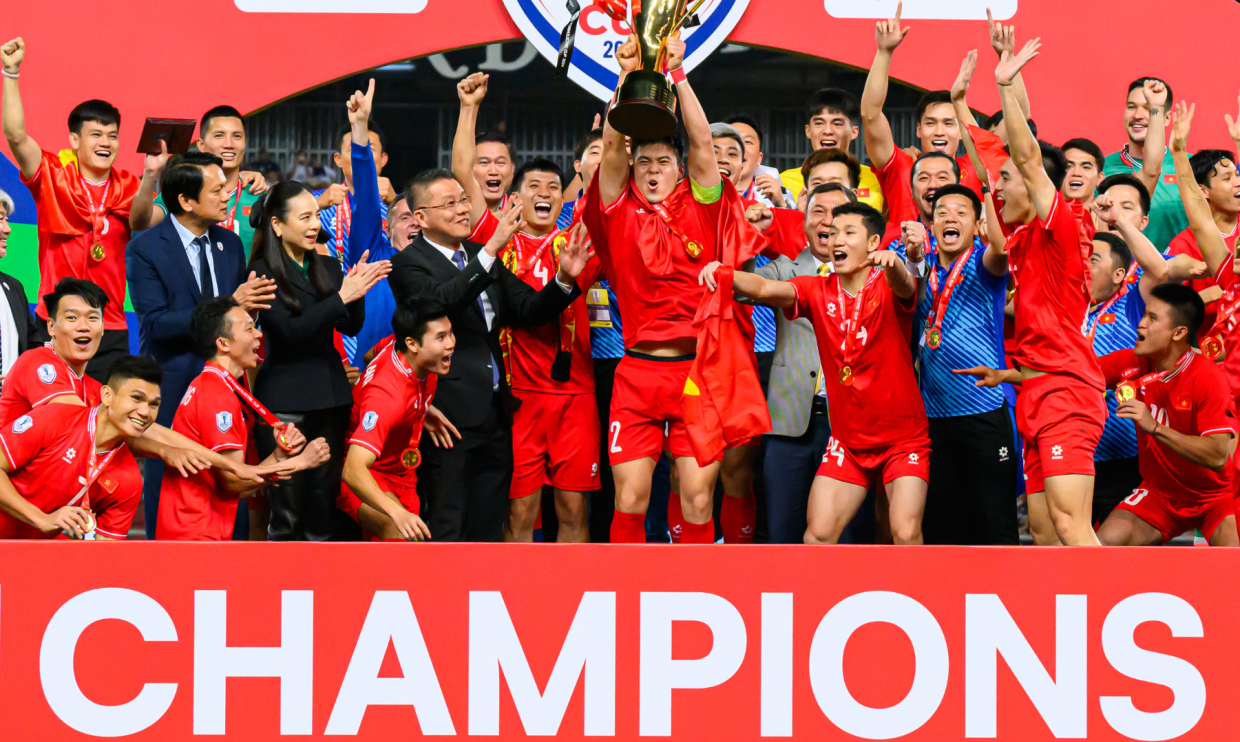
The ASEAN Championship, launched in 1996 and now known as the ASEAN Hyundai Cup™ after its title partner, Hyundai, is the region’s flagship senior national team competition. As Southeast Asia’s most-watched and followed sporting event, the ASEAN Hyundai Cup™ remains the jewel in the crown of ASEAN football, intensifying rivalries and widespread fan passion while raising competitive standards.
This year’s edition, scheduled from July 24 to August 26, marks the tournament’s 30th anniversary.
The AFF have since expanded its competition ecosystem. The ASEAN Club Championship Shopee Cup™, the latest addition in its line-up of premier events, was launched in 2024 together with title partner Shopee, Southeast Asia’s largest e-commerce platform. The Shopee Cup, now a key annual fixture, gives elite clubs a regional platform and is designed to raise domestic league standards while attracting millions of viewers across the region.
Alongside it, the ASEAN U-23 Championship continues as a key development pathway, producing Southeast Asia’s future stars while the ASEAN Women’s MSIG Cup™ has grown in prominence, reflecting the rise of the women’s game in the region, highlighted by Vietnam and the Philippines qualifying for the FIFA Women’s World Cup in 2023, with Australia, who are members of the AFF, emerging as semi-finalists.
But competitions alone are not enough. Like all frameworks for elite sports, football’s progress depends on sustainable commercial foundations that support long-term growth – from elite delivery to grassroots development and fan engagement.
That is where ASEAN United FC plays a central role. The AFF’s four major competitions are unified under the ASEAN United FC brand, creating the only single commercial platform in Southeast Asia that enables brands to engage audiences all year long across multiple tournaments and across ASEAN – among the world’s fastest-growing economic and consumer regional blocs and a major focus for multinational companies that are targeting growth.
SPORTFIVE Asia President and Chairman of the Board, Seamus O’Brien, believes this structure is accelerating football’s advancement and regional growth. A sports industry pioneer who helped establish the Asian Football Confederation’s (AFC) first-ever commercial programme in 1992 and subsequently inaugurated the ASEAN Championship and ASEAN Club Championship in partnership with the AFF, O’Brien has played an important role in the region’s sporting evolution.
“Over the past few decades, Asia’s sports industry, which includes ASEAN, has grown rapidly to become the third largest in the world, with expectations it could eventually match Europe and North America in size and value, and also achieve success in international competitions” he said.
“Long-term corporate investment in sport helps elevate competitions’ profile and stature, enhance fan and TV viewers' experiences, increase visibility and generate resources that can be reinvested into the sport.
“We are now seeing how sponsorship is pushing the standards of ASEAN football and expanding its fan base. For example, the ASEAN Championship has consistently smashed broadcast viewership records since it was first launched 30 years ago and has become the pride of every ASEAN national team, player and fan. The 2024 event drew more than 541 million live broadcast viewers and generated a potential reach of 19.6 billion across print and digital platforms, which is evidence of the region’s growing strength and size as a dominant football market.”
Those figures underscore not just commercial growth but also a broader shift, as ASEAN football evolves into one of Asia’s most-watched, followed and engaging sporting properties. This commercial momentum has attracted global and regional brands such as Hyundai, Shopee and MSIG, whose involvement goes beyond sponsorship into long-term development roles.
Southeast Asia’s young population, rising incomes and rapid digital adoption have further strengthened its appeal as a sporting market.
For Hyundai, the world’s third-largest auto manufacturer, football has long been a global platform. A FIFA partner since 1999, the automotive giant initially used the sport to strengthen brand visibility and credibility on a global level.
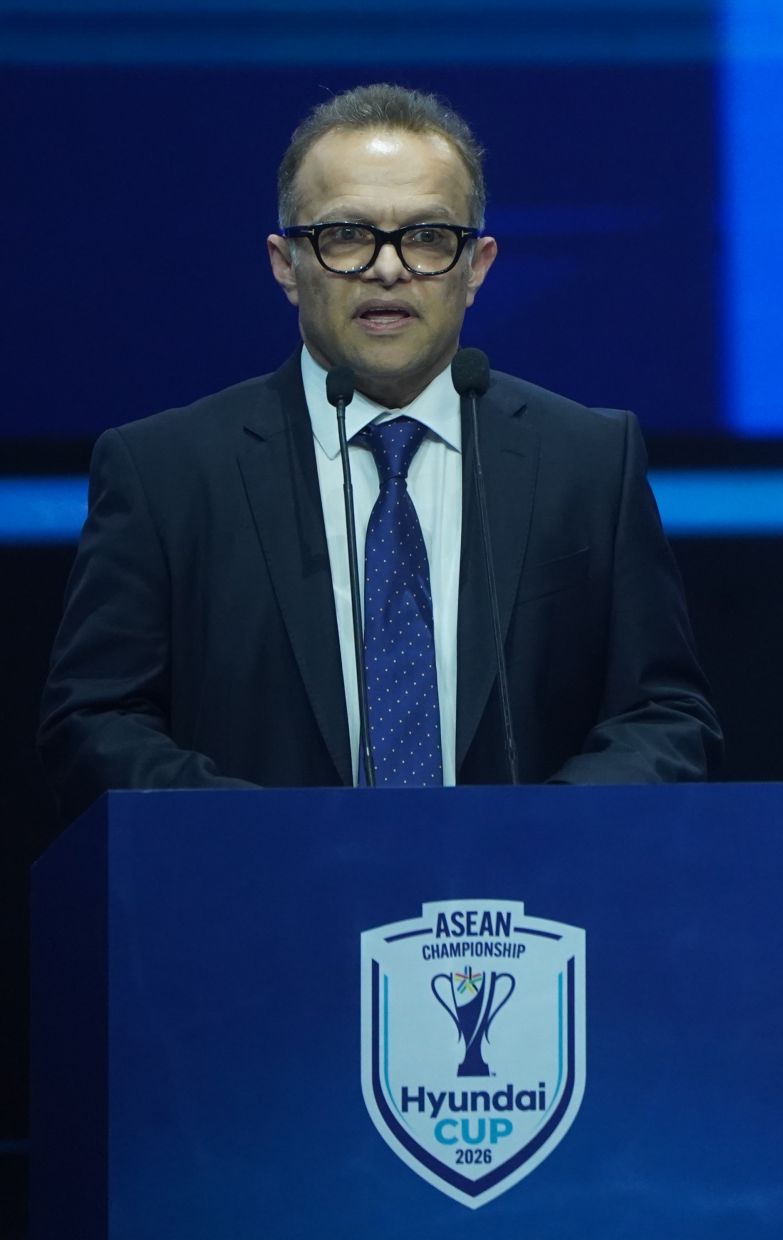
In 2024, Hyundai entered Interbrand’s Global Top 30 ranking, with its brand value rising from US$23 billion to US$24.6 billion in 2025. Shamsi said sports investment has contributed meaningfully to that growth.
“Football is a powerful platform for connecting people, transcending language and cultural boundaries through a shared passion,” said Shamsi. “Ultimately, the ASEAN Hyundai Cup reflects Hyundai’s belief that sports partnerships are long-term strategic platforms that drive both brand and business growth.”
As the sport evolves, so too do fans. Digital consumption habits are reshaping how audiences engage with football, driving demand for experiences that are immersive and that take them closer to the game, their teams and their players.
That shift has created opportunities for brands like Shopee, Southeast Asia’s largest online marketplace, to focus on fan engagement beyond matchdays.
Eugene Low, Shopee’s Director of Regional Marketing, said football’s strength lies in its ability to connect communities.
“We believe football has the power to bring communities across Southeast Asia together through a shared passion for the sport. We hope the Shopee Cup™ will grow as a regional platform that celebrates local talent and creates meaningful moments for fans,” said Low.
In its second season, won by regional powerhouse Buriram United FC of Thailand after defeating Malaysia’s Selangor FC in the final, Shopee reinforced the Trophy Tours, a Shopee Cup™ Bazaar and interactive digital campaigns, alongside fan activations that blended physical and digital engagement.
While these initiatives may appear ancillary, they help to strengthen the region’s football culture, which in turn creates a more cohesive and robust fan-driven ecosystem. This ultimately supports development pathways and competitive standards.
Indonesia’s narrow miss in the qualification for this year’s World Cup highlights this progress. Long seen as one of the sleeping giants in Southeast Asia, Indonesia has made significant strides in recent Asian qualifying campaigns, narrowing the gap with Asia’s established powers and strengthening regional belief that qualification for the World Cup is within reach. Australia, who compete under the AFC qualifying rounds, have featured successively in the World Cup since 2006.
A similar pattern can be seen in the women’s game. Global general insurer MSIG, title partners of the ASEAN Women’s MSIG Cup™, has played a key role not only in expanding opportunities for female players but also in using the event as a platform to empower Southeast Asia’s female demographic.
For Clemens Philippi, Chief Executive Officer of MSIG Asia, football’s value extends beyond competition. “Football is more than just a game in this region. It's a unifying force that brings communities together and inspires national pride,” said Philippi.
MSIG’s initiatives include a Player Escort Kids programme at the 2025 tournament, featuring 23 girls from seven ASEAN countries in the first all-girl escort line-up in an ASEAN United FC competition. The company has also delivered football clinics across Indonesia, Thailand and Singapore, supporting youth development and engagement.
These initiatives may not directly affect the next World Cup cycle, but they are important building blocks that contribute to the long-term evolution of an ASEAN-focused vision that ensures each competition, grassroots programme and partnership continues to strengthen football’s development pathway in the region.
Ultimately, Major General Khiev Sameth believes that unity will be the driving force behind ASEAN football's journey to the FIFA World Cup.
"Football is the ultimate team sport, where success is achieved when everyone works towards the same objective. The same principle applies to Southeast Asian football. Realising our World Cup ambition will require the collective commitment of our Member Associations, players, coaches, clubs, governments, commercial partners, supporters and the wider football community.
“Every contribution, no matter how large or small, plays an important role in shaping our future. If we continue to stand together, inspire one another and pursue excellence with a shared sense of purpose, I have every confidence that Southeast Asia will earn its place on football's greatest stage. When that moment arrives, it will be a proud achievement shared by our entire ASEAN football family."