




As the United States marks the 250th anniversary of its founding, it confronts a new world order dominated by its relationship with China. In this wide-ranging series, we examine the pressure points and possibilities in those ties, from hard tech to soft power. Here, Ling Xin and Meredith Chen look at how the fight against discrimination continues to this day.
The rise of the United States to superpower status was fuelled by the untold millions of immigrants who arrived from foreign shores.
Among them were the Chinese who crossed the Pacific in search of opportunity and a better life – only to become the builders of modern America, who remain too often forgotten and even excluded.
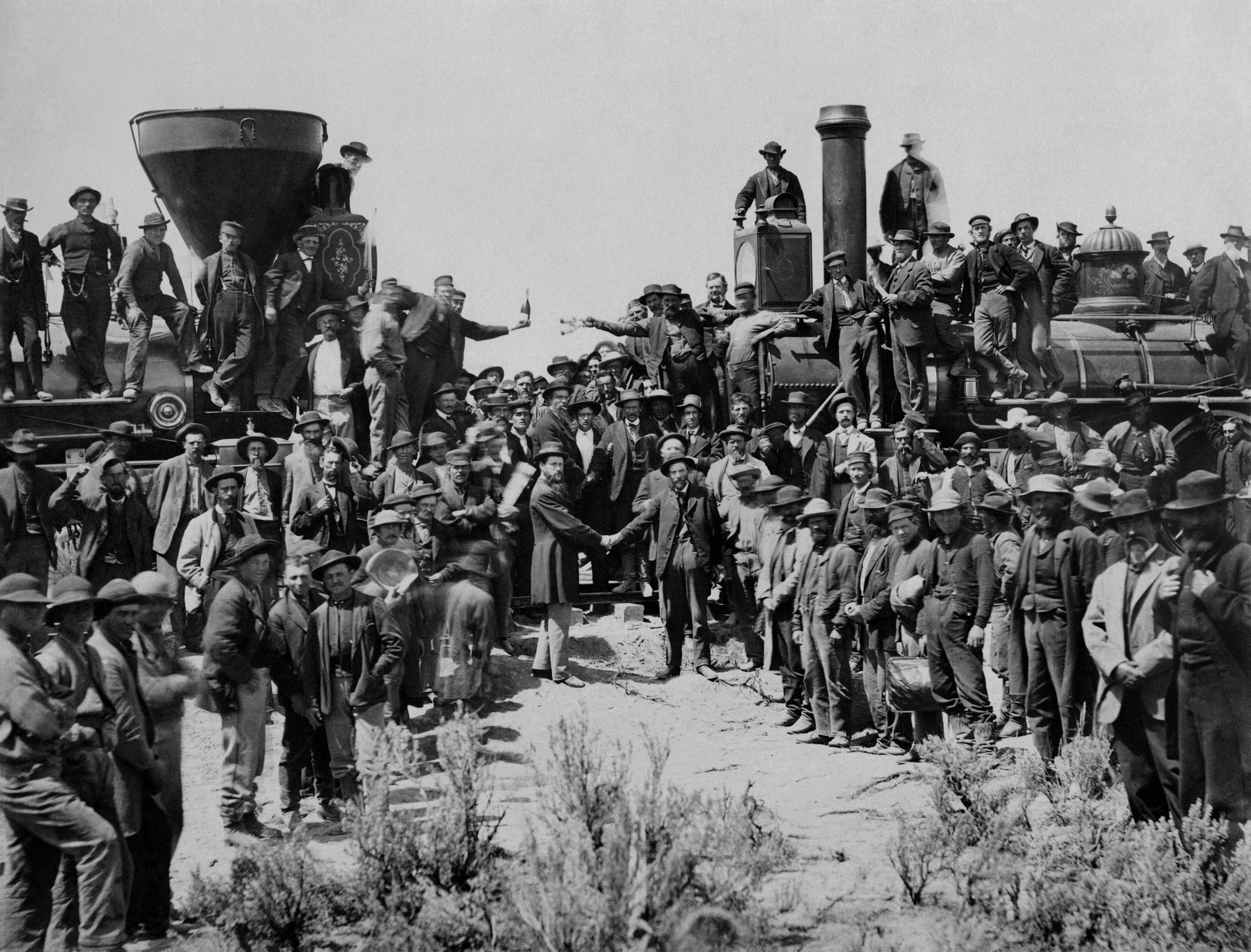
One well-known photograph taken in 1869 to celebrate the completion of the Transcontinental Railroad showed a cheering crowd made up of entirely white faces. Meanwhile, Chinese workers, who made up as much as 90 per cent of the workforce and endured the most dangerous labour, were kept well away from the spotlight.
Frank Wu, the president of Queens College, City University of New York, said Chinese-Americans had long been seen as “perpetual foreigners” whose achievements sparked suspicion from the very beginning.
“The very success of Asian-Americans has been held against them,” he said, adding that since their arrival, fear had driven others to view their hard work not as a contribution to American progress but as “unfair competition”.
“The more they do well in different domains, the more important it is to ensure they do not dominate politically or socially,” said Wu, a former chair of the Committee of 100, a New York-based non-profit organisation formed by prominent Chinese-Americans.
The resentment hardened into law with the Chinese Exclusion Act in 1882. By slamming the door on new workers and banning existing residents from citizenship, it became one of the nation’s first federal laws to bar an entire immigrant group based on race, class and nationality.
Chinese immigrants and their families did not passively accept these restrictions, said Ellen Wu, an associate professor of history at Indiana University Bloomington, who specialises in race, migration and belonging in US history. Instead, they fought back fiercely in the courts.
She pointed to two landmark Supreme Court victories that reshaped American law: the 1886 Yick Wo case, which ruled that everyone had a constitutional right to equal protection, not just citizens, and the 1898 Wong Kim Ark case, which secured birthright citizenship for the children of immigrants regardless of race or their parents’ status.
These legal battles, she said, permanently widened the definition of who gets to be called an American – and were a critical, yet often overlooked, contribution to the country by Chinese immigrants.
Throughout the 20th century, the Chinese-American community steadily expanded its presence and visibility across society.
Yung-Chen Lu, a retired mathematics professor at The Ohio State University, said there was only one tiny Chinese grocery store when he moved to Columbus in 1969 after earning his PhD from the University of California, Berkeley.
Today, that community has grown to include more than 1,200 Chinese restaurants across Ohio. In academia, the contribution of scholars of Chinese origin has also been remarkable, he said.
While Chinese-Americans account for just over 1 per cent of the total population of Columbus, they comprise at least 6 per cent of all tenure-track professors at Ohio State.
In the prominent Columbus suburb of Dublin, voters recently elected the Chinese-American doctor Greg Lam to the city council, marking the first time a person of Chinese descent has held a seat on the city’s governing board.
“A political milestone like this would have been completely unthinkable 30 years ago,” he said.
But the discrimination continues. In recent years, escalating tensions between Washington and Beijing have turned ordinary Chinese-Americans into collateral damage in a new era of state-sponsored suspicion.
As China rises as a scientific powerhouse, researchers with ties to the country have come under intense scrutiny in the name of national security.
In 2018, during his first term in office, Donald Trump launched the China Initiative to curb alleged economic espionage and trade secret theft from China.
The programme largely became a hunt for paperwork errors that left hundreds of scientists out of work, bankrupt or dragged through the courts.
For Frank Wu, this modern climate of suspicion was just history repeating itself.
“There is nothing new under the sun. It’s all about Asians being not immigrants but invaders,” he said. “The bigotry used to be explicit. The same sentiments have come back in a resurgence, well beyond hints of prejudice.”
Beyond university campuses, the hostility has fuelled a wave of state laws targeting home ownership.
Florida and Texas have already banned Chinese citizens from buying land near military bases or critical infrastructure in the name of national security, and similar measures have been proposed in Iowa, Ohio and Louisiana.
The rules are drawn so broadly that they leave Chinese families with almost nowhere to legally buy a home.
Across the country, communities have begun to fight back.
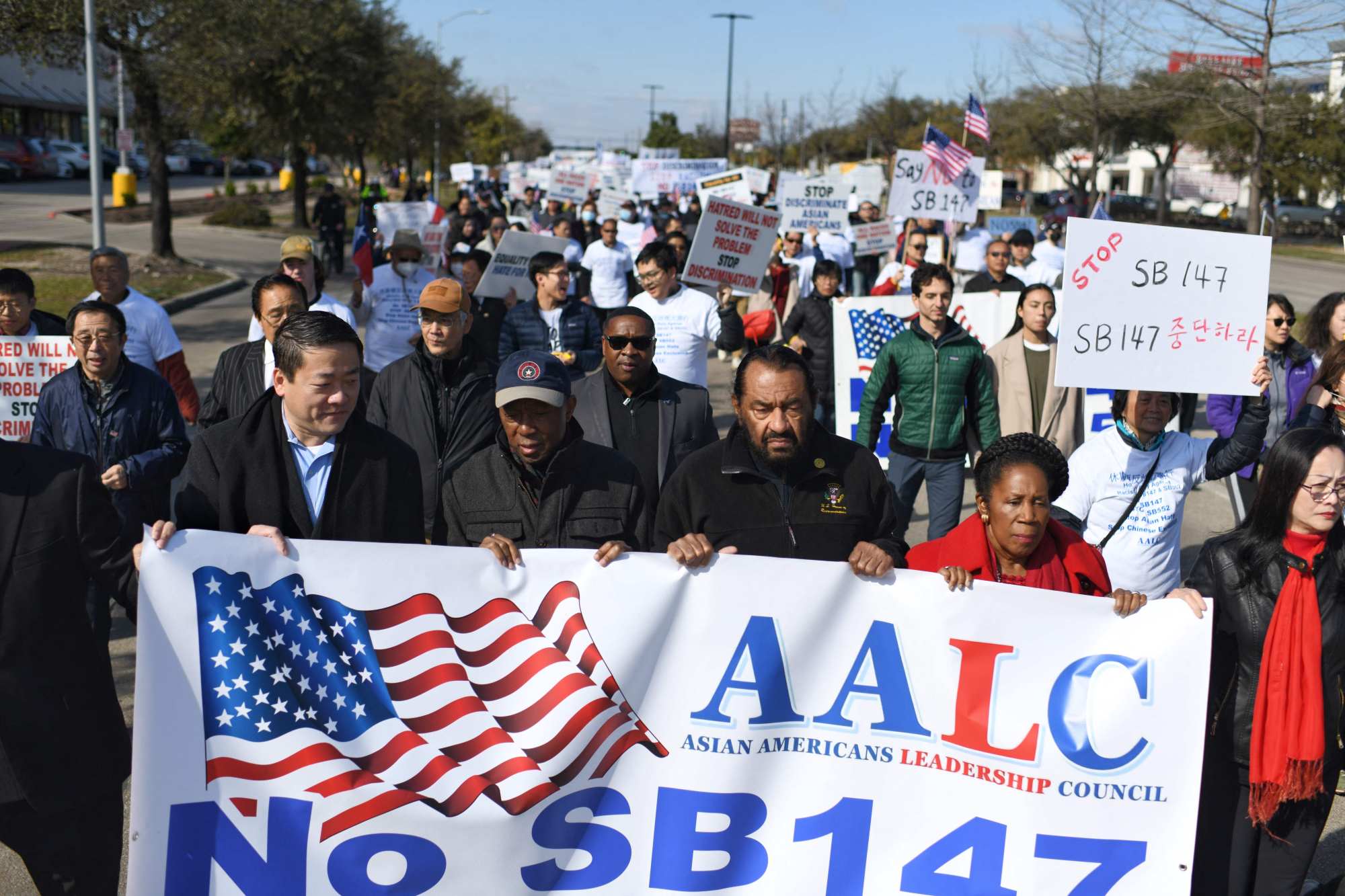
Wess Miller had never been to a political rally in his life. The IT consultant from Plano, Texas, whose wife was born in China, got involved in the fight in March last year, when he spotted a roadside sign protesting against a property bill while driving to get groceries.
“This smells bad,” he thought. He showed up the very next day wearing a dragon boat jersey – one of only three white people among roughly 300 protesters.
Although the protesters failed to stop the bill in Texas, the experience pulled him deep into the fight and he is now a key voice in the Chinese-American community’s campaign to stop a similar law being passed in Ohio.
The backlash was swift: he was called a traitor, and some have posted online that he should be hanged. At one point he had to hire security guards to watch his home, but he said he was no longer afraid. “It’s a fight worth fighting, and no state is fighting back like Ohio,” he said.
For Lu, these land bills reflect one of the biggest misconceptions Americans hold about the Chinese – the belief that they seek to dominate.
The reality, he said, is quite the opposite: it is the United States that has repeatedly engaged in military conflicts around the world, while China has built its foreign policy around peaceful trade and mutual benefit.
“In a sense, Americans are judging China through the lens of their own experience,” he said.
But Lu, a community leader who helped establish senior meal programmes, a free health clinic and the city’s Asian Festival in the 1990s, argued Chinese-Americans themselves must do more.
He said many of them had traditionally placed greater emphasis on career and family than on politics – a legacy, in part, of history.
“Many of those who came from mainland China lived through the Cultural Revolution,” he said. “That experience left a profound mark on them, and many chose to stay away from politics after settling in the US. That is unfortunate, and it needs to change.”
Looking ahead, Ellen Wu said the story of Chinese-Americans held an important lesson for the United States as it approached its 250th anniversary: that safeguarding the country’s founding ideals – freedom and opportunity for all – demanded constant effort.
“It will take hard work and coordinated efforts to ensure that future generations can enjoy this promise – the very ideals that first drew our families to the United States,” she said. -- SOUTH CHINA MORNING POST



