In comments directed at Asean, a top Communist Party official reiterated that Beijing did not want to become a regional hegemon, while vowing to strengthen its energy cooperation with the Southeast Asian bloc.
“For a country like China, which has ‘harmonious coexistence’ embedded in its DNA, it is extremely difficult to undergo a ‘genetic mutation’ and become a militaristic hegemony that bullies the small and weak,” said Sun Haiyan, deputy head of the party’s International Department.
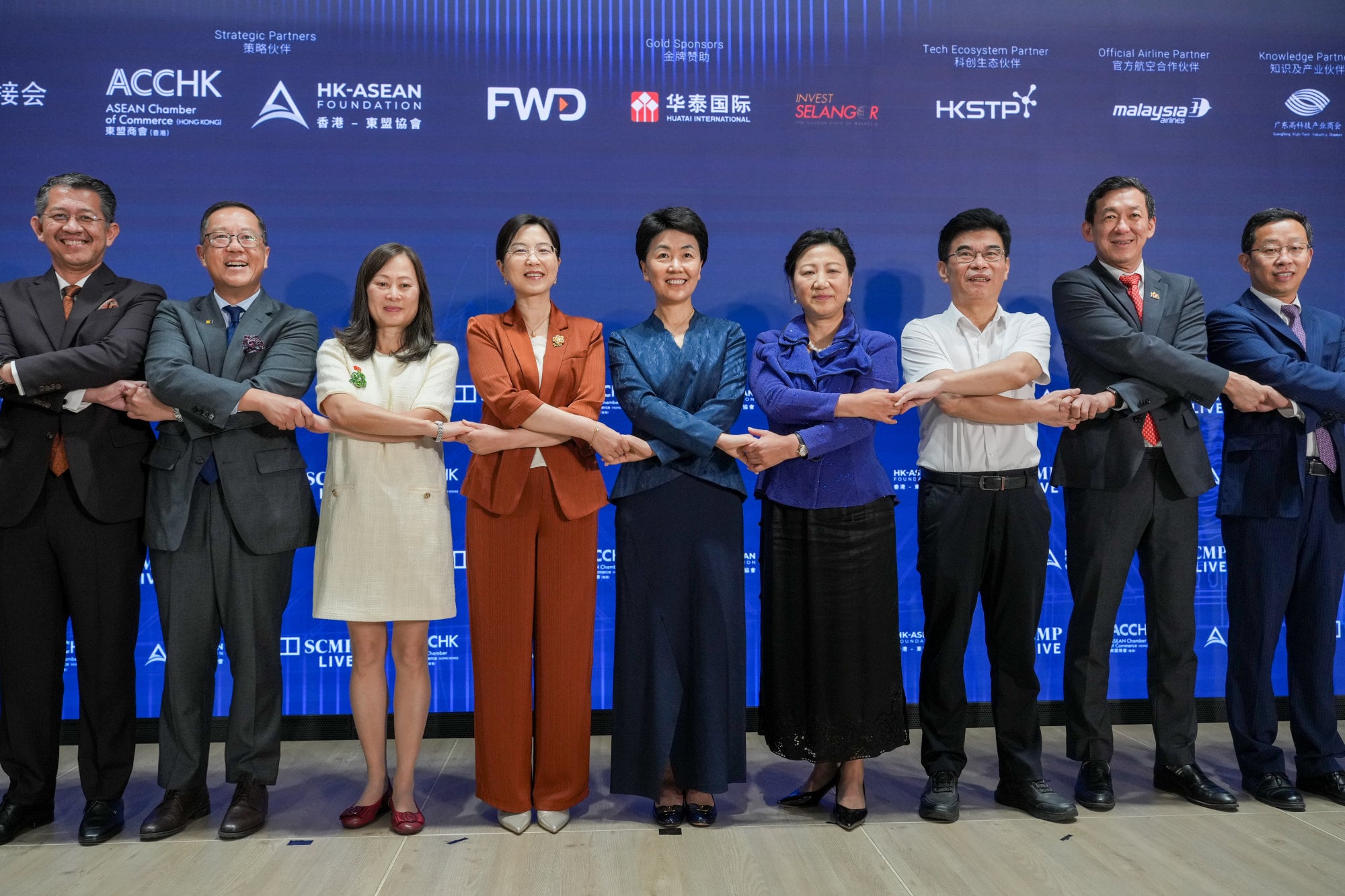
Sun, who handles party-to-party diplomacy, was speaking at the Greater Bay Area-Asean summit in Shenzhen, southern China’s Guangdong province, on Wednesday.
The event was organised by the South China Morning Post.
She said the country’s history had influenced its cultural genes, which, like biological genes, “will be passed down through the generations in a large proportion”.
“For example, some countries in the world have a history of war, so it is really difficult for them to maintain peace for a long time.”
It was a mistake to apply to China the logic that a major power inevitably became a hegemon, stressed Sun, who was ambassador to Asean-member Singapore from 2022 to 2023.
Beijing has touted its rise as an example of “peaceful development” since the early 2000s and frequently describes itself as a unique major power that has never actively initiated a conflict nor formed an exclusive military alliance since the end of World War II.
In recent years, China has promoted other diplomatic phrases, such as its goal of building a “community with a shared future for mankind” and positioned itself as an advocate of the existing international order, introducing a suite of initiatives spanning development, security and good governance.
However, containment from existing hegemonic powers and external forces pursuing their own agendas had prevented these concepts from gaining widespread acceptance, drawing scepticism and opposition instead, Sun said, in a swipe at the United States.
“Some are following the hype in order to push domestic problems onto emerging powers, such as high inflation, increasing unemployment, people’s livelihood difficulties, ethnic conflicts and other governance problems, treating internal diseases externally to avoid their own dereliction of duty.”
In addition, provocations by certain politicians only proved their underlying trust in China’s commitment to peace, as they would never dare to provoke a real hegemon in this manner, she added, without naming any names.
At the event, SCMP publisher Tammy Tam noted that Hong Kong shared long-standing ties with Asean, adding that the city’s drafting of its first five-year plan was particularly critical at this point.
In a separate discussion on Wednesday, Sun addressed energy security challenges confronting both China and the Asean member states.
The fallout from the US-Israel war on Iran has rattled global energy markets, driving up the prices of fuel and derivative products such as fertiliser.
Southeast Asia is among the regions hardest hit by the energy crisis due to its heavy reliance on oil and gas imports from the Persian Gulf. Governments have introduced drastic measures to offset the crisis, including shortened workweeks, remote-work protocols, subsidies and price freezes.
“If you look around the world, our region has the best conditions, the most advantages, and is most likely to take the lead in solving this [energy] problem ... because we are prepared,” Sun said, citing China’s highly diversified energy sector and its renewable energy products, which she described as being of the “highest quality and most affordable”.
Beijing was more than willing to share its experience and technology with Asean countries so they could cooperate on energy security, Sun said.
The energy crisis could not be resolved by any single country but should be addressed through coordinated planning among countries in the region, she added.
In March, when the Iran war began, China pledged to work with Southeast Asian nations on energy security, confirming that the country would continue to sell fertiliser to international markets as concerns mounted over its restrictions on fuel exports.
Southeast Asian nations, including Singapore, have recognised Beijing as a key player in the region’s ambitious green transition, with Chinese firms striking major deals on energy infrastructure projects in the region. -- SOUTH CHINA MORNING POST