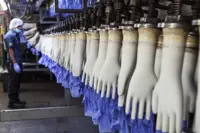
KUALA LUMPUR: The Malaysian Rubber Glove Manufacturers Association (MARGMA) has called on the government to remove or reduce the export cess, introduce stronger investment incentives, and enhance tax and labour policies under Budget 2027.
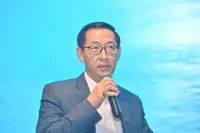
Its president Oon Kim Hung said the proposed initiatives are aimed at strengthening the industry’s cost competitiveness, encouraging continued investment and innovation, supporting workforce transformation, and safeguarding Malaysia’s position as a leading global hub for rubber glove manufacturing and exports.
"We urge the government to undertake a review of the imposition of the 0.2 per cent export cess, with a view to removing it.
"If full removal is not immediately feasible, the government could substantially reduce the rate and introduce a periodic review mechanism based on prevailing industry conditions, export competitiveness and the cumulative cost burden faced by manufacturers,” he told Bernama.
Oon also calls for a more flexible and competitive energy-cost framework, mainly for natural gas and electricity.
"For natural gas, review reserved capacity (RC) and take-or-pay (TOP) mechanisms to allow greater flexibility where actual consumption falls below contracted levels because of market conditions, and review transportation and distribution charges to ensure that they remain internationally competitive.
"For electricity, major future tariff revisions should also be communicated through a transparent and predictable mechanism to improve business planning,” he said.
Tax incentives and policies
MARGA also calls for the government to introduce an enhanced tax incentive specifically for Malaysian manufacturers commercialising locally developed research and development (R&D) outcomes, said Oon.
"Qualifying expenditure could include pilot production, product and process validation, scale-up activities, testing and certification, specialised machinery and equipment required for commercialisation, technology deployment and other costs incurred in transitioning from R&D to commercial production.
"This could be complemented by matching grants or co-funding for high impact projects in areas such as advanced materials, specialty gloves, sustainable manufacturing, automation, artificial intelligence and process innovation,” he said.
Oon said the association recommends introducing targeted skills-development incentives for manufacturers undergoing automation and digital transformation.
This includes enhanced tax deductions for approved technical and digital training, matching grants for company-led reskilling programmes, support for structured industry-university and industry-TVET collaborations.
Enhance labour policies
Oon added that the government should establish a predictable and needs-based foreign-worker framework for export-oriented manufacturers.
He noted that companies should be allowed to apply based on verified manpower requirements, supported by clear eligibility criteria and fixed processing timelines.
"Consideration should be given to a faster approval mechanism for employers with strong compliance records and demonstrated difficulty filling identified positions with Malaysians.
"Greater policy certainty over a defined period would also allow manufacturers to plan automation, recruitment and production requirements more effectively,” he added.
Stronger investment framework
Oon suggested the government extend Green Investment Tax Allowance (GITA) beyond Dec 31, 2026, provide a longer claim period for projects implemented in phases and allow qualifying investment programmes to be undertaken over a realistic multi-year timeframe.
He also recommends introducing a multi-year investment framework with measures that could include enhanced reinvestment allowance, accelerated capital allowances, automation or matching grants, and broader recognition of qualifying expenditure for retrofitting existing facilities.
"Eligible expenditure should include automation equipment, smart manufacturing systems, digitalisation, artificial intelligence, process-control technologies and Industry 4.0 solutions, while consideration should also be given to allowing qualifying projects to be implemented and claimed in phases,” he said.
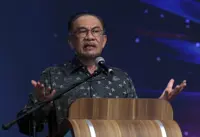
Prime Minister Datuk Seri Anwar Ibrahim, who is also Finance Minister, is scheduled to table Budget 2027 on Oct 9.
-- BERNAMA
TAGS: MARGMA, rubber gloves, export cess, tax, labour, Oon Kim Hung,