
Hong Kong police will enable artificial intelligence-powered facial recognition technology across their expanding smart surveillance network this month to improve the tracking of missing persons or suspects, with plans to save the data it generates for up to 180 days.
The force said the facial recognition technology was widely used by law enforcement agencies around the world and stressed that residents’ privacy rights would be protected.
“Leveraging AI [facial recognition] would cut the time we spend reviewing the closed-circuit television [CCTV] footage to track down target persons,” Eric Leung Ming-leung, senior superintendent of the force’s operations wing, said.
“This technology will speed up the initial review and free our officers for other investigative work.”
Leung said that tracking missing persons or suspects often tied up many patrol officers. Facial recognition was akin to having extra officers who could search around the clock to locate those people more efficiently, he added.
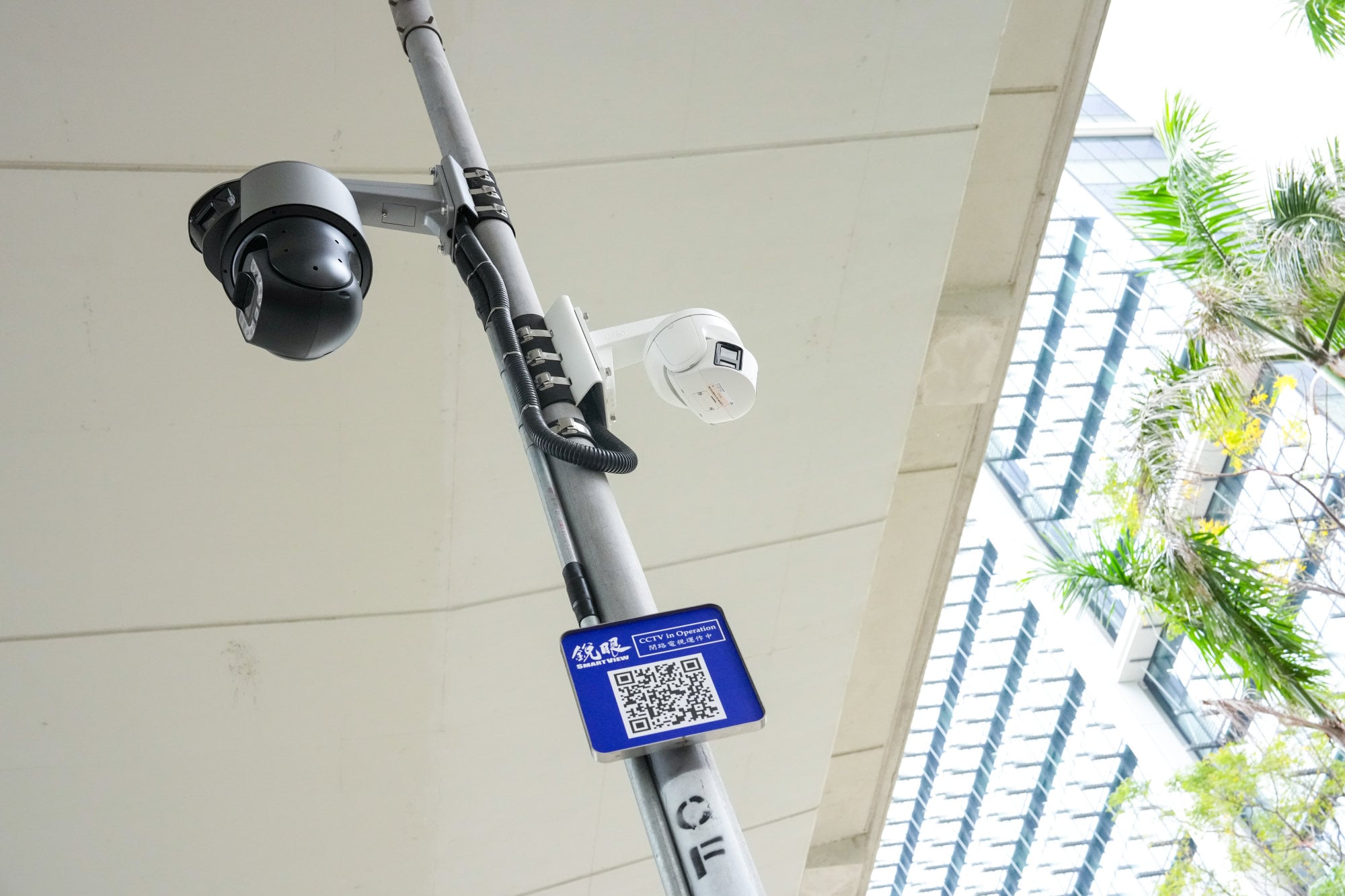
He said the facial recognition technology in the “SmartView” surveillance camera installation programme would work in two ways.
Officers could input a suspect’s facial features and ask the system to check whether the person had appeared in specific footage or on certain cameras within a given time frame, allowing them to review the person’s movements.
The second function would operate in real time. For example, Leung said that if an elderly person went missing and could not be traced in past footage, their facial features could be entered into the system, which would then send an alert about when and where the person appeared on camera for police to follow up.
He stressed that searches in the system would require approval from an officer at the inspector level or above and must be aligned with the goals of safeguarding national security, preventing and detecting crime and ensuring public safety.
Officers would also have to justify their use of the system, such as how many cameras and how much footage they needed to review, and whether that scope was proportionate to their investigation, Leung said.
The officer who approved the search would then check whether the search had gone beyond the approved scope or strayed from its original purpose, he added.
In terms of data storage, Leung said police had to comply with the relevant ordinance and that storing the footage was costly, so data should not be kept for more than 31 days to balance operational needs with resources.
However, data generated by the facial recognition function could be retained for longer as it occupied less storage space than video footage, he said.
The force said it planned to keep relevant data, such as when and where a person appeared in footage, for no more than 180 days.
“We think that if we can keep the data longer, it will be better for our investigation,” Leung said.
“Some cases took place six months or even a year ago, so the longer the data is kept, the better it will be for us.”
The force stated that all CCTV cameras installed under the SmartView project captured only public areas, and that all operating procedures were based on independent privacy impact assessments and discussions with the Office of the Privacy Commissioner for Personal Data (PCPD), to ensure residents’ privacy rights were protected.
In response to South China Morning Post queries, the PCPD said it would not comment on individual cases, but that all data users were required to comply with the requirements of the Personal Data (Privacy) Ordinance and its relevant data protection principles when they collected, held, processed or used personal data in Hong Kong, regardless of whether facial recognition technology was involved.
“From time to time, the PCPD provides our observations and views from the perspective of protecting personal data privacy to government departments and bureaus on their new initiatives or proposals to facilitate compliance with the requirements of the [ordinance],” the privacy watchdog added.
The SmartView project, first rolled out in 2024, included plans to install 60,000 cameras across the city by 2028.
Leung said SmartView had already used AI for people counting and automatic licence plate recognition. As of the end of October, the system had helped police solve 2,192 criminal cases, including murder, arson and theft, and arrest 2,831 people.
In the first phase, Leung said police had focused on cameras operated by government departments and public organisations, and they would expand the initiative to private organisations in the next phase, starting from locations with higher pedestrian flows, such as shopping centres and transitional housing.
Police had talked with several shopping centres about linking their cameras to the system, he said, adding that the response had been positive and the first batch could be connected as early as the end of this year.
Secretary for Security Chris Tang Ping-keung previously said that authorities were still considering whether to put up additional notices telling the public that a shopping centre’s cameras had been linked to the police system, arguing it “may not be necessary” as many malls had already displayed recording notices.
Leung said police encouraged the shopping centres to put up notifications, as the system gave the public much confidence.
“If people know the shopping centre is working with us, they will feel safer, which could have a positive impact on its business.” -- SOUTH CHINA MORNING POST