




Global pharmaceutical firm AstraZeneca on Thursday said it would start selling a cancer drug after coming under criticism for failing to bring it to the US market faster, prompting some Americans to fly to Shanghai to procure the potentially life-saving medicine first developed by China.
In recent months, desperate Americans have travelled to China to obtain the Chinese-made cancer drug that was approved by the US Food and Drug Administration but remained unavailable in the country for more than a year, according to a cancer-treatment awareness advocate who made the journey while his mother was battling the disease.
“I’m very thankful to all the development that companies in China have done because it saved my mum’s life,” Max Doppelt, chief executive of Patient Data Vault, a consultancy that connects cancer patients to clinical trials, told the South China Morning Post.
Developed by China’s Dizal Pharmaceutical, sunvozertinib is a targeted lung cancer drug designed to treat adults with an advanced form of the illness, offering another treatment option for patients.
“Being in China physically, when I was there, I felt a very strong presence of connection between two very foreign, two very different places,” Doppelt said.
“We are all human beings, and health transcends it all. There are no political biases or sides when it comes to health.”
He added that he knew of at least 30 other Americans who had made the same trip.
Doppelt said he decided to travel to Shanghai to obtain the drug after his mother’s lung cancer spread to her brain in January 2025, when she had about 10 tumours.
At a lung cancer conference, a doctor told him that if his mother “happened to have lived in China, she could just get it”, as the country had approved the drug in 2023.
“I became pretty obsessed over it because my first reaction was, well, why don’t we go to China?”
However, at the time, he grew increasingly concerned about the escalating trade war between Washington and Beijing, marked by tit-for-tat tariffs and export controls.
“I was reading that in the news every day. So my main concern was: in six months, will there still be an avenue and a route for my mum to get this medicine?”
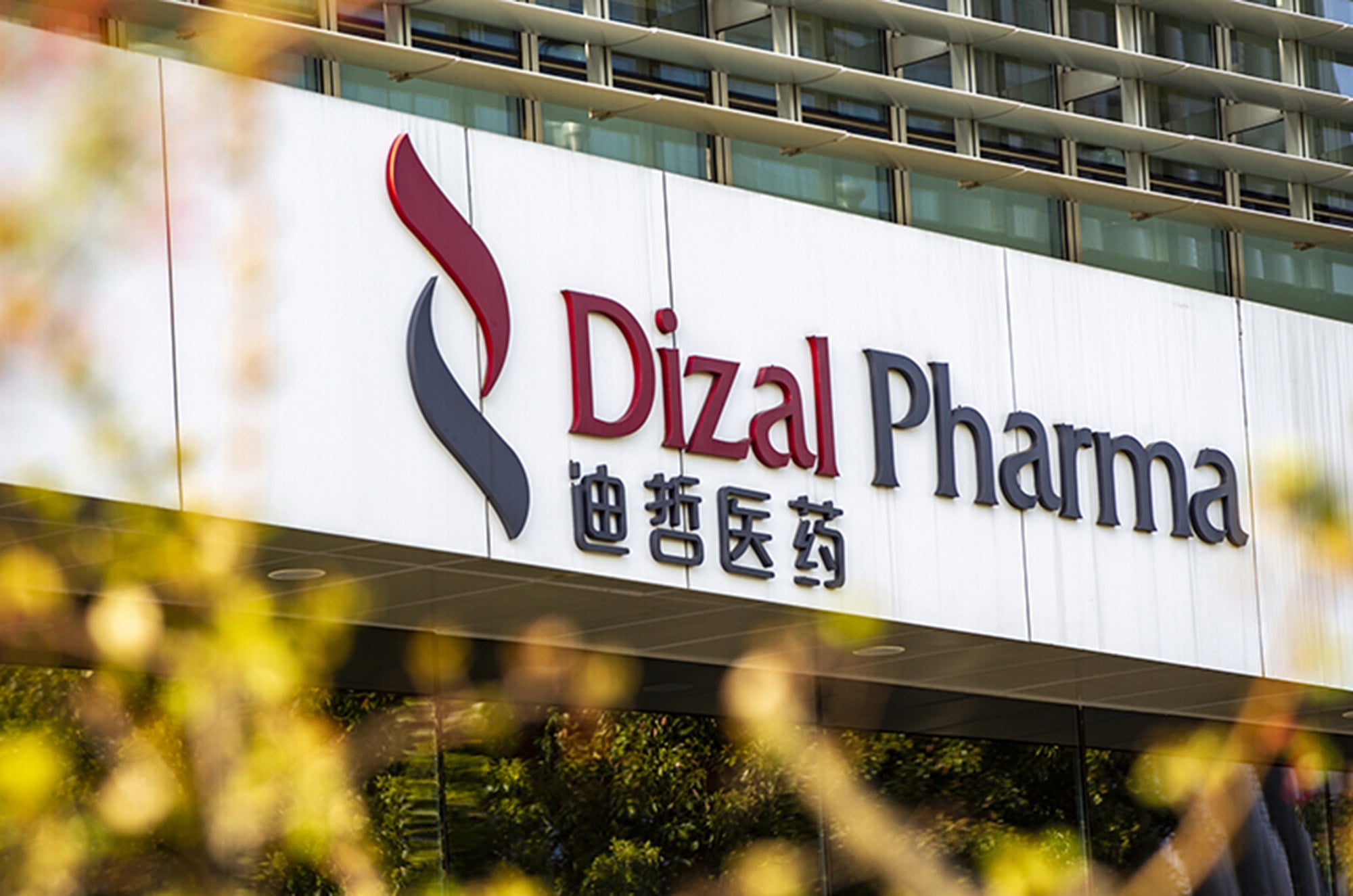
Despite the geopolitical tensions, he flew to China and returned home with 26 boxes of the China-made drug.
The Washington Post first reported the story on Tuesday.
AstraZeneca said on Thursday that sunvozertinib would be commercially available in the United States under the brand name Zegfrovy, after securing worldwide rights to develop and sell the drug from China’s Dizal Pharmaceutical.
While the FDA granted an “accelerated approval” to the drug in July 2025, AstraZeneca announced its “exclusive license agreement” with China’s Dizal Pharmaceutical in July of this year.
“AstraZeneca will acquire worldwide rights to develop and commercialise Zegfrovy,” the company said in a press release.
The deal included a US$600 million upfront payment to Dizal, with a further US$900 million potentially payable upon meeting specific regulatory clearances, as well as tiered royalties on global sales of Zegfrovy.
“The transaction is expected to close in the second half of 2026, subject to customary closing conditions and regulatory clearances,” the statement added.
In an email response to the SCMP, an AstraZeneca spokesperson said the global licensing agreement was “completed” only on September 1, 2026, and that the firm “has been working to make Zegfrovy available to patients in the US as quickly as possible”.
“By making Zegfrovy available in the US, we are bringing an oral, mutation-specific treatment option to a distinct patient population with substantial unmet need,” the spokesperson added.
Doppelt said he initially chose not to speak publicly but became “increasingly frustrated” that the drug remained unavailable in the US despite an FDA approval.
“Every single quarter, we have been told as a community, of all the lung cancer patients who have this mutation, that it’s going to be ready next quarter. It’s going to be next quarter.”
However, Doppelt said he would not blame the drug maker for the 15-month delay.
“Without AstraZeneca, we wouldn’t even have the drug today.”
Kyle Concannon, a doctor-scientist at the University of Colorado, said Washington needed to change its approach to developing and adopting new treatments.
“If the US wants to remain competitive and ensure patients don’t have to travel across the world for treatments, we need to both accept greater risk, recognising that for many patients the alternative is no treatment,” he wrote on social media.
Anne Wojcicki, CEO and founder of the 23andMe Research Institute, noted that China had transformed from a country known for producing raw materials into a global force in drug discovery, contrasting its position with that of the US in the early 2000s.
“The world has flipped. It’s remarkable how China has become a powerhouse in drug discovery and is now leading,” she said on social media.
She added that artificial intelligence would bring another shift in the industry, with large-scale data initiatives and “nimble regulatory oversight” key to driving progress.
China has rapidly expanded its pharmaceutical sector, taking the lead in clinical trial registrations between January 2024 and June 2025 with 24 per cent of the world total, according to World Health Organization data compiled by the British Medical Journal.
China’s share of global early-stage drug-development programmes rose from 8 per cent in 2015 to 32 per cent in 2024, closing the gap with the US, whose share fell from 48 per cent to 37 per cent over the same period, according to a study published in the Journal of the American Medical Association in March 2026.
Doppelt called for FDA reforms, including greater transparency around clinical trials and data reporting, as well as greater openness to testing new cures.
He also pointed to China’s approach to cellular therapy research, saying the US could adopt some of its practices.
“In China, I think we could learn something from them because there are dozens of cellular therapy trials that are spun up all the time.” -- SOUTH CHINA MORNING POST


