




The Chinese ambassador to the United States, Xie Feng, has described the personal rapport and “mutual respect” between Chinese President Xi Jinping and US President Donald Trump as the “most valuable strategic asset in our bilateral relations”.
“Their personal connection and in-depth dialogue have helped keep China-US relations on course at critical moments,” Xie said during a speech on Wednesday marking National Day celebrations at the Chinese embassy in Washington.
“Head-of-state diplomacy anchors the bilateral relationship.”
The ambassador’s comments come days after Xi’s state visit to the US, during which Trump pulled out all the stops to make the trip a grand affair.
It included an airport welcome, a formal White House reception, a state dinner attended by leading American business executives, a meeting over tea and a visit to the National Archives.
During the meetings, both sides agreed to build a “constructive relationship of strategic stability” based on “respect, fairness and reciprocity”.
Xie also highlighted expected meetings between the two leaders at the Asia-Pacific Economic Cooperation (Apec) gathering in Shenzhen in November and the Group of 20 (G20) summit in Miami in December. He said their “support for each other” gave “fresh momentum to Asia-Pacific cooperation and global governance”.
The relationship Xie described dates to April 2017, when Trump first hosted Xi at Mar-a-Lago in Florida, saying they had “developed a friendship”.
That personal channel survived a trade war, the pandemic and a four-year interruption under president Joe Biden, before being revived last October on the sidelines of the Apec meeting in Busan.
Repeated phone calls kept the contact alive until Trump travelled to Beijing in May, the first visit by a sitting US president to China in nearly a decade.
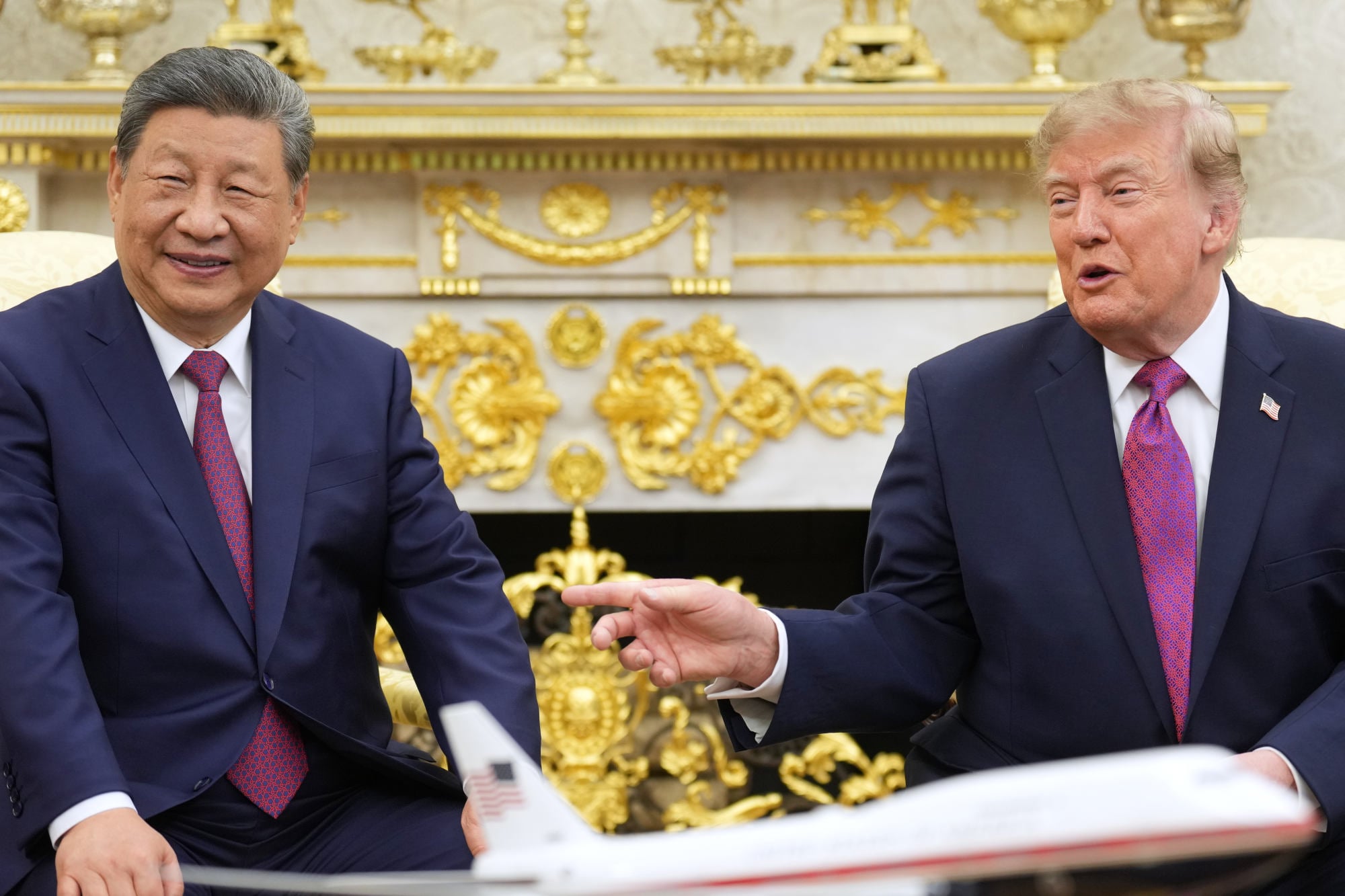
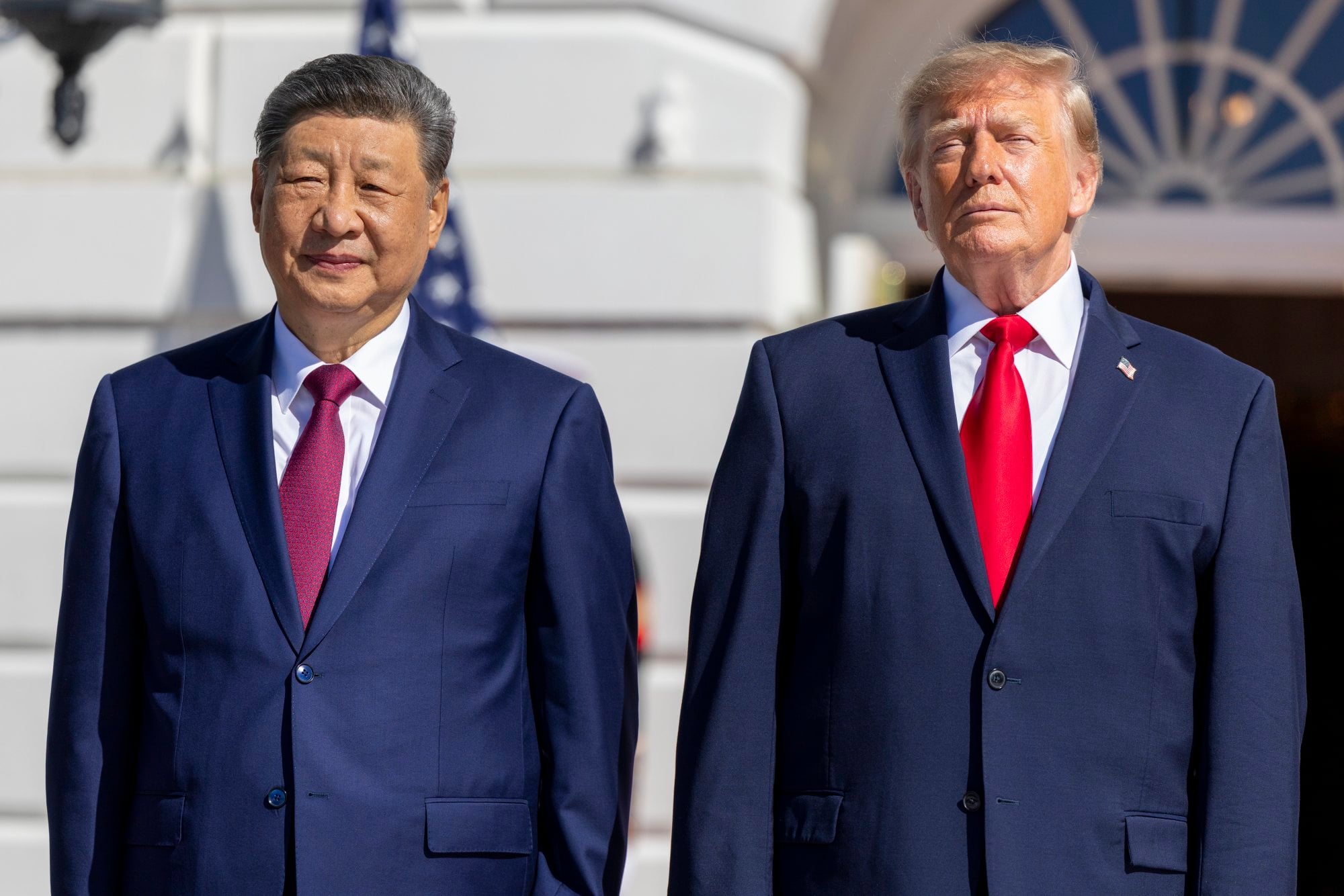
At the White House arrival ceremony last week, Trump said: “From the time of my first election in 2016, President Xi and I have forged a friendship, a truly great friendship, actually, built on mutual respect and the vital interests of our people.”
Xi returned the favour, saying: “President Trump and I have respect for each other. We have built personal rapport and stayed in touch.” He said he had come to Washington “to carry on our friendship”.
This year’s National Day celebration at the Chinese embassy had more invited speakers and more emphasis on people-to-people connection between the two countries than last year.
In keeping with tradition, the US State Department issued a congratulatory note on its website: “The United States wishes the people of China goodwill, along with peace, health and happiness in the coming year.”
During his speech on Wednesday, the Chinese ambassador highlighted China’s advances in technology, pointing to developments by tech giant Huawei and AI start-up Kimi as evidence of the country’s progress despite US restrictions on access to advanced technology.
“The Tau Scaling Law gives a new approach to improving chip performances,” Xie said.
In May, Huawei unveiled the Tau Scaling Law and chip architecture that it said could deliver 1.4 nanometre-level performance in coming years without relying on advances in chipmaking equipment tools.
As part of a US-led campaign to restrict China’s access to advanced semiconductor technology, Chinese companies are barred from acquiring the most advanced extreme ultraviolet lithography machines, traditionally required to produce powerful chips at the 3nm and lower process nodes.
While last week’s summit produced no breakthrough on easing US chip controls, the two leaders covered a wide range of issues.
In their meeting on September 24, Xi urged Trump to explicitly oppose Taiwan independence, saying he hoped the US side would “adhere to the correct position of opposing ‘Taiwan independence’”, according to a statement from Beijing’s foreign ministry. The White House did not mention Taiwan in its statement.
On Monday, Trump denied discussing US arms sales with his Chinese counterpart, disputing US ambassador to China David Perdue’s account in a Fox News interview a day earlier that the US president had proposed selling weapons to China.
“I never heard of that one,” Trump said. “I am gonna have to ask him. You mean we’re going to sell? No, they’d probably like to buy it because we do make better equipment than that, so maybe it’s a good idea. But we didn’t discuss.”
Speaking to Fox News after Xi’s visit, Perdue said: “[Trump] actually asked President Xi, would he like to buy some at one point.”
Perdue did not say when Trump raised the question, what prompted it, or how Xi responded.
Beijing sees Taiwan as part of China to be reunited by force if necessary. Most countries, including the United States – Taiwan’s main international backer – do not recognise the self-ruled island as an independent state. However, Washington is opposed to any attempt to take Taiwan by force and is committed to supplying it with weapons.
According to the Chinese embassy, the two militaries also agreed to conclude a memorandum of understanding on “crisis communication and prevention as soon as possible”. The US side made no mention of military cooperation.
The South China Morning Post reported earlier this month that the two sides were expected to announce measures to improve military-to-military communication.
Among the economic deliverables, both sides extended the Busan trade agreement for two more months, until January 10, 2027.
The deal signed in Busan, South Korea, in October 2025 lowered US tariffs on some Chinese goods, suspended additional US restrictions on Chinese-affiliated companies, paused certain Chinese rare earth export controls, and secured new Chinese commitments to buy American soybeans. The arrangement was due to expire on November 10.
At the summit last week, Beijing and Washington also launched the Board of Trade mechanism and on Sunday announced a range of products in non-sensitive sectors, capped at US$30 billion each, for tariff reduction.
The White House released tariff-reduction lists that included 77 categories of Chinese imports into the US and 1,619 US imports into China.
The US import list covered a range of consumer goods, including microwave ovens, electric irons, Christmas ornaments and toys. China’s list was dominated by agricultural products, including beef and vegetables, but also included coal, timber and medical devices such as hearing aids and pacemakers.
On artificial intelligence, the two sides announced an AI dialogue to exchange views on the technology’s “risks and benefits”, with the next meeting scheduled for November. They also agreed to establish a “bilateral communication channel” to discuss AI-related incidents. -- SOUTH CHINA MORNING POST


