




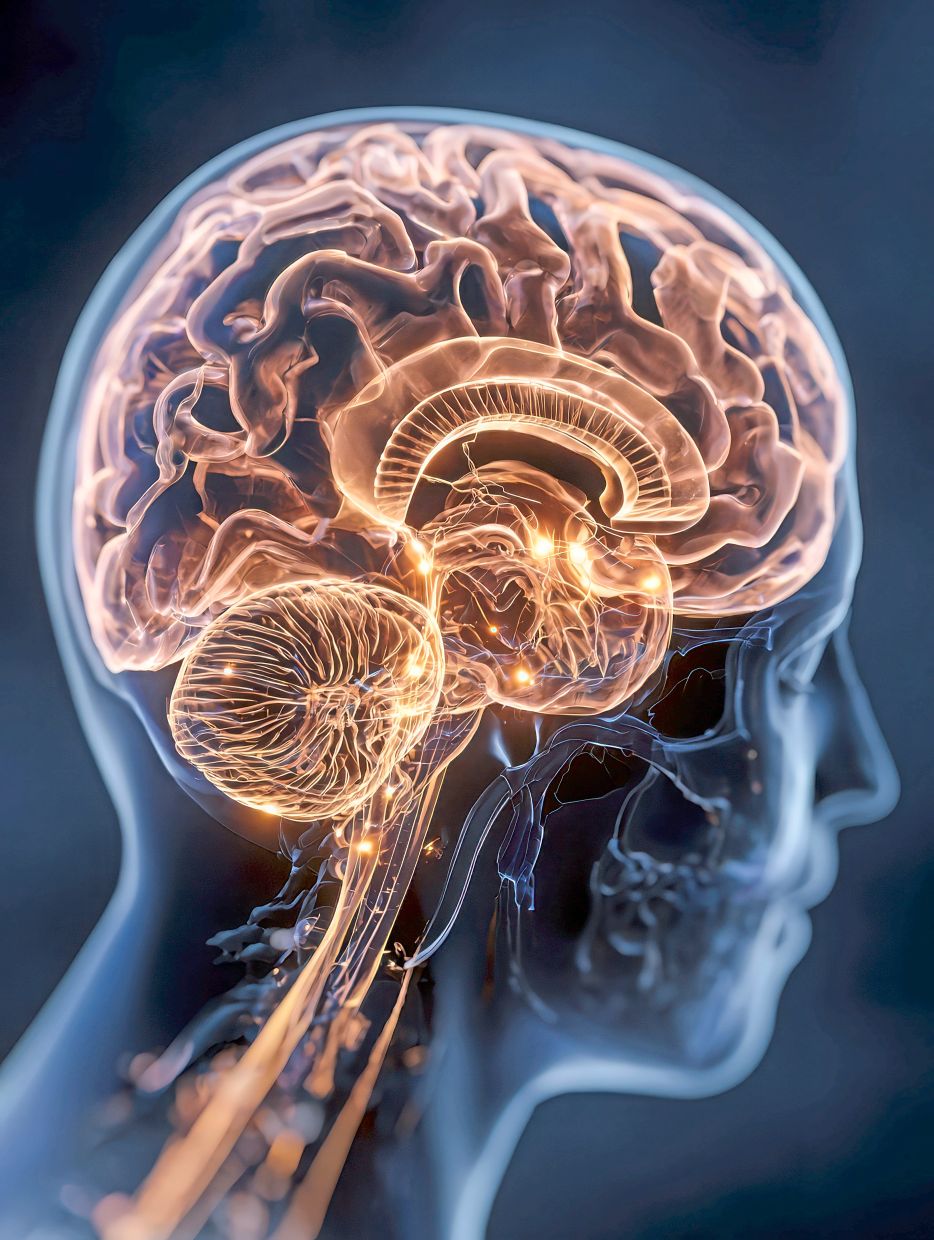
As neuroscience continues to evolve, specialists are exploring a wider range of approaches to managing stroke and other neurological conditions, from medication and interventional procedures to surgery
ADVANCES in neuroscience are changing the way conditions such as stroke and brain aneurysms are treated.
For some patients, procedures that once required more invasive approaches can now be performed through tiny punctures in a blood vessel.
But choosing the right treatment is not simply about avoiding surgery; it is about finding the most appropriate approach for each patient, at the right time.
When neurological symptoms strike, speed can make an enormous difference. A sudden loss of strength, speech or vision, for example, may signal a stroke requiring urgent treatment.
At the same time, advances in imaging, medications and minimally invasive procedures have greatly expanded the options available to doctors.
Consultant neurologist Dr Rishikesan Kuppusamy and consultant interventional radiologist Dr Arvin Rajadurai explained how modern neuroscience combines rapid diagnosis, multidisciplinary expertise and increasingly sophisticated treatments to give patients the best possible chance of recovery.
They were speaking at the recent Neuroscience Excellence Showcase held at Pantai Hospital Kuala Lumpur.
Treating the brain through blood vessels
One of the major developments has been the growth of neurointerventional procedures, in which doctors can reach blood vessels in the brain through a small puncture, commonly in the groin or wrist.
“It involves treating the vessels in the brain through a really small hole, usually either in the arm or groin,” explained Dr Arvin.
An important application is the treatment of acute ischaemic stroke, which occurs when a blood clot blocks an artery supplying part of the brain.
“In the past, this was treated with medication. Now, we can use combination therapy, which may involve medicine as well as removing the clot through a blood vessel,” he said.
For patients with a blockage in a large brain artery, a procedure known as mechanical thrombectomy may be performed.

A thin catheter is guided through the blood vessels to the site of the blockage, where specialised devices are used to retrieve the clot and restore blood flow to the brain.
Interventional techniques have also transformed the treatment of some brain aneurysms.
Rather than using open brain surgery, selected aneurysms can be treated from within the blood vessels using techniques such as coiling, stent-assisted procedures or flow-diverting devices.
Dr Arvin said these procedures can be performed through a small puncture in the arm or groin, reflecting how advances in interventional techniques have expanded the options available for treating brain aneurysms.
When recovery can begin immediately
In stroke treatment, time remains crucial because brain tissue deprived of blood and oxygen can rapidly become damaged.
Dr Arvin said early intervention is important, with interventional procedures aimed at addressing the underlying problem, particularly in cases involving symptoms such as arm or leg paralysis.
However, the degree of recovery depends on factors such as the location and severity of the stroke, how much brain tissue has already been affected and how quickly blood flow can be restored.

Rehabilitation may still be needed to help patients regain movement, speech and independence.
Nevertheless, advances in imaging, catheters, clot-retrieval devices and other technologies have continued to expand what specialists can offer.
“There’s constant research into improving devices, and as these get better, outcomes also improve,” he added.
Medical, interventional or surgical?
When a patient arrives with neurological symptoms, one of the first priorities is establishing what has happened inside the brain.
“The patient comes in and scans are carried out to find the cause of the symptoms,” explained Dr Rishikesan.
“Depending on the duration and type of symptoms, the doctor will decide what investigative scans are needed. All these are carried out as soon as possible.”
This distinction is particularly important in stroke. An ischaemic stroke is caused by a blocked blood vessel, while a haemorrhagic stroke occurs when a blood vessel ruptures and causes bleeding in or around the brain. The treatments are very different, which is why urgent brain imaging is essential.
For an ischaemic stroke, treatment may involve medication and, in suitable patients, an interventional procedure to remove the clot. When there is bleeding in the brain, the neurologist may work closely with a neurosurgeon and other specialists to determine whether surgery is necessary.
“Sometimes surgery can be carried out, sometimes not,” said Dr Rishikesan.
In other words, modern neurological care is not a choice between “surgery” and “no surgery”.
The aim is to identify the problem quickly and choose the treatment most likely to provide benefit while balancing its potential risks.
Know when symptoms are an emergency
For patients and their families, however, the first challenge is often recognising that something is seriously wrong.
“It’s not easy for the patient or family to know whether the symptoms are indicative of an emergency,” shared Dr Rishikesan.
“But generally, if it’s sudden, severe and neurological, you go to the emergency department. We’ll help you decide if it’s surgical or medical.”
Symptoms that should raise concern include sudden double vision or loss of vision, loss of balance or coordination, weakness, difficulty speaking or slurred speech, difficulty swallowing, severe giddiness or a sudden severe headache.
A useful way to remember common warning signs of stroke is ‘BE FAST’:
> B – Balance: sudden loss of balance or coordination;
> E – Eyes: sudden visual disturbance or loss of vision;
> F – Face: facial drooping or weakness;
> A – Arm: sudden arm weakness or paralysis;
> S – Speech: slurred speech or difficulty speaking; and
> T – Time: seek emergency medical attention immediately
Rather than waiting to see whether they disappear, patients are advised to seek urgent assessment. Even symptoms that improve can require medical evaluation.
The least invasive approach, when appropriate
With minimally invasive treatments now available, patients may understandably wonder whether the goal should always be to avoid surgery.
Dr Arvin stressed that the answer depends on the individual patient, noting that if assessment shows intervention is not necessary, it may not be recommended.
For example, a patient may have relatively minor neurological deficits and imaging may show an occlusion that does not warrant an invasive procedure.
Conversely, when a significant blockage threatens a large area of the brain, intervention may offer substantial benefit in an appropriately selected patient.
The decision therefore goes beyond simply asking which treatment is less invasive.
“It can be easy to get a diagnosis. It may not be as easy to find a good solution,” Dr Rishikesan pointed out.
Doctors must consider the likely benefits of treatment against its risks, as well as the patient’s overall condition, age, functional status, circumstances and priorities.
“Sometimes, doing something carries a risk, and is the risk worth it?” he said.
“These are life questions that need to be considered.”
In some situations, the best course is clear. In others, the balance between intervention and conservative treatment is less certain.
This is where shared decision-making becomes particularly important. Rather than focusing only on what can technically be done, the neurological team considers what should be done for that particular patient.
“Communication is key,” said Dr Rishikesan, “so that everyone understands the risks, benefits and possible outcomes clearly before making a decision.”
A team around the patient
Modern neuroscience increasingly depends on collaboration.
A patient with an acute neurological problem may require input from emergency physicians, neurologists, interventional radiologists, neurosurgeons, radiologists, critical-care specialists and rehabilitation professionals, depending on the condition.
The same teamwork continues beyond the initial treatment.
Physiotherapists, occupational therapists, speech and language therapists, nurses and other rehabilitation professionals may play important roles in helping patients regain function and return to everyday life.
As neuroscience continues to evolve, specialists have a growing range of approaches to consider, with the patient’s condition and circumstances guiding the decision-making process.
Recognising neurological symptoms and seeking medical attention promptly remain important when managing acute neurological conditions.


