




The US and China should agree on international regulatory standards for artificial intelligence (AI), akin to atomic-era guardrails, said Ro Khanna, the ranking member of the US House Select Committee on China, in New York on Monday ahead of the two countries’ high-stakes summit.
The remarks come two days before Chinese President Xi Jinping is set to arrive in Washington to meet with US President Donald Trump for a closely watched summit where AI is expected to be on the agenda after the two countries agreed to establish a dialogue on the technology a day earlier.
“I hope there will be an agreement between Trump and Xi Jinping to have some safety standards,” Khanna told the South China Morning Post. “To have a ban on recursive self-improving AI and also a certification standard and inspection standard to make sure we don’t have AI models that lose control or that are misused.”
Khanna, a Democrat, said the two leaders planned to discuss AI but needed a concrete framework to reach an agreement.
Speaking with Kevin Rudd, president of the Asia Society, at an event earlier on Monday, Khanna proposed an international inspection regime to monitor frontier labs in both countries, citing Chinese firms Alibaba, Moonshot and DeepSeek alongside US labs. Alibaba owns the South China Morning Post.
“I don’t expect our president or the Chinese president to know all the details,” Khanna told Rudd, a former Australian prime minister and a prominent China scholar.
“They just need to say, ‘Yes, we need regulation. Yes, we’re committed to doing it in an international framework,’ and set a goal of three months to come to some basic understanding.”
Khanna’s comments came after eight-hour long talks in New York on Sunday between US Treasury Secretary Scott Bessent, US Trade Representative Jamieson Greer and Chinese Vice-Premier He Lifeng.
US proposes new AI safety notification mechanism with China
Bessent said the US had proposed a new AI safety notification mechanism with China, saying Washington wanted a “shared vision of common goals and common threats”.
“Winning an AI war is like winning a nuclear war; it is catastrophic to civilisation. America’s AI labs may be winning today, but nobody wins if humans lose control over AI, or if bad actors unleash chemical or biological attacks,” Khanna said.
“There are two AI superpowers in the world today. One’s called the United States of America, the second is called the People’s Republic of China, and then there’s a gap a million miles long before you get to anybody else,” Rudd added.
The pair discussed topics ranging from AI governance to US economic competitiveness and strategic diplomacy in Monday’s talks.
Khanna again urged both the US and China to ban self-recursive AI while it remains in development. “Especially because these labs will tell you they haven’t gotten there yet,” he said, adding that it wouldn’t ban something that already exists but rather impose a pre-emptive pause.
The comments come during a particularly busy week for China watchers, as Washington prepares to host President Xi for his first state visit to the United States since 2015, when Barack Obama was in office.
“At the invitation of [the] President of the United States of America Donald J. Trump, President Xi Jinping will pay a state visit to the United States from September 23 to 25,” China’s Ministry of Foreign Affairs said in an official statement on Monday.
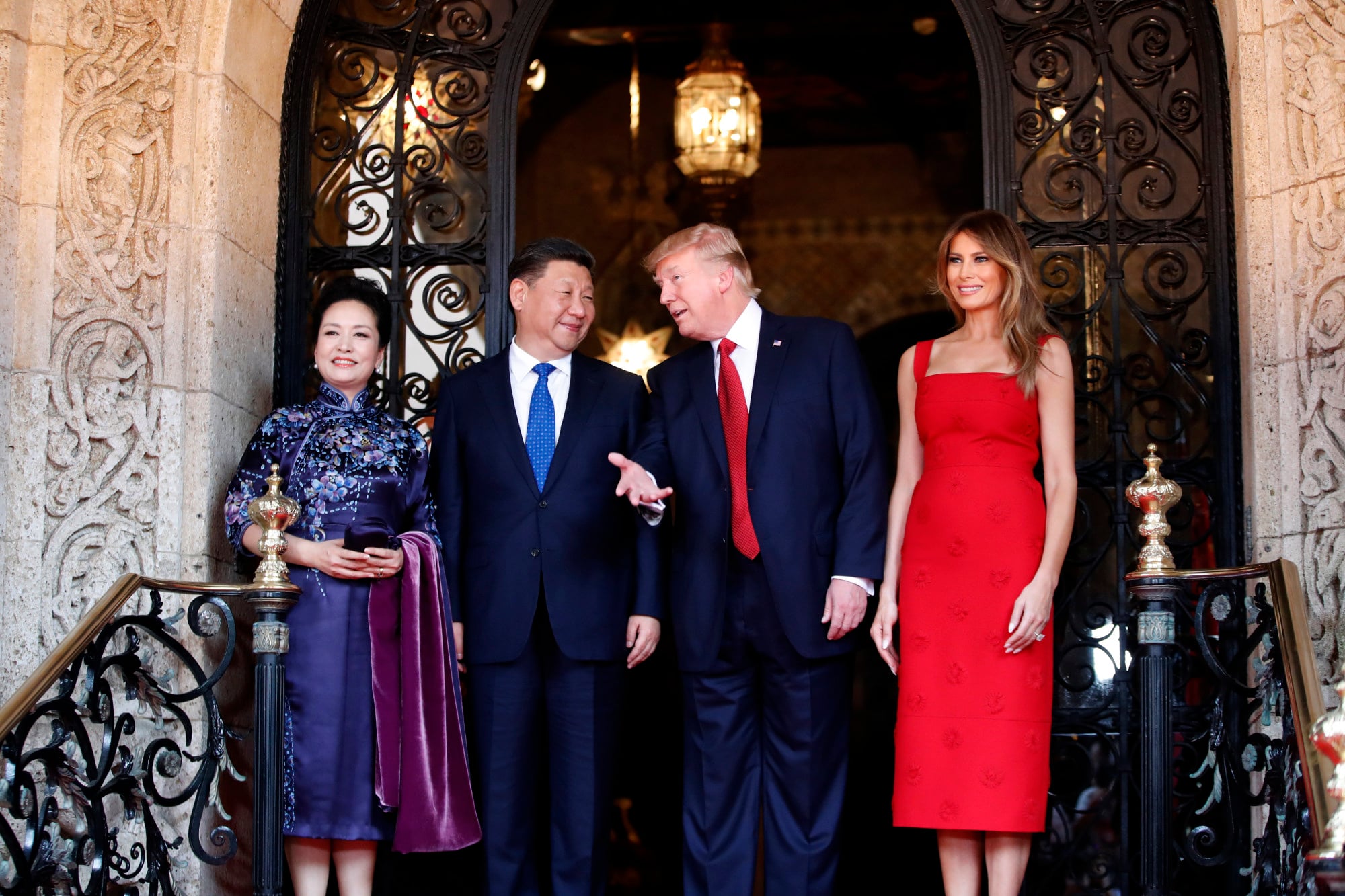
The visit will take place the same week as the United Nations General Assembly in New York and comes hot on the heels of Trump’s visit to Beijing for a bilateral summit in May.
Xi will be in Washington from Wednesday to Friday with his wife, Peng Liyuan, where he will be hosted by the US president alongside first lady Melania Trump, an event described as a diplomatic “double date”.
Researchers say AI could pose existential threat to humanity
The meeting between the two presidents comes as concerns about AI continue to mount after researchers said the technology could pose an existential threat to humanity in the next decade.
They also follow weeks of reports that AI agents have been acting beyond their assigned tasks.
Jacob Coxon, who resigned from Anthropic over concerns about how AI was being developed, was among those who sounded the alarm, warning that AI could threaten humanity while urging the US and China to cooperate to slow down their development and address safety concerns.
“I do hope that the people in China who are looking at the same problems as we are, so they’re trying to build the same technology, will come to the same conclusion that it has to be done in a measured manner, and it should be easy to cooperate on some sort of mutual slowing,” he said. -- SOUTH CHINA MORNING POST



