Chinese Foreign Minister Wang Yi held a phone call with US Secretary of State Marco Rubio on Thursday, just a week ahead of President Xi Jinping’s planned trip to the United States.
“Wang Yi stressed that the two sides should act in the spirit of equality, respect and mutual benefit” and “make good preparations for high-level engagement in the next stage,” said Mao Ning, a spokesperson for China’s Ministry of Foreign Affairs on social media.
He also called on the two sides to “send a positive message that China and the United States are committed to advancing a constructive relationship of strategic stability and jointly promoting world peace and development”.
The call is expected to have locked down final details of Xi’s closely watched visit and expected summit with US President Donald Trump.
The two top diplomats held a similar call roughly two weeks ahead of Trump’s state visit to China earlier this year.
Rubio last met Wang Yi in July on the sidelines of the Association of Southeast Asian Nations foreign ministers’ gathering in Manila. Both leaders held a 90-minute engagement and discussed possible outcomes for the September summit.
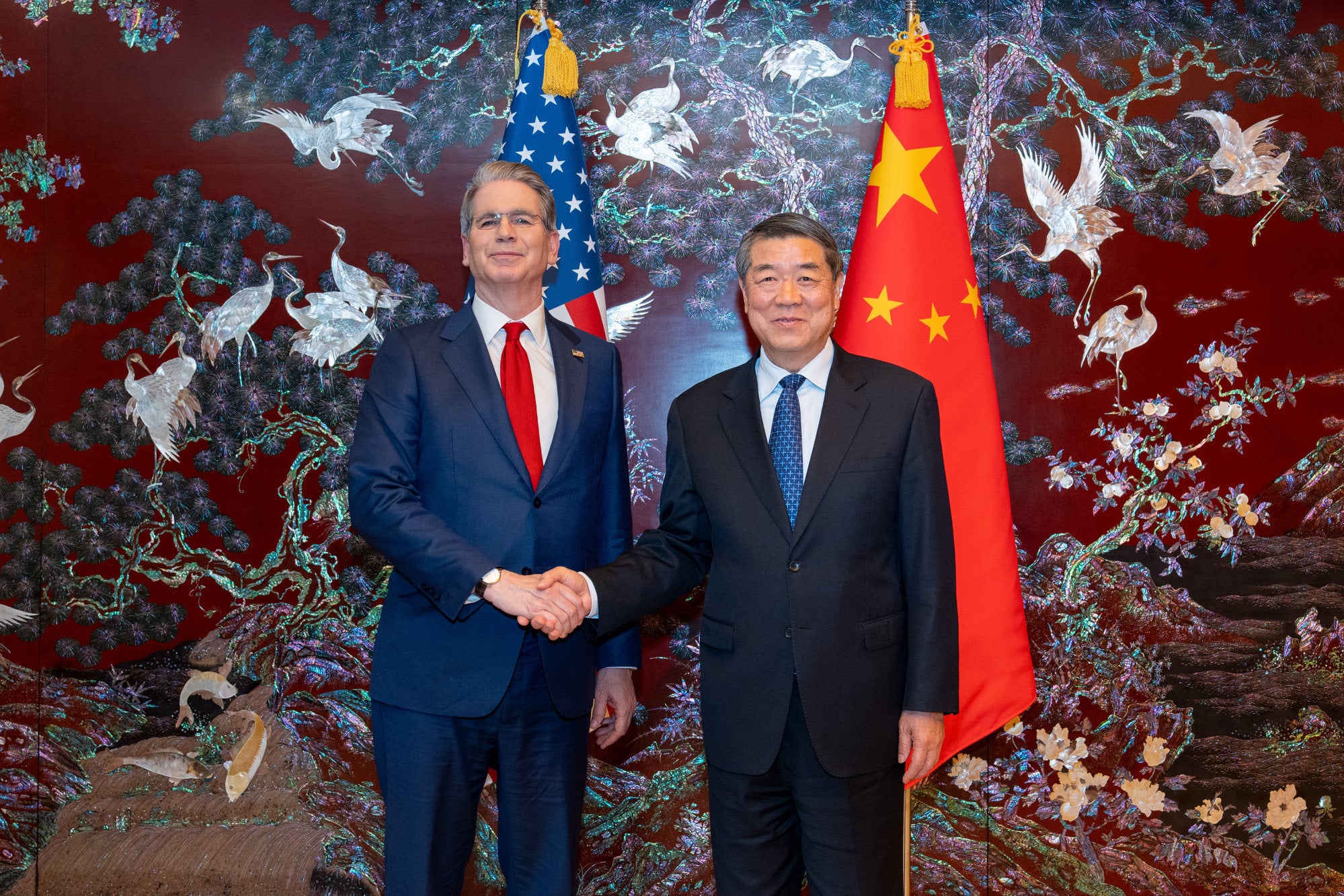
The phone call on Thursday comes just days ahead of the US Treasury Secretary Scott Bessent’s weekend meeting with Chinese Vice-Premier He Lifeng to finalise the agenda for the Xi-Trump summit.
“With China, we have had some very good private discussions, and I look forward to those continuing this weekend when I meet my Chinese counterpart, [Vice-Premier] He Lifeng,” Bessent said during a House Financial Services Committee hearing on Tuesday.
Bessent was responding to a question about the alleged role of Chinese banks in facilitating commercial transactions with Iran and Washington’s plans to take action against them.
Bessent and He are expected to finalise the likely economic outcomes of the summit and begin preparatory dialogue on artificial intelligence safety and governance.
Sources said Bessent is expected to discuss AI and economic issues with He in a single meeting, rather than hold separate high-level talks.
Bessent leads the US side in both dialogues, while the tight schedule before the summit has made it increasingly difficult to arrange a second meeting.
With Xi’s trip just a week away, Beijing and Washington are racing to lock in possible deliverables.
The South China Morning Post previously reported that one key deliverable could be an extension of the trade deal struck in South Korea last year, when Xi and Trump met on the sidelines of an Asia-Pacific summit, though Washington was not expected to push for a breakthrough.
The SCMP also reported on Thursday that both sides are discussing possible announcements to strengthen military-to-military ties.
Another issue under discussion, and a possible summit deliverable, is resuming arms-control talks suspended in 2024 over US arms sales to Taiwan, potentially with military personnel taking part in the dialogue.
Sources said both sides were exploring ways to expand military communication channels and strengthen existing ones, providing a rare area of cooperation in an otherwise fiercely competitive relationship.
As Washington and Beijing prepare for the leaders’ meeting, the US Congress on Wednesday passed a bill to strengthen sanctions against Russia by targeting Russia’s leading energy buyers – China and India.
The legislation, championed by late Republican Senator Lindsey Graham, who died in July, authorises Trump to impose up to 100 per cent tariffs on the five largest importers of Russian oil and natural gas, expanding his favourite tactic of slapping tariffs to maximise leverage and retribution.
China on Thursday pushed back against the sanctions bill, saying that Beijing “carries out economic and trade cooperation with countries on the basis of equality and mutual benefit”.
“China opposes long-arm jurisdiction that has no basis in international law or the authorisation of the UN Security Council,” Chinese foreign ministry spokesman Guo Jiakun said.
Xi is expected to hold talks with Trump in Washington on September 24, marking his first state visit to America since 2015. -- SOUTH CHINA MORNING POST