




US President Donald Trump praised China on Monday for remaining on the sidelines during the prolonged closure of the Strait of Hormuz, just weeks before Chinese President Xi Jinping is expected to visit Washington.
“Even with the Strait of Hormuz, he’s relatively inactive. He’s been relatively inactive by comparison to what he could have been,” Trump said while responding to a reporter’s question on Xi’s likely visit.
“He’s coming in a couple of weeks. He looks forward to it. I look forward to having him. We have had a very good relationship.”
Trump added that he had “a lot of respect” for the Chinese leader and believed the feeling was mutual.
“I think he respects me, and I think he respects our country again. He didn’t respect our country two years ago. He laughed at our country.”
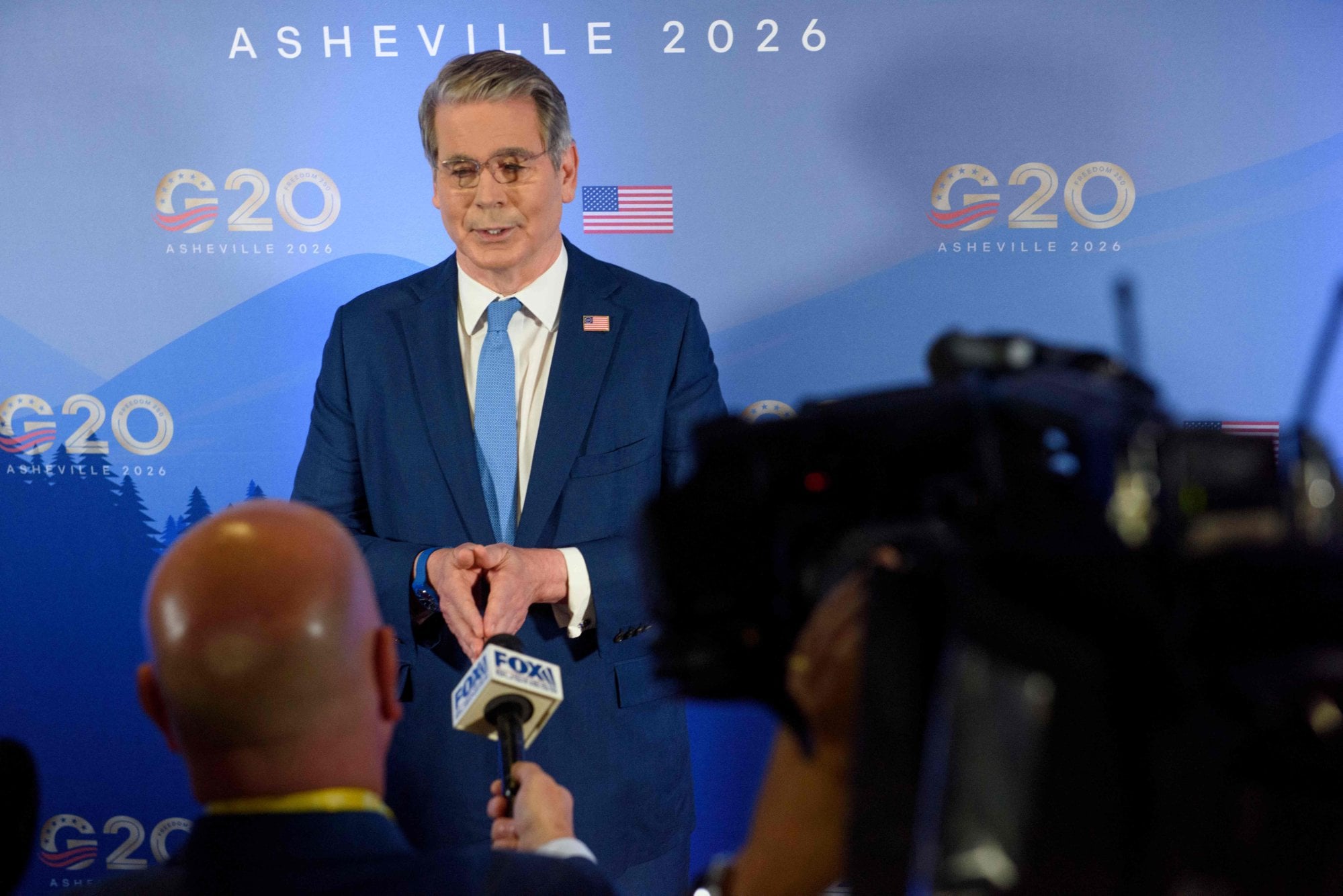
Trump’s remarks came as US Treasury Secretary Scott Bessent indicated that Chinese banks may not be targeted under the administration’s “Economic D-Day” secondary sanctions.
“I would push back on that false narrative that somehow the media has jumped on this. Oh, you can’t do it without China. Well, you can,” Bessent said in an interview to CNBC on Monday.
The comments appear to mark a climbdown by the Trump administration after it threatened to sanction Chinese banks and refiners over their commercial links with Iranian entities.
The shift underscores the issue’s sensitivity and the risks of escalating economic pressure on Beijing just weeks before the Chinese leader visits Washington.
Last week, Trump hinted that sanctions could be on the table for Chinese lenders.
Asked why the US had not sanctioned Chinese banks for their dealings with Iranian entities, Trump said: “Who said I’m not? Well, I don’t have to announce everything, do I?”
“We want to make clear here today that no one is above the reach of US sanctions,” Bessent also said last week when asked about the possibility of the US imposing secondary sanctions on Chinese banks.
The Treasury Secretary announced new sanctions against 60 entities and individuals worldwide, including some in mainland China and Hong Kong, and demanded “immediate action” from nations maintaining economic and commercial ties with Iran.
In response, the Chinese embassy in Washington said Beijing stood firmly against “illicit unilateral sanctions that have no basis in international law”.
“We will firmly protect Chinese businesses’ legitimate and lawful rights and interests,” embassy spokesman Liu Chang said.
China is the largest purchaser of Iranian oil, accounting for more than 80 per cent of the country’s total oil exports in 2025, according to data from analytics firm Kpler.
A March report by the US-China Economic and Security Commission accused Beijing of helping Tehran circumvent global sanctions through trade and financial networks, technology transfers and trade in dual-use goods.
China has rejected the accusations.
The US measures are part of the administration’s broader campaign to increase economic pressure on Tehran after military strikes and diplomatic negotiations failed to reopen the Strait of Hormuz or end the six-month conflict.
US military strikes resumed on Sunday after US forces attacked two rocket launchers on Iran’s Larak Island. Tehran retaliated with strikes on American bases in Jordan and the United Arab Emirates.
Trump on Monday declined to say whether the latest attacks on Iran would continue, while asserting that the country’s economy and military had been largely degraded.
“That doesn’t mean we won’t smack them. We’ll see what happens,” he said.
However, Trump ruled out using nuclear weapons against Iran when asked by a reporter, saying there was no reason for the United States to consider such an option.
“They’re totally defeated militarily. So now I defeat them, and now I should use a nuclear weapon on top of them? What a stupid question!” -- SOUTH CHINA MORNING POST


