
Hong Kong’s housing chief has resigned to take political responsibility for the devastating fire at Wang Fuk Court, offering condolences to the families of the victims and expressing hope that those who perished may rest in peace.
Winnie Ho Wing-yin said on Thursday that she submitted her resignation to Chief Executive John Lee Ka-chiu the previous day, becoming the only minister-level official so far to resign over the fire.
“As the secretary for housing, I’m willing to bear political responsibility for the fire at Wang Fuk Court. I hope the deceased may rest in peace, and that their families find peace to move forward and recover from their grief soon,” she said in a statement.
Earlier on Thursday, Lee announced Ho’s departure, saying that she should bear political accountability for the fire though no personal wrongdoing had been found.
The blaze, which broke out on November 26 last year at Wang Fuk Court in Tai Po, was the city’s deadliest in decades, killing 168 people and displacing nearly 5,000 residents.
Ho’s bureau led the embattled Independent Checking Unit, which an independent committee’s report found should bear the greatest responsibility for its lack of oversight.
Ho said the reform measures to be rolled out by the government and its willingness to confront the core issues raised by the fire showed authorities’ determination to take responsibility, while expressing confidence that the efforts would bring change.
Looking back on her tenure, Ho recalled her bureau’s efforts to tackle long-standing housing issues, including building light public housing and cutting waiting times for public rental housing.
“It has been a profound honour and a lifelong privilege to serve Hong Kong, a city I deeply cherish, over the past four-plus years,” she said.
She also thanked the central authorities, Lee and the government team for their trust and support.
Before Ho, other top city officials had stepped down to take political responsibility.
In 2004, health minister Yeoh Eng-kiong resigned after a Legislative Council report blamed him for mishandling the severe acute respiratory syndrome (Sars) outbreak.
A year earlier in 2003, Regina Ip Lau Suk-yee resigned as secretary for security following widespread public anger over her role in spearheading the government’s first attempt to enact national security legislation as required under Article 23 of the Basic Law, the city’s mini-constitution.
There were also officials who stepped down after becoming embroiled in personal scandals.
In early 2022, home affairs chief Caspar Tsui Ying-wai resigned following public outrage over his attendance at a birthday party during the Covid-19 pandemic.
In 2012, development chief Mak Chai-kwong stepped down just days after taking office following allegations that he was involved in housing subsidy fraud more than two decades earlier.
In 2003, financial secretary Antony Leung Kam-chung resigned after it was revealed he had bought a luxury Lexus car shortly before introducing a sharp tax increase on new vehicles.
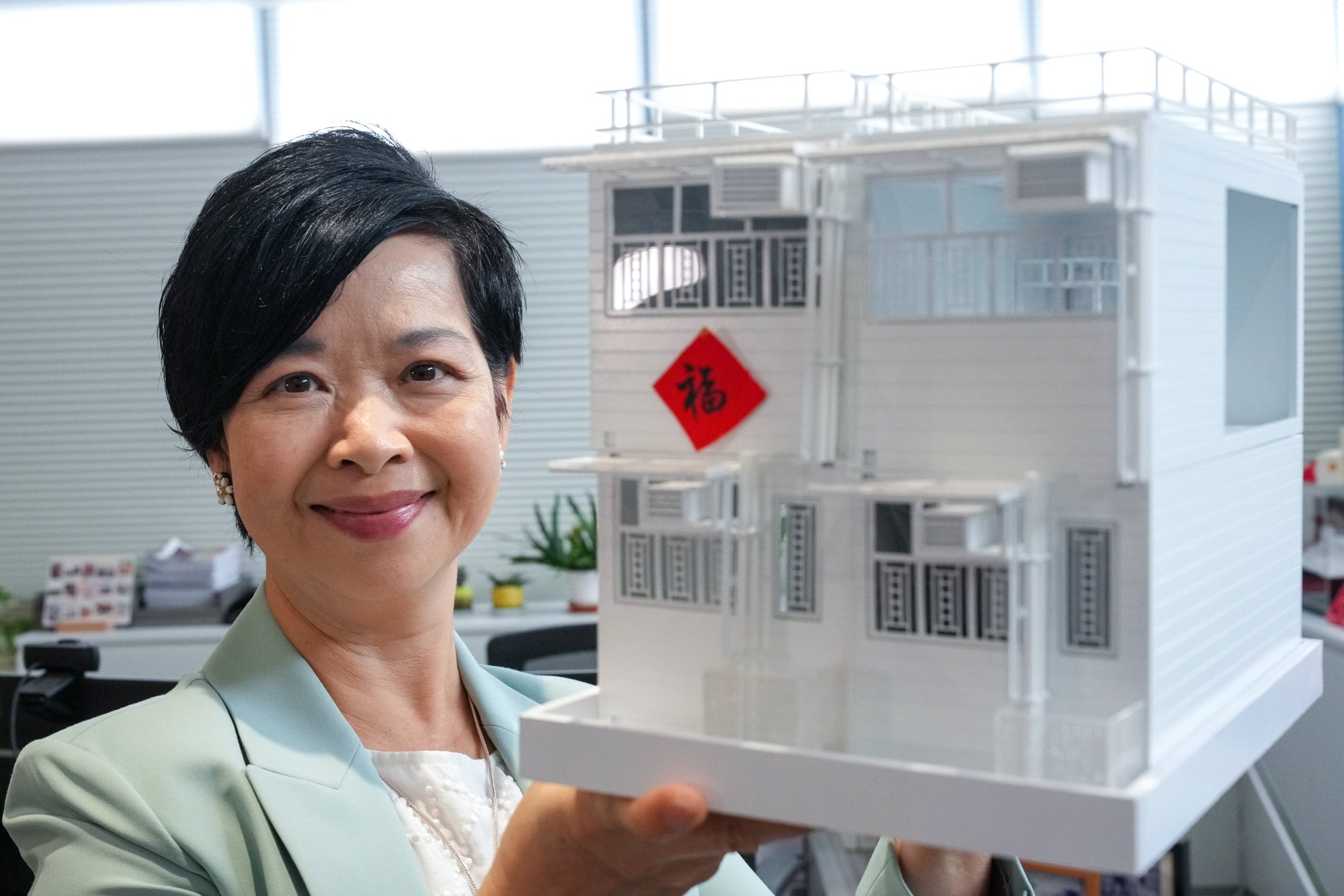
Ho joined the government in 1992 as an architect, rising through the ranks over three decades to become director of architectural services before her appointment as the housing secretary in 2022 as part of Lee’s administration.
During her term, Ho focused on tackling the shortage of public housing and phasing out substandard subdivided flats.
She led the initiative to construct roughly 30,000 light public housing flats to provide transitional relief for families trapped in substandard homes.
Under her tenure, the average waiting time for public rental housing was reduced from a peak of more than six years before the current-term government took office to under five years, making progress towards the authorities’ target of 4.5 years in 2026-27.
She also pushed through the Basic Housing Units Ordinance, aimed at eradicating substandard homes. From next March, only subdivided flats that meet minimum standards and are certified as “basic housing units” may be legally leased, unless they are registered for the grace period. -- SOUTH CHINA MORNING POST