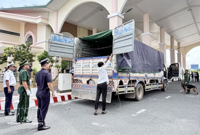
PHNOM PENH: Cambodian authorities shut down 605 suspected scam locations and referred 4,147 suspects to court during a year-long nationwide crackdown on technology-enabled scams.
Figures released by the Secretariat of the Commission for Combating Technology-enabled Scams (CCTC) show authorities investigated and conducted operations at 751 suspected scam locations between July 2025 and July 31, 2026, of which 605 were sealed and shut down to prevent further illegal activity.
The figures provide some of the clearest measurements to date of the scale of Cambodia’s campaign against an industry that has increasingly become a transnational security concern across Southeast Asia.
Authorities also examined 195 licensed casinos during the same period, resulting in the revocation of 20 casino licences and suspension of another 29 over links to scam operations, according to the secretariat.
A further 23 casino licences expired, with the businesses ceasing operations.
“The casino enforcement figures are significant because casinos, hotels and other large compounds have repeatedly come under scrutiny in regional efforts to dismantle scam operations that can involve sophisticated telecommunications infrastructure, financial networks and large numbers of foreign nationals,” according to the CCTC.
It said the government has framed its response around a policy of “no tolerance, no exception and no retreat”, reiterating that Cambodia will not allow its territory to serve as a safe haven or operational base for transnational scam networks.
The secretariat insisted that combating such networks is not a short-term operation aimed at improving Cambodia’s image, but an ongoing task involving law enforcement and the protection of national security, public order and the safety of both Cambodian citizens and foreigners.
The crackdown has also involved a substantial number of foreign nationals.
From July 2025 through July 2026, Cambodian authorities processed 21,666 foreigners from 38 nationalities for deportation and repatriation, with Chinese, Vietnamese, Pakistani, Indonesian, Bangladeshi and Indian nationals accounting for the largest groups, according to the secretariat.
Law enforcement authorities referred 388 criminal cases, involving 4,147 suspects, to the courts.
“The suspects, including alleged ringleaders and their accomplices, represented 27 nationalities,” said the CCTC.
The government has characterised technology-enabled scams as a threat to national security as well as a criminal justice problem, while acknowledging that dismantling the networks is essential to protecting Cambodia’s reputation and rebuilding confidence among investors, tourists, international partners and legitimate businesses.
The latest enforcement figures were released as Cambodia prepares to host the International Conference on Combating Online Scams (ICCOS-2026) in Phnom Penh on September 23-24, themed “Acting Together Towards Breaking the Chain and Eradication of Online Scams.”
According to the conference’s official website, Prime Minister Hun Manet will preside over its opening, while governments, international organisations, law-enforcement agencies, financial institutions, technology companies, academia and other stakeholders are expected to participate.
In a welcome message on the conference website, Manet described online scams as a “complex transnational challenge” that no single country can tackle alone.
The conference is intended to deepen understanding of the evolving scam ecosystem, strengthen international cooperation and coordination and expand multi-stakeholder partnerships, while promoting the exchange of experience and best practices.
The Lancang-Mekong Integrated Law Enforcement and Security Cooperation Center (LMLECC) and the UN Office on Drugs and Crime Regional Office for Southeast Asia and the Pacific (UNODC-ROSEAP) are listed as co-supporting institutions.
The provisional agenda explains that the two-day meeting will examine regional and global responses to online scams, technology and cyber resilience, national enforcement efforts, financial disruption and international cooperation.
Representatives expected in the discussions include officials and experts from Cambodia, the US Federal Bureau of Investigation, Australian Federal Police, ASEAN Secretariat, International Monetary Fund and INTERPOL, along with representatives from a range of governments and international organisations.
The scale of Cambodia’s enforcement figures is likely to form part of the government’s case at the conference that the country is moving from isolated raids towards a broader strategy combining law enforcement, prosecution, international cooperation and disruption of the infrastructure that allows scam networks to operate.
For Cambodia, the campaign also carries a reputational dimension. With scam operations able to recruit across borders, move illicit funds internationally and exploit digital platforms and telecommunications systems outside the country where perpetrators are physically based, Phnom Penh has increasingly emphasised that enforcement within Cambodia represents only one part of the response.
That position is reflected in the theme of the September conference: breaking the chain supporting scam operations rather than treating individual compounds or perpetrators in isolation.
The official ICCOS-2026 website provides information on the conference programme, objectives, venue and participation arrangements. - Phnom Penh Post/ANN