
The Argentine national football team expressed solidarity with China’s flood-affected Guangxi Zhuang autonomous region, offering to donate supplies to victims of the disaster.
In a statement online, the national team, beloved by Chinese fans, said it would contribute provisions such as water bottles, towels, clothing and backpacks to aid post-disaster recovery and reconstruction.
The team said it wanted to give back to Chinese supporters, who had cheered them on during this year’s FIFA World Cup in North America, and would work with local organisations to help deliver donations as soon as possible.
Argentina defeated England in the semifinals of the World Cup and takes on European champions Spain in the final on Sunday (Monday 3am, Malaysian time).
“We saw the news of the floods in Guangxi, China, and we really hope to do something for the Argentine fans in China and the Argentine fans in Guangxi,” it said.

Guangxi is battling the aftermath of severe flooding caused by 10 days of persistent rain from Typhoon Maysak, which killed at least 39 people and left nine missing in the region. More than 375,000 residents were also affected by the disaster and more than 130,000 residents were forced to flee their homes.
As floodwaters began to recede in some parts of Guangxi, authorities started clearing debris and restoring power and communications services.
They also turned their attention to ageing infrastructure and the threats posed by the new normal of climate-driven extreme weather.
Quoting a flood management researcher, Guangzhou-based newspaper Southern Weekly reported last week that several reservoirs across Guangxi had reported emergencies triggered by extreme, short downpours that broke through the engineering design limits of the original structures.
One of the deadliest incidents in the floods was a reservoir breach in Hengzhou near the regional capital Nanning.
Two sections of the Liulan Reservoir – which was built in 1960 – collapsed on July 6, leaving 26 people dead and seven missing, according to official reports.
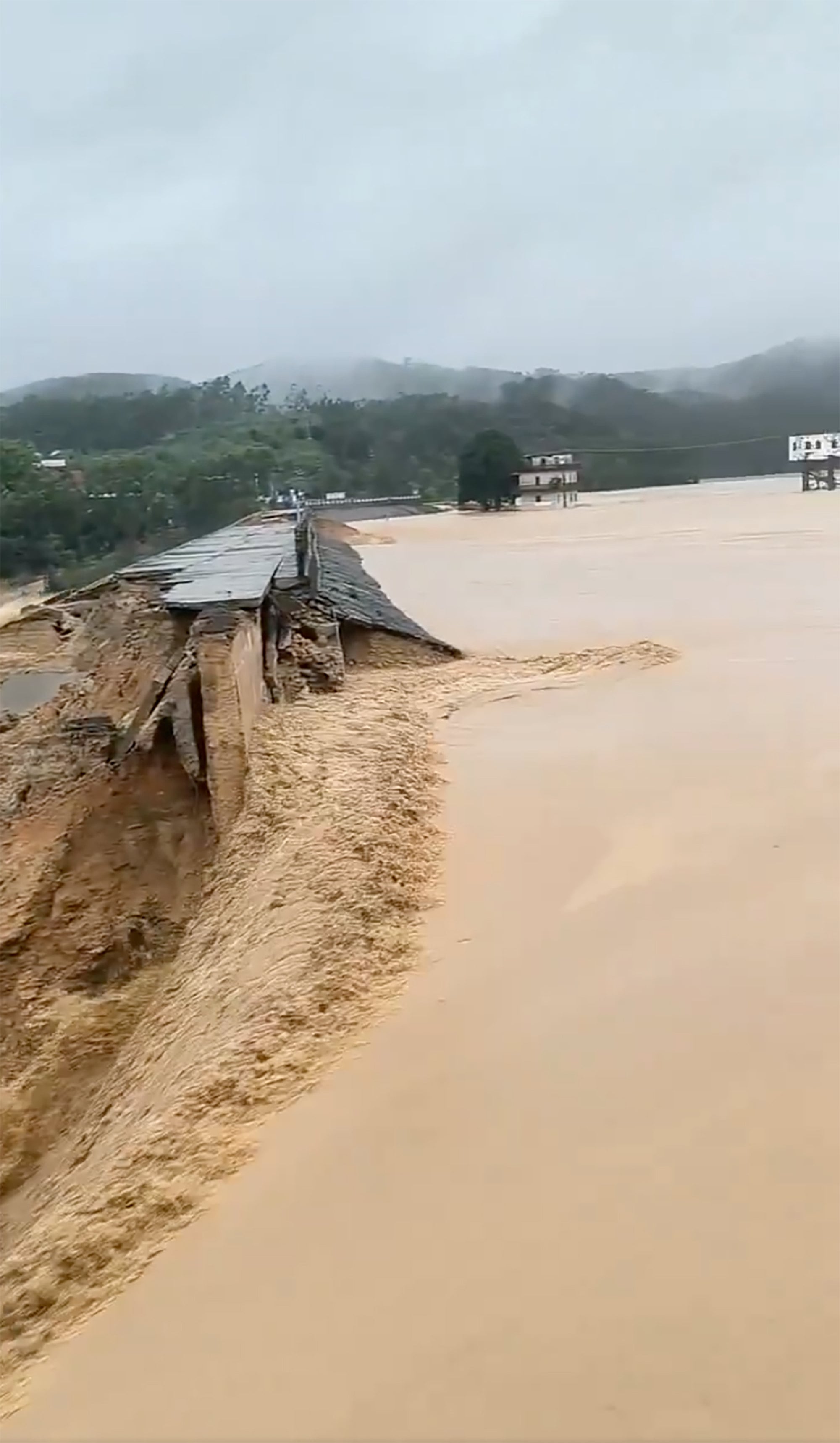
In an interview with state broadcaster CCTV on the weekend, water resources official Liu Jiahong said that under the influence of global climate change, incidents of short, intense rainfall were becoming more frequent, making modern extreme precipitation much more destructive.
Against this backdrop, China must fortify its ageing reservoirs to withstand extreme floods, said Liu, who is deputy director of the water resources department at the China Institute of Water Resources and Hydropower Research.
The researcher quoted by Southern Weekly agreed, saying that beyond Guangxi, many of the country’s small and medium-sized reservoirs were ageing and operating past their service lives, making them highly vulnerable to floods under global climate change. He added that it was critical to strengthen the flood control capacity of these reservoirs and to reinforce damaged or high-risk facilities.
Guangxi must also brace for further heavy to torrential rain. The National Meteorological Centre said on Tuesday that falls driven by a tropical disturbance and a monsoon trough over the South China Sea were expected to hit coastal areas of Guangdong and Guangxi over the next three days.
Meanwhile, Bavi, which has been downgraded from a typhoon but continues to bring downpours to northeast China, has forced more than 360,000 people in Liaoning province to find emergency shelter, according to state broadcaster CCTV.
In the provincial capital Shenyang, emergency measures were imposed as heavy rainfall triggered flooding on Monday. Along several of the city’s main roads, the water was nearly 300mm (11.8 inches) deep.
Schools, outdoor activities and construction site operations were suspended, while city authorities urged residents to work from home and avoid non-essential trips.
By Tuesday morning, the municipal government had announced the closure of multiple subway entrances and the temporary suspension of three entire transit lines.
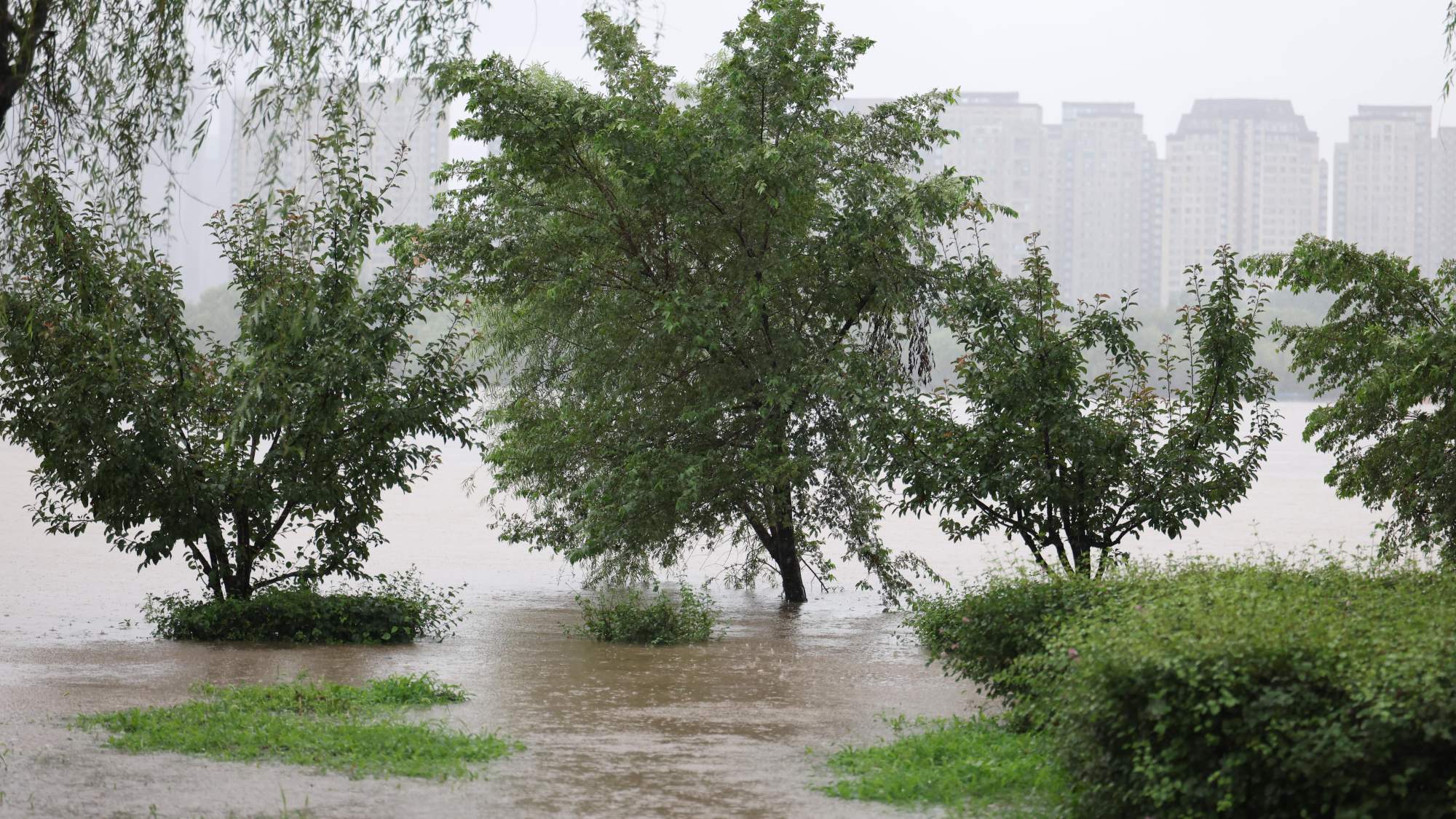
At around 7am on Tuesday, Shenyang renewed its highest-level red alert for torrential rain. Meteorologists warned that several towns could expect another 50mm to 100mm of rain over the next six to eight hours.
In some regions, cumulative precipitation from the storm is expected to exceed 450mm, posing a high risk of flash floods.
Several localities under the city of Dalian activated emergency responses for flood controls, while maritime authorities warned of high waves and storm surges along the city’s coast.
Dalian closed 41 scenic areas near mountains, rivers or the sea on Tuesday.
Torrential rain also battered the country’s northwest, with more than 8,000 residents in Gansu province’s Xiahe county evacuating their homes and Ningxia Hui autonomous region activated emergency responses for flood control in some regions.
Where is Bavi headed next?
By 3pm on Tuesday, Bavi had moved back over the Yellow Sea and was centred about 295km west-southwest of Pyongyang, North Korea, according to the National Meteorological Centre.
It had spent more than 60 hours traversing parts of eastern and northern China since making landfall in Zhejiang province late on July 11.
Bavi is expected to cross the northern part of the Korean peninsula overnight. Chinese officials have advised coastal and northeastern regions to remain vigilant for lingering heavy rain and gusty winds until the system fully departs. -- SOUTH CHINA MORNING POST