The United States launched fresh strikes against Iran on Tuesday, prompting retaliation from Tehran, which targeted a major US naval base in Bahrain and an airbase in Jordan.
It came just hours after US President Donald Trump vowed to retaliate for what he described as the hostile downing of an American AH-64 Apache attack helicopter over the strategic Strait of Hormuz.
The escalation tested a fragile US-Iran ceasefire that had taken effect on April 8 as both sides negotiate terms to end the war, which also involves Israel.
The US Central Command said it began carrying out “self-defence strikes” against Iran at 5pm Eastern Time (5am on Wednesday in Hong Kong), describing the operation as a “proportional response to unjustified Iranian aggression”.
According to the military, US Air Force and US Navy fighter jets used precision-guided munitions to hit Iranian air-defence systems, ground-control stations and surveillance radar sites near the Strait of Hormuz.
Iran acknowledged strikes around Bandar Abbas and Qeshm Island, but gave no details on the damage.
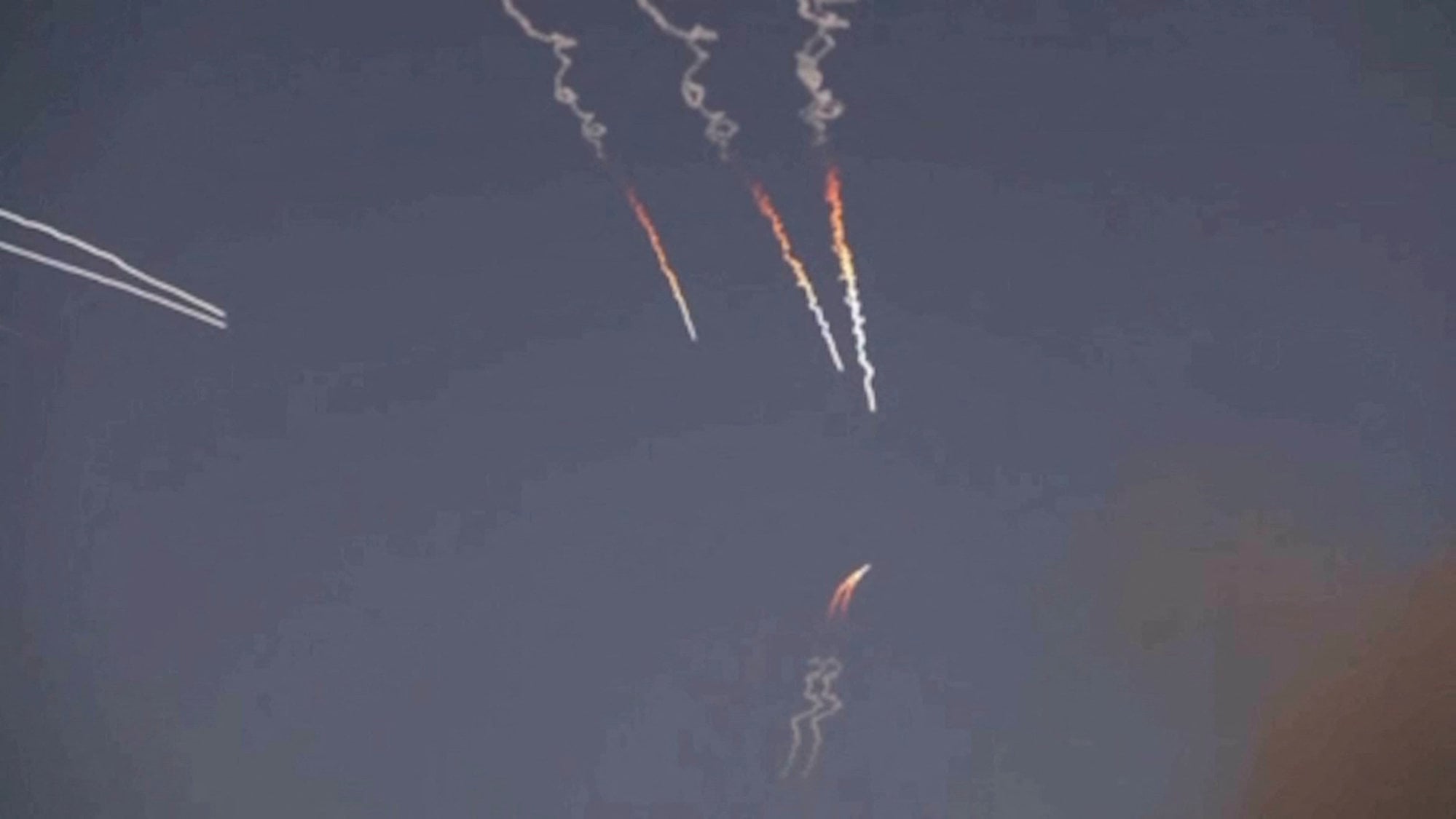
Iran’s Revolutionary Guard claimed its missiles struck four “key targets” at Al-Azraq Air Base in Jordan, including facilities supporting US F-35 stealth fighter aircraft and command-and-control systems.
Jordan’s military said it had intercepted and shot down five missiles launched from Iran towards al-Azraq. Debris from the interception operation fell on Jordanian territory but caused no injuries or material damage, it added.
The Kuwaiti army said its air defence systems engaged hostile aerial targets and urged the public to follow official safety instructions, while Bahrain’s air defences had repelled Iranian attacks, a media adviser to Bahrain’s king said in a post on X. Bahrain is home to the US Navy’s 5th Fleet.
Trump had earlier said Iran had “shot down” a US military helicopter while it was patrolling the Strait of Hormuz, warning that Washington would respond. Iran has maintained a tight stranglehold on the strategic waterway as the US has enforced a sweeping blockade on Iranian crude oil shipments.
“I have just been informed by our Great Military that last night the Iranians shot down one of our highly sophisticated Apache Helicopters while patrolling over the Strait of Hormuz,” Trump wrote in a social media post.
“Nevertheless, the United States must, of necessity, respond to this attack,” he said, adding that the two US pilots were safe and uninjured.
US reports said the Apache came in contact with an Iranian drone before going down off the coast of Oman.
The US Central Command said that two crew members were “safely rescued within approximately two hours and are in stable condition. The cause of the incident is under investigation”.
The rescue was carried out with a 7.3-metre sea drone identified as a Saronic Corsair, in what was reported to be a first known operation of its kind by the US military. The crew were reportedly taken to another location at sea where they were picked up by a helicopter.
Iranian Foreign Minister Abbas Araghchi did not directly address the incident, but he wrote on social media that “foreign forces in proximity to our territory are at constant risk on account of their own human errors, plain accidents, or potentially being caught in crossfire”.
“To reduce risk, the best solution is for them to leave. We prefer the language of diplomacy, but speak other languages too,” he said.
The helicopter incident jolted a brief pause in hostilities between US ally Israel and Iran, who agreed on Monday to cease their first direct exchanges of missile fire since April. While that halt followed an appeal from Trump, the Middle East foes have warned they stood fully prepared to launch retaliatory attacks if provoked.
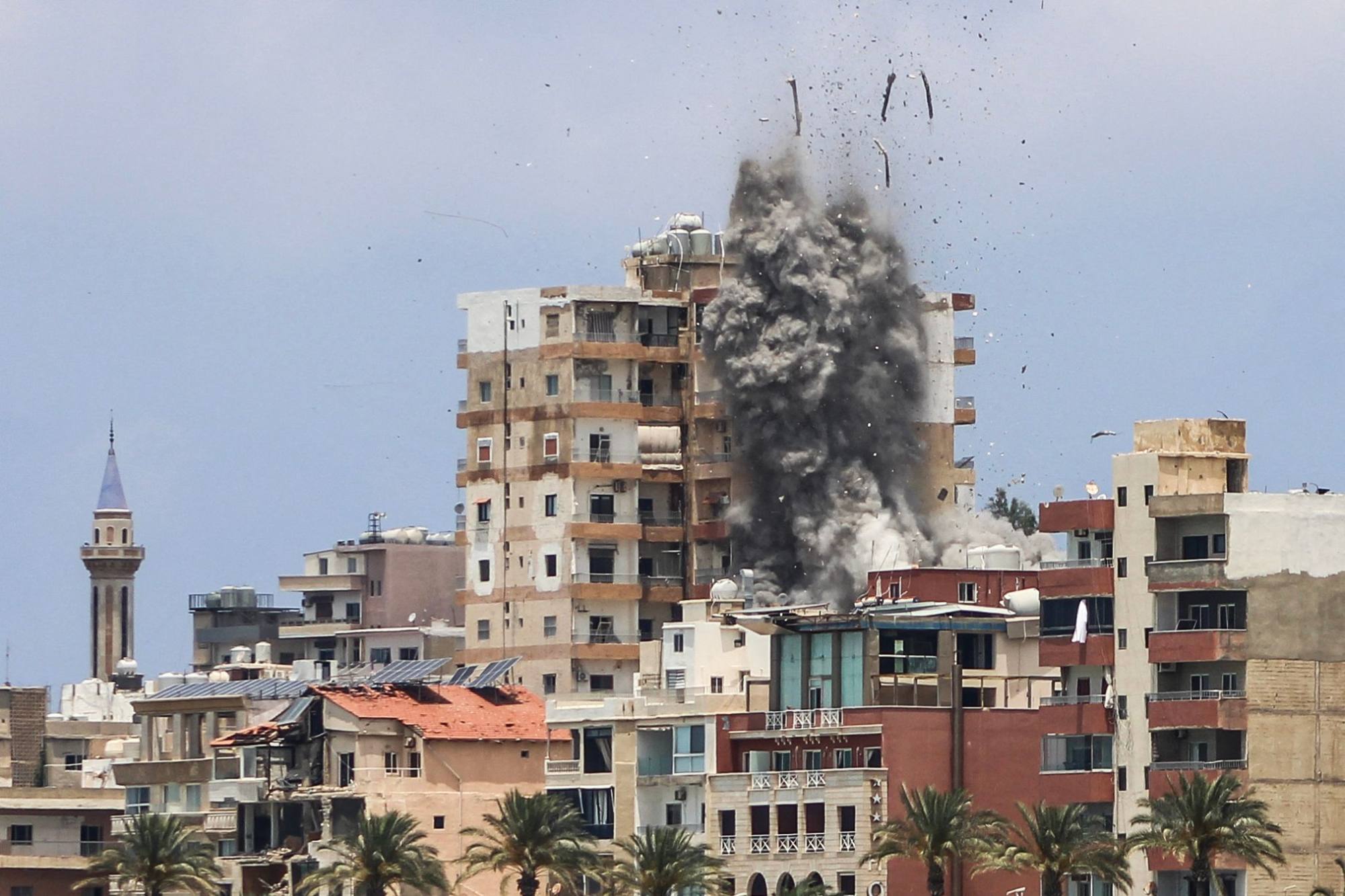
A lasting peace has remained elusive as Israel continues its military operations against Iran proxy Hezbollah in Lebanon.
Despite volatility in the Middle East, Trump had expressed optimism on Monday, telling reporters that negotiations with Tehran were “going well”. Trump has been pushing for a deal as energy prices soar globally, including a major spike at the pump for US consumers.
“We’re in the final throes of what will be a very, very good deal that will not allow in any way, shape or form nuclear weapons ... and the strait will open up right away,” he said. “It’ll open up immediately upon signing, which could be in two or three days.”
Iran has long denied seeking nuclear weapons. Among its demands, Tehran has insisted the US unfreeze billions in frozen funds, lift its naval blockade and pay reparations for damages inflicted during the war.
Additional reporting by Reuters -- SOUTH CHINA MORNING POST