
The PapaHome furniture showroom – the product of a partnership between local home repair platform Papabo and Taobao Hong Kong – will close its doors at a Tsim Sha Tsui mall when its lease expires in October, according to multiple people familiar with the matter.
The move means Taobao Hong Kong and Papabo will give up their first physical shop at a prime spot in Kowloon. PapaHome said in a statement on Thursday that it would “relocate” its Tsim Sha Tsui flagship store to Fashion Walk in Causeway Bay in October, a location that had been part of earlier expansion plans.
The 25,684 sq ft PapaHome Taobao Furniture Store at China Hong Kong City opened in February 2025 as Taobao Hong Kong’s first bricks-and-mortar furniture showroom, allowing customers to check products before ordering online.
Taobao does not own an equity stake in PapaHome.
Marketing materials showed landlord Sino Group had begun seeking a new tenant for the second-floor unit, shop 202B, which would be available from October.
While marketing a retail unit before a lease expires does not necessarily mean the tenant will leave, three sources said PapaHome had decided not to renew its tenancy.
Taobao is operated by Alibaba Group Holding, which owns the South China Morning Post.
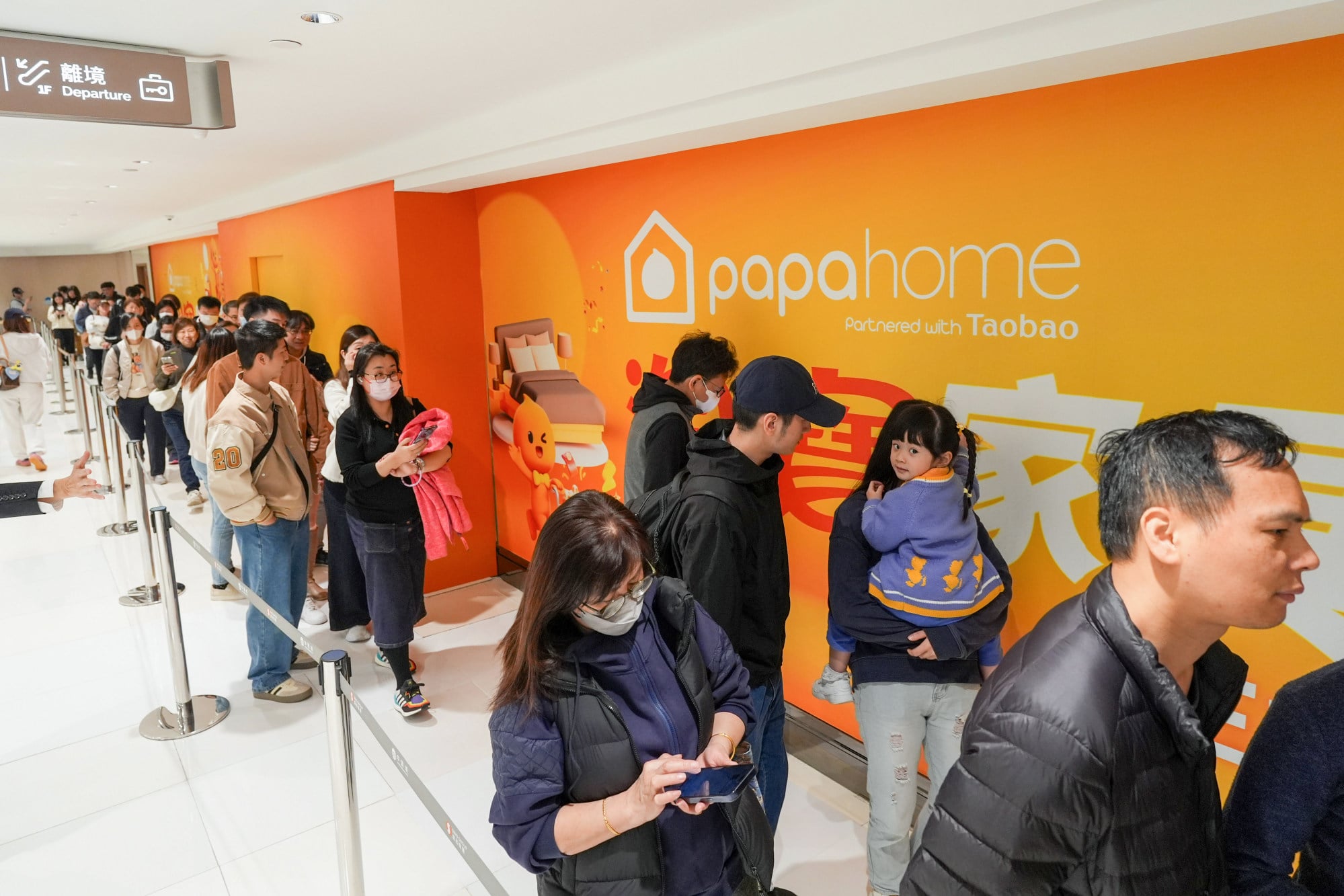
PapaHome announced last October that it planned to open a 40,000 sq ft furniture and lifestyle store at Hang Lung Properties’ Fashion Walk in Causeway Bay in the second quarter of 2026, describing it as the company’s second Hong Kong outlet.
People familiar with the matter said the company was still working towards that opening.
Sino Group and Hang Lung Properties declined to comment.
PapaHome said its “brand-new mega shop” on Hong Kong Island opening in the fourth quarter would “introduce a mix of shopping and dining experiences”. It did not comment on the closure.
Analysts said the move reflected a reassessment of both the location and the economics of operating a large physical showroom.
It was “probably an experiment” that gave consumers an opportunity to get a feel for the products, said an executive director at a property consultancy, who asked not to be named.
“Giving up the China Hong Kong City store is consistent with its original role as a high-profile marketing initiative.”
Simon Lee, a finance lecturer at Hong Kong Shue Yan University, said the mall’s location on the edge of Tsim Sha Tsui attracted less foot traffic.
“Taobao is known for selling affordable products, so operating a large showroom in a relatively expensive location may not be the most suitable business model,” Lee said. “Hong Kong’s retail market has stabilised, but it is still far from booming.” -- SOUTH CHINA MORNING POST