
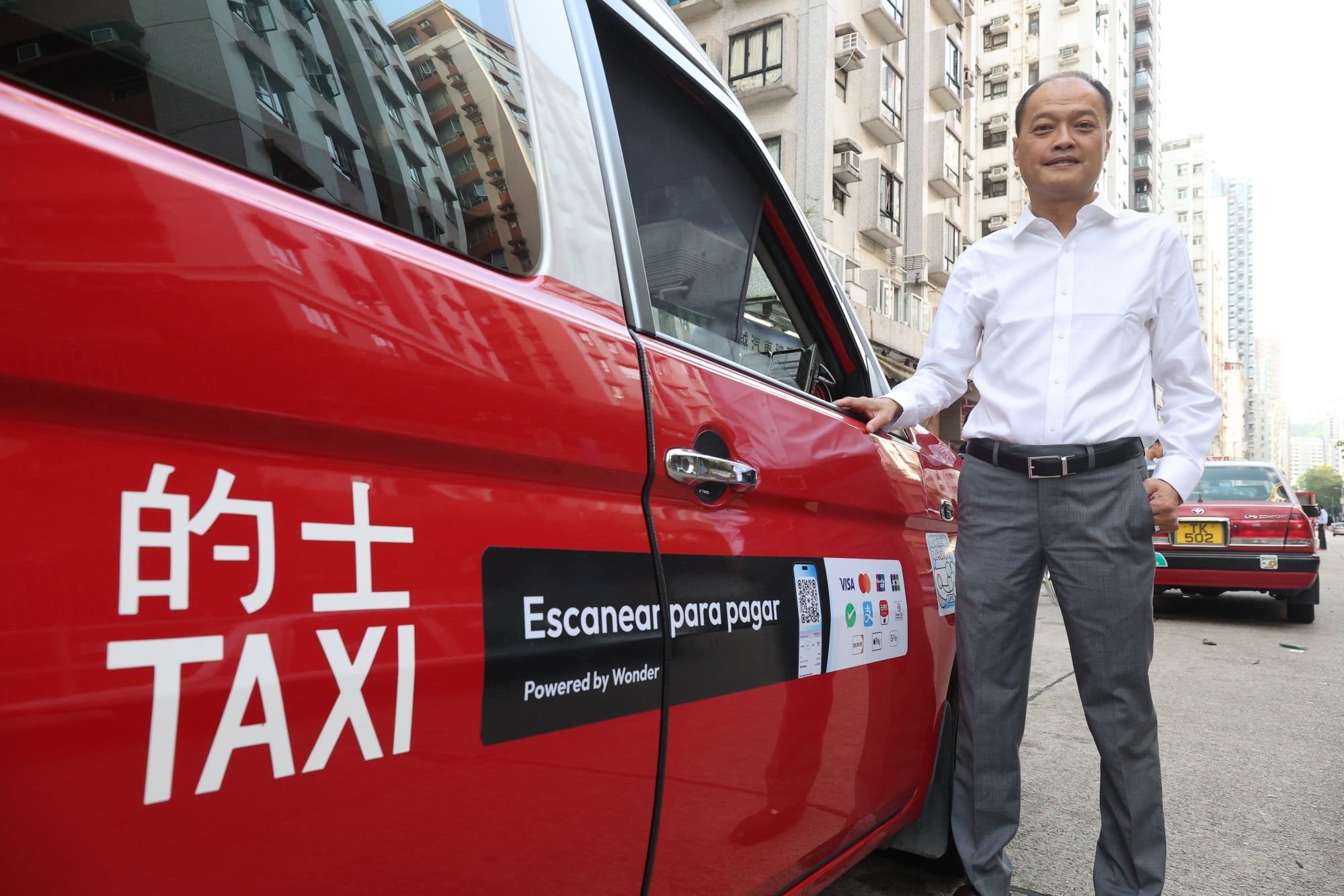
Taxi trade leader Chau Kwok-keung says he has never felt as much fear as he does now after transport minister Mable Chan set a 10,000-vehicle cap for ride-hailing service permits in May, in a bid to resolve what she called a “long-standing controversy” between traditional cabs and online service providers.
Chau, a 40-year veteran of the industry, worries that the trade, comprising 18,163 taxis and about 46,000 active cabbies, will be driven into a dead end because he believes the quota will seriously affect livelihoods and the sector’s outlook.
“The ride-hailing quota has gravely disrupted the taxi trade. Drivers are already suffering from plummeting income, with those on night shifts finding almost no business,” said the chairman of the Hong Kong Taxi and Public Light Bus Association.
“I am most afraid that after the government enforces this quota limit, it will keep increasing the number of ride-hailing permits under different pretexts. Then Hong Kong’s taxi industry will keep shrinking. The economy is already gloomy enough.”
Chau, 59, is among tens of thousands in the taxi trade frustrated by the government’s plan to issue 10,000 permits, a proposal that has also drawn the ire of ride-hailing giant Uber.
While the government said it expected the quota would match the current demand, critics warned it could lead to shortages, higher fares and public dissatisfaction.
“Chan shouldn’t just kick the can down the road over regulating ride-hailing services in Hong Kong,” legislator Mark Chong Ho-fung said.
“If the thorny issues are not handled well, she runs the risk of facing an explosive outburst of public discontent.”
Critical cap
Hong Kong’s legislature on Thursday completed the negative vetting process to approve the subsidiary legislation for the ride-hailing regulatory regime, helping to fill a legal vacuum 12 years after the first operator, US-based Uber, entered the market.
The cap on permits is the most controversial issue affecting the interests of all parties, including the taxi trade, ride-hailing platforms and other service providers such as taxi fleet operators.
“It was destined to be a decision that will leave all parties unhappy, as it pleases neither side,” Chong said.
Amid protracted wrangling, the taxi industry called for a cap of only a few thousand at most, while Uber has opposed any upper limit.
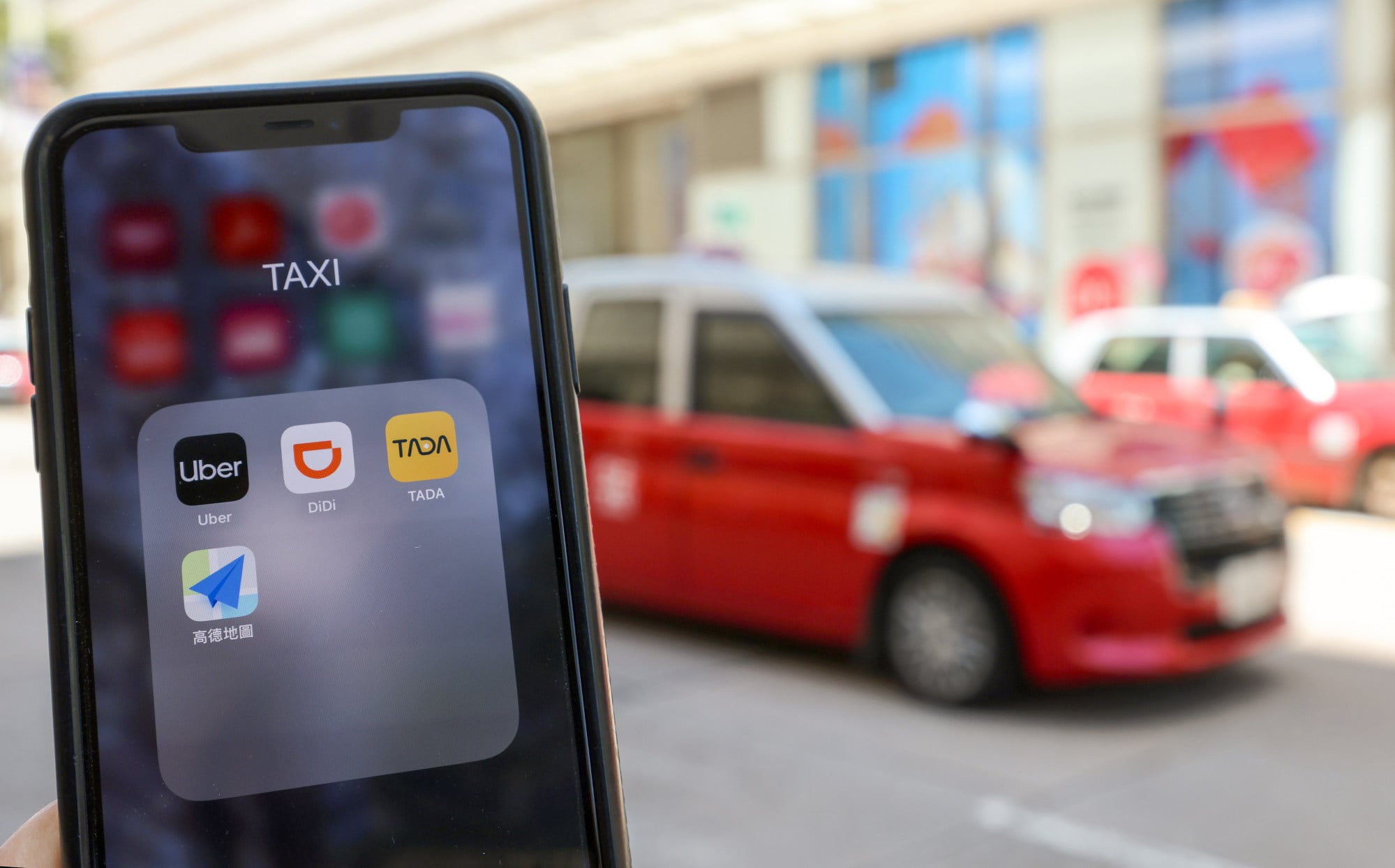
In addition to Uber, three other operators – Singapore-based Tada, Amap and Didi Chuxing – are in the market, a situation taxi drivers have criticised as unfair. Amap is operated by Alibaba Group Holding, which owns the South China Morning Post.
While the Transport and Logistics Bureau said the 10,000-vehicle cap – to be allocated via a lucky draw – was a cautious and appropriate approach to maintaining service standards, it promised to “dynamically adjust” the number.
By comparison, Uber’s platform alone has about 30,000 active drivers, not to mention that the cap will be shared among operators.
While Amap and Didi Chuxing have expressed support for the quota proposal, Uber deems it insufficient, arguing that it would lead to longer waiting times for passengers and higher fares, and force some drivers out of work.
The bureau said Hong Kong was unique in that commuters mainly used public transport, accounting for nearly 90 per cent of daily trips.
It said that under the “driver-vehicle pairing” requirement, ride-hailing would remain predominantly a part-time activity, although compliance costs might encourage some drivers to work longer hours.
Based on an average of six hours of operation and 12 trips per vehicle per day, the bureau estimated that a 10,000-vehicle fleet would provide about 120,000 daily trips, broadly in line with previously surveyed demand of 114,000 trips. The relevant subsidiary legislation was published in the government gazette last month.
The government said a consultancy firm had estimated that the current daily patronage of personalised point-to-point transport services was around 880,000 passengers, with taxis and online ride-hailing cars accounting for 78 per cent and 22 per cent, respectively.
Most legal provisions regulating ride-hailing services are set to take effect on August 3 this year. Platform companies will be invited to apply for operating licences in the third quarter, while drivers can apply for the 10,000 permits in the fourth quarter.
Experience in other cities
Unlike Hong Kong, cities such as London and the Australian capital Canberra have not set any limit on the number of ride-hailing vehicles.
There is no limit on the number of vehicles or platforms that can operate. Those governments focus on platform accountability and consumer protection standards rather than supply-side restrictions, while allowing competition to drive service quality.
Singapore regulates ride-hailing by licensing operators rather than putting a ceiling on individual vehicles. It has adopted stringent measures to control the overall growth in the number of private cars.
Shanghai and New York have stopped issuing new ride-hailing car licences in a bid to ease traffic congestion, maintain market order and avoid vicious competition. Shenzhen recently issued a risk alert stating that its ride-hailing car market had reached saturation.
Ryan Ip Man-ki, vice-president of think tank Our Hong Kong Foundation and executive director of its Public Policy Institute, noted that some markets did not impose a Hong Kong-style numerical quota.
“But this does not mean ride-hailing is unregulated elsewhere. Different cities use different tools, including licensing, congestion controls, insurance requirements, platform obligations, driver protection rules and in some cases broader vehicle control regimes,” he said.
While critics said Hong Kong’s legal regime tended to protect the taxi trade from competition, Ip disagreed.
“A quota is also not necessarily contrary to the shared economy. The original idea of the shared economy is to make better use of underutilised assets,” he said.
Ip argued that if ride-hailing simply encouraged people to buy more private cars for commercial use, it “moves away from that logic and becomes an expansion of commercial traffic on already crowded roads”.
Uber’s case
But striking the right balance between taxi and ride-hailing services while meeting passenger demand is delicate.
Uber Hong Kong warned that more than 20,000 people would lose a flexible earning opportunity, adding that a lottery-like quota allocation would put drivers’ livelihoods at risk.
The government has proposed an annual licence fee of HK$1.2 million (US$153,163) for ride-hailing platform operators. A vehicle permit valid for up to 12 months will cost HK$1,560, while a driver’s permit, valid for five years, will cost HK$410.
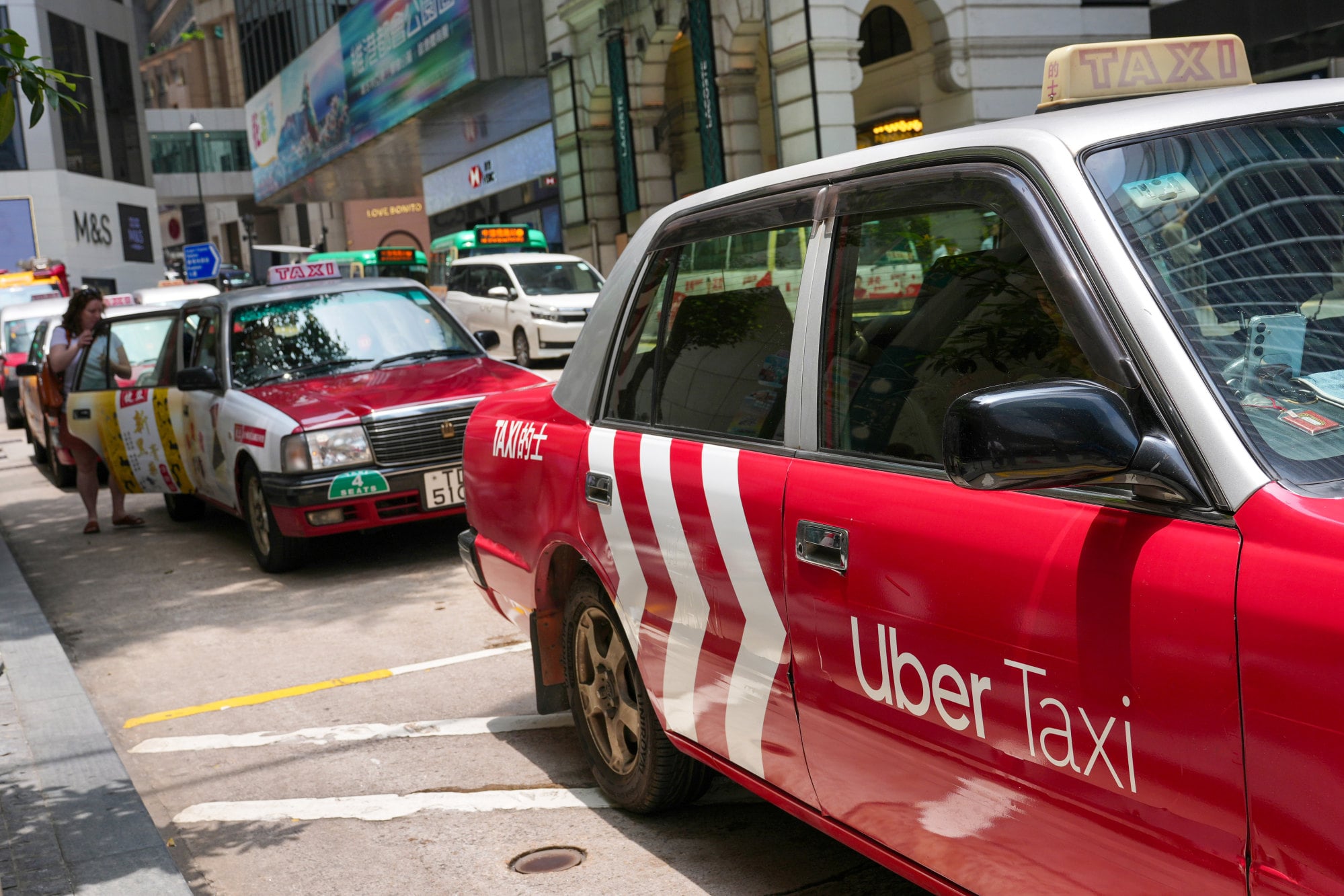
Former lawmaker Michael Tien Puk-sun estimated that about 11,000 of the 16,000 urban taxis in the city were already on the Uber platform, with some earning an extra HK$10,000 a month.
More than 216,000 drivers had registered on Uber and Uber Taxi in Hong Kong by 2021, according to the latest available data from the company.
Uber earlier proposed that 30,000 permits be issued, the same as the number of drivers working with the platform, warning that a limit of 10,000 to 15,000 could result in booking prices rising by 70 per cent and waiting times potentially doubling.
Uber argued that a scheme with no vehicle quota represented a “well-functioning regulatory framework”, allowing market forces to drive service delivery and innovation with fare levels determined by supply and demand.
“Singapore’s framework focuses on platform accountability, driver accreditation, vehicle roadworthiness and data reporting,” it said.
“The result has been a competitive, multi-platform market – with Grab, Gojek, ComfortDelGro, Ryde and Tada Mobility all operating – that serves both daily commuters and international visitors effectively.”
Uber driver Sang Chui, 63, who also works as a clerk at a law firm, dismissed the idea that the 10,000-permit quota was enough to meet demand, although he said he would apply for the permit.
“First, even if I apply to register for the scheme, it does not mean Uber will allow me to sign up as nobody knows how this lucky-draw system works,” he said.
Chui said the quality of Uber drivers was set to drop as those who were granted a permit might only intend to work part-time, resulting in the platform failing to meet capacity.
“If Uber cannot provide enough capacity to meet the demand, it will definitely raise the prices,” he said.
Can the conflicts be resolved?
Chau, the taxi union chief, said friction between the taxi trade and Uber could never fully be resolved, as ride-hailing operators would always adversely affect taxi drivers’ livelihoods.
He earlier estimated that 10 per cent of the city’s cab owners could soon default on vehicle mortgages as licence values had plunged, with many drivers switching to the new ride-hailing regime.
The market value of a taxi licence has fallen over the past two decades, from a record high of HK$7.66 million in 2009 to HK$2.62 million for urban cabs and HK$1.45 million for New Territories taxis as of May this year, according to the Hong Kong Taxi Exchange.
“Many cabbies may switch to becoming full-time ride-hailing drivers, and taxi owners may stop paying their mortgages,” Chau warned. “Many feel hopeless about the industry’s future.”
Chau also noted that taxis were losing passengers to public transport due to concessionary fares for people aged 60 or above.
Ng Kwan-sing, honorary chairman of the Taxi Dealers and Owners Association, echoed Chau’s views, saying the government should be fair to the “crippled” taxi trade and offer it a way to sustain operations, such as issuing ride-hailing permits in batches.
To ease public concern, transport chief Chan confirmed the government would dynamically adjust the initial 10,000 quota based on operational data collected from licensed ride-hailing platforms.
Legislator Chong agreed, but warned that any review should be swift and precise. Otherwise, the government’s efforts could backfire, he said.
He argued that reviews should be carried out regularly, for example, quarterly, and that if demand justified more ride-hailing permits, the increase should be implemented immediately via “negative vetting” of subsidiary legislation, which allows laws to take effect on gazetting before lawmakers give final approval.
“If the review is done in a swift, sharp and precise way to adjust the supply of services immediately, then passenger demand could be met, and it should be plain sailing,” Chong said. “Otherwise, the transport scene will be chaotic, and there will be an outburst of public discontent.”
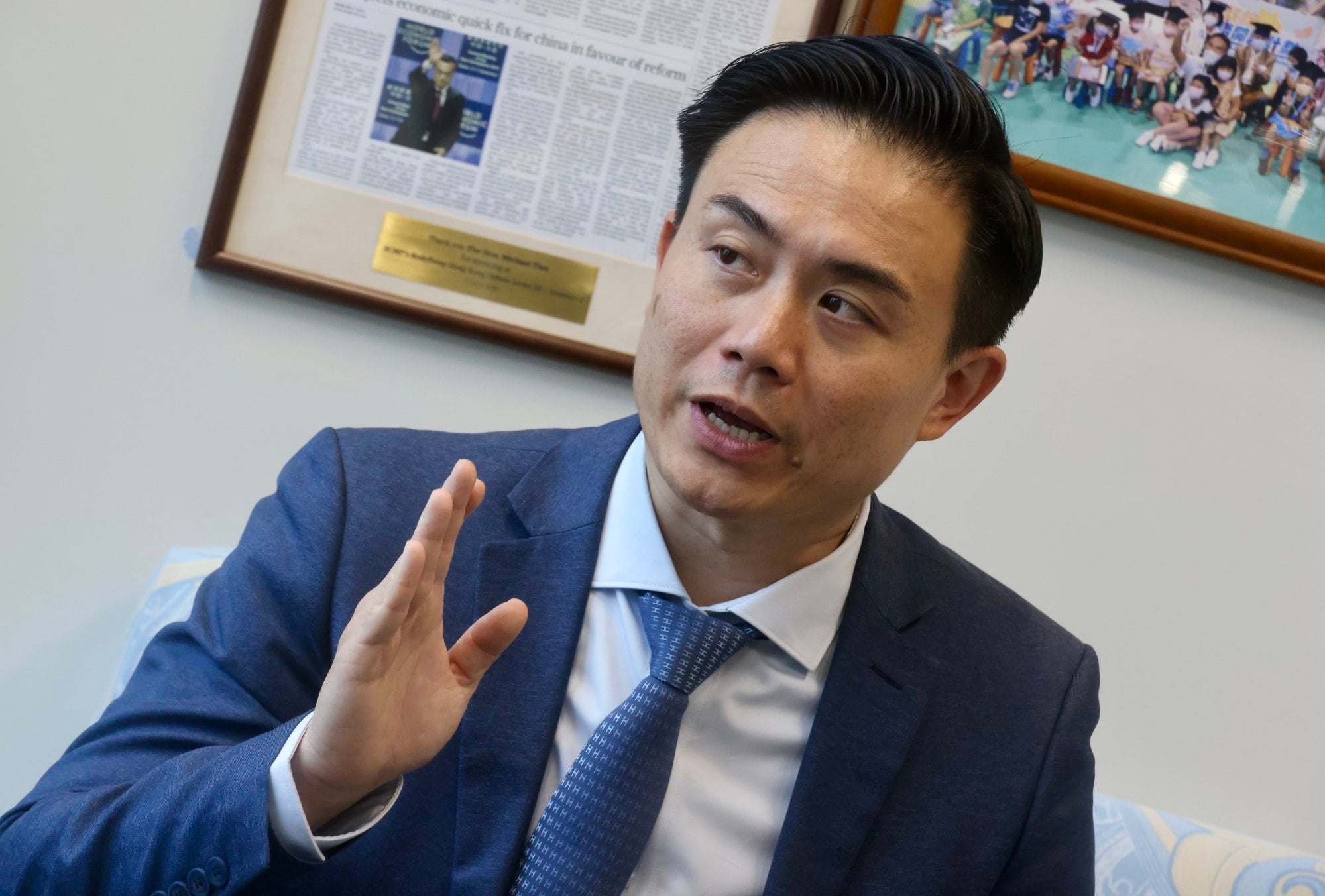
Chong said Chan should also rein in any attempts by ride-hailing platforms to arbitrarily raise fees, adding that she should supervise drivers as well.
“Passengers should come first in ride-hailing. There should also be a mechanism to prevent ride-hailing drivers from idling to ensure they provide enough capacity,” he said.
Ip of Our Hong Kong Foundation supported the government’s strategy of dynamically adjusting the number of ride-hailing permits, but expressed concern that the initial stage of legalisation might require frequent gazetting to amend the licence quota, which could lead to “unnecessary policy confusion”.
“Authorities should closely monitor changes in public commuting demand after legalisation, allowing for flexible increases in the number of licences on a monthly or even weekly basis,” he said.
Issues such as the insurance framework for ride-hailing have also sparked concern. All major platforms operating in overseas markets, including Uber and Lyft, have chosen the blanket insurance model.
Chan said on Thursday that the Transport and Logistics Bureau intended to invite interested parties to apply for platform operator licences as early as next month, with the results to be announced from late November.
Earlier this month, the transport minister said she expected ride-hailing platforms to begin operations in early December.
In reply to the SCMP’s inquiries, a bureau spokesman said a ride-hailing vehicle must complete a specified number of journeys within a specified period before its vehicle permit could be renewed, and it would be required to provide ride-hailing services.
So will the 10,000-permit quota satisfy passenger demand and settle the matter?
Uber driver Chui said: “I am pretty sure that the 10,000 quota will never meet demand.” -- SOUTH CHINA MORNING POST