Vanuatu had a clear goal at last month’s annual assembly of the World Health Organization in Geneva – securing new international aid for the Pacific island nation.
“I’m here to lobby for support,” said Jenny Stephens, Vanuatu’s director of public health.
“We are experiencing the global funding cuts – it’s affecting our programmes like malaria, TB and HIV. We’re already struggling.”
Vanuatu’s health programmes are among thousands in the Global South that have been halted or cancelled since the United States pulled out of the WHO and terminated both its WHO funding and much of its foreign aid after dismantling the US Agency for International Development.
The WHO has estimated that aid cuts have already deprived some 53 million people, in crisis situations, of access to healthcare.
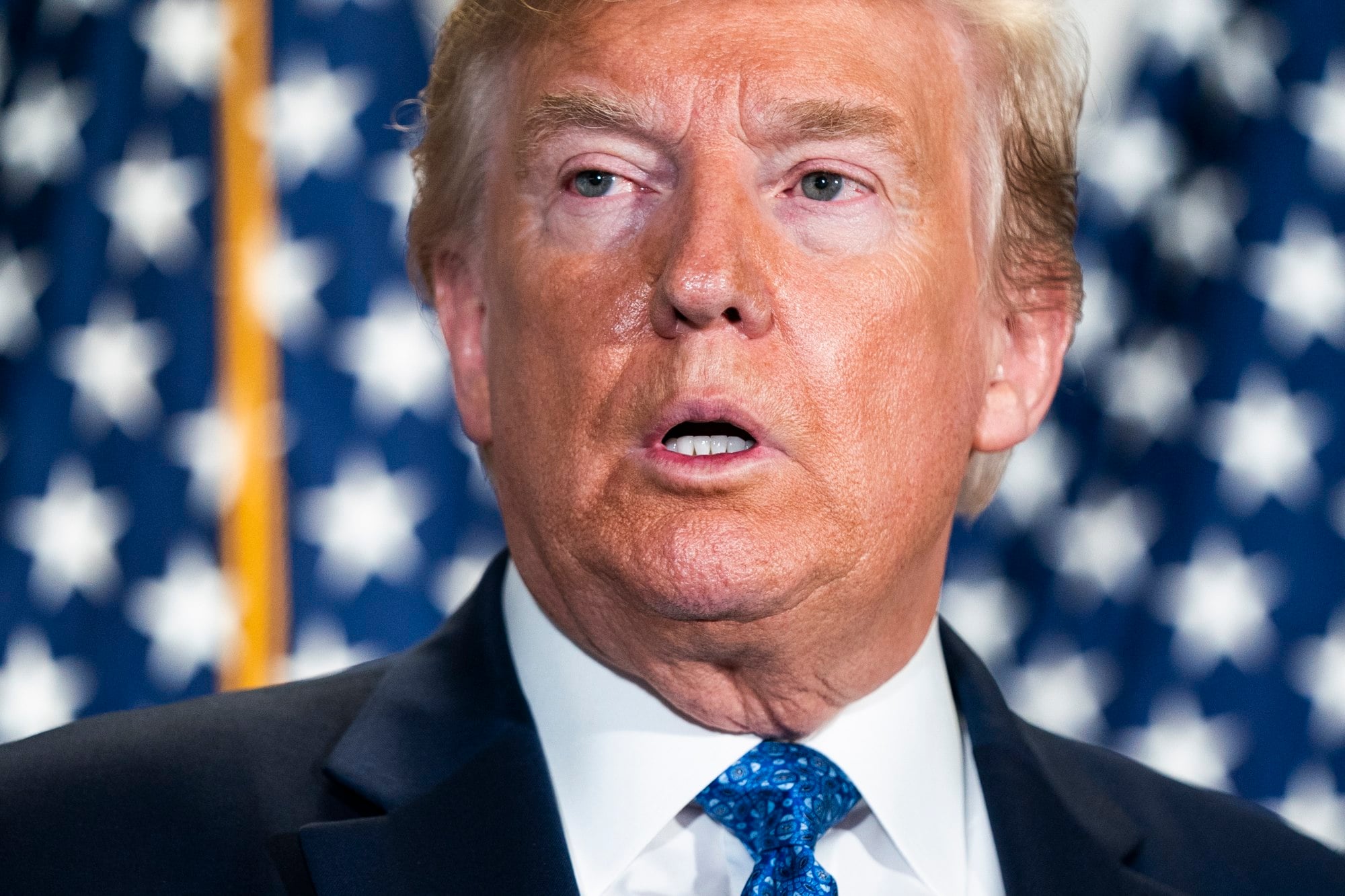
President Donald Trump ordered the US withdrawal from the WHO in January 2025 – a move that took full effect early this year, with last month’s World Health Assembly (WHA) the first to be held without the United States.
China has now emerged as the global health body’s biggest assessed contributor for the first time, replacing the US and raising the question of whether Beijing can not only fill the funding gap left by Washington, but also the leadership void.
America’s retreat
The US withdrawal left behind total assessed contribution arrears of about US$260 million for 2024 and 2025, and WHO director general Tedros Adhanom Ghebreyesus has said there were “no signals” that this would be paid.
In addition, voluntary funding of US$200 million to US$400 million a year that was previously provided by Washington for specific programmes has dried up.
That has forced the WHO to cut 25 per cent of its staff, reduce its budget for 2026-27 from US$5.3 billion to US$4.2 billion, and to increase the assessed contributions of the remaining member states by 20 per cent.
Tedros told the assembly at the Palais des Nations that “90 per cent of the base budget is funded” for 2026-27.
“However, we recognise that in the current environment, the remaining 10 per cent will not be easy to mobilise,” he said.
Under the WHO’s new payment scale for 2026-27, the United States remains assessed at 22 per cent, though no actual payments are expected.
Meanwhile, China accounts for just over 20 per cent of the budget – about US$138 million a year.
That represents a significant increase of US$50 million, or 57 per cent, from the 2024-25 period and makes China the leading contributor of mandatory fees to the UN agency.
The next biggest contributors are Japan and Germany, whose annual dues have gone up by US$1.6 million and US$4 million, respectively. That takes Japan’s annual contribution to US$48 million and Germany’s to US$39 million.
Under the new funding structure, China’s share alone matches the total of the next four major contributors combined: Japan, Germany, Britain and France.
Moreover, the Chinese government pledged an extra US$500 million contribution during last year’s WHA, to be rolled out across the next five years.
But this does not bridge the immediate funding gap left by the United States, which provided US$958 million in the 2024-25 period alone.
It also remains unclear from public records how much of China’s funding pledge has already been disbursed or where the money will go.
Pete Baker, deputy director of the global health policy programme and policy fellow at the Centre for Global Development in London, believes the US$500 million mainly refers to China’s increased assessed contribution.
“This is not a large, generous offer but it is flexible funding,” he said. “Historically China has tended to do well in providing flexible funding.”
‘Major risk’
There are two main types of funding in the WHO system: assessed contributions and voluntary donations.
Assessed contributions – which are calculated based on a member’s economic and demographic indicators – serve as flexible resources at the WHO’s disposal.
In contrast, voluntary donations are usually tied to specific conditions and projects and driven heavily by the donor’s agenda.
Addressing delegates in Geneva last month, Tedros emphasised the WHO’s urgent need for more flexible resources instead of earmarked funding that made the agency “vulnerable to shifting donor priorities and geopolitical winds”.
“We recognised this overreliance on inflexible, voluntary contributions from a handful of donors as a major risk,” Tedros said.
“It undermined the organisation’s independence, impeded its agility and exposed it to shocks if a major donor were to withdraw or reduce its funding significantly ... like the shock that happened last year.”
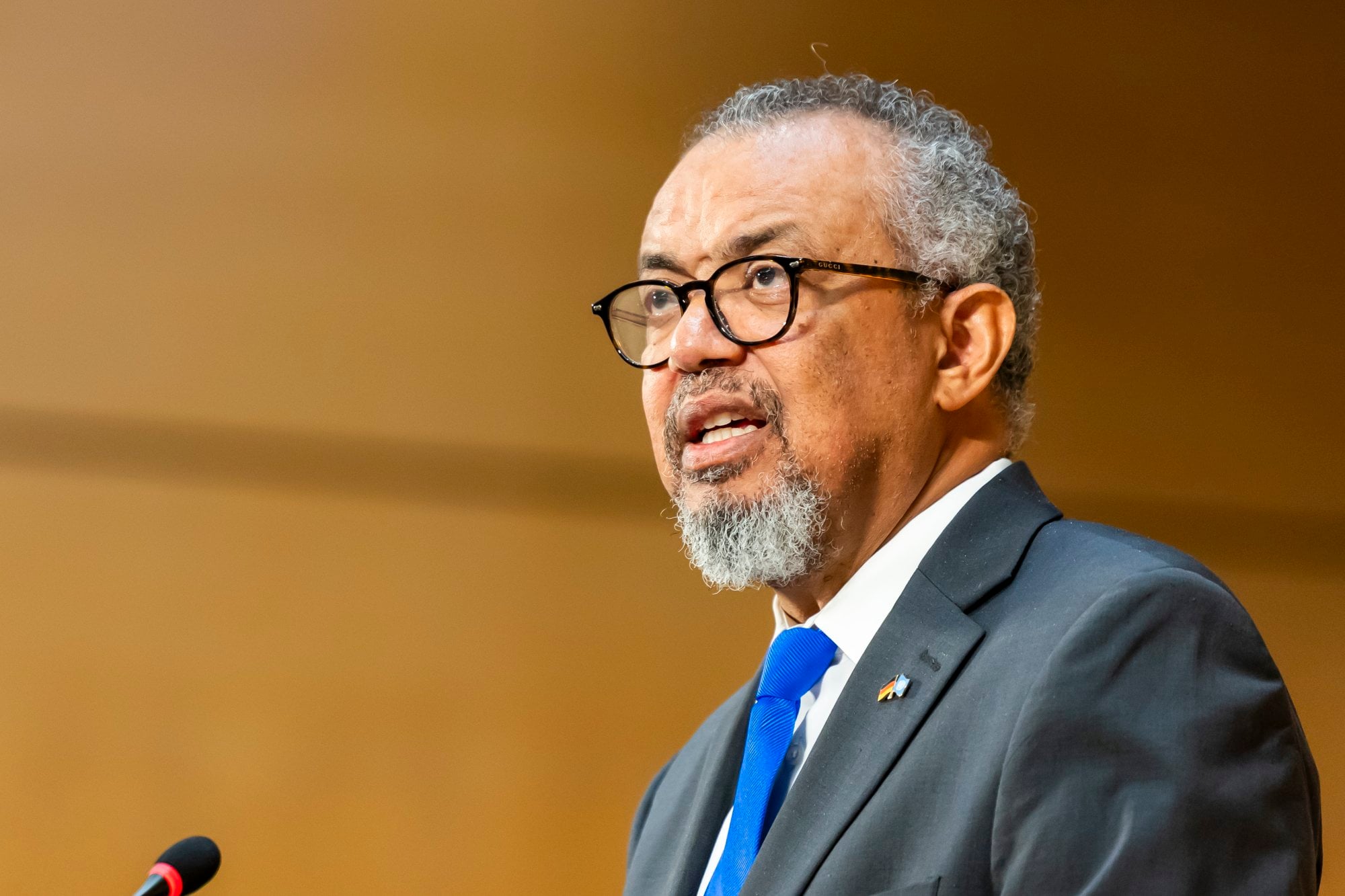
The director general has proposed three more increases in assessed contributions in 2027, when he will step down, as well as in 2029 and 2031, aiming to ultimately raise the assessed contribution from 20 per cent of the base budget to 50 per cent.
But that is after it fell to 17 per cent of the base budget in 2025, Baker noted.
In addition, he said the most restrictive “specified” funding had increased and now made up 91 per cent of voluntary contributions.
Notably, in the 2022-23 period, 73 per cent of China’s contribution was in the form of flexible assessed dues.
That proportion rose to 97 per cent in 2025.
But that does not equate to a robust endorsement of the WHO chief’s vision. It is arguably more to do with Beijing’s hesitancy to scale up its flexible, voluntary funding.
In the 2022-23 period, China ranked 23rd on the contributor list for voluntary donations. Meanwhile, nine major donors – including the US – provided more than half of the WHO’s total budget in voluntary funding, according to an analysis of China’s new role in the WHO published by the Atlas Institute for International Affairs in April.
China’s voluntary donations remained low in 2025, coming in at just US$3 million.
And despite topping the list for assessed contributions, China’s total funding ranked only 10th – behind major donor states such as Germany, Britain and Saudi Arabia, who made significant voluntary donations.
That position “does not allow it to concretely replace the US”, researcher Nicola Ragazzi wrote in the analysis.
He said that for China to become a leader in the WHO its voluntary contribution must also rise to the top, just as America’s did.
Leadership change
But he noted that Beijing might not be willing to take that step, given its traditional philosophy on leadership and good governance – referring to concepts of Confucianism such as keeping a low profile and acting within one’s capacity – and its “ambitious priorities to achieve domestically”.
“This attitude is coherent with China’s position not to become the leader in global affairs,” Ragazzi said.
“So far, we can observe that China will likely continue to support the WHO while also preferring alternative routes.”
He gave the example of Beijing promoting its Health Silk Road programmes with Belt and Road Initiative partners with whom it has preferential cooperation agreements.
Analysts have pointed to next year’s election of a new director general as a critical moment for the WHO, since the race for the top job often brings significant funding from the home countries and allies of candidates.
While another Chinese candidate is unlikely following Margaret Chan Fung Fu-chun’s two terms from 2007 to 2017 – just before Tedros – Beijing could still wield some influence in this process and secure leverage within the organisation.
According to Baker, as a major global power China has an important and valuable role to play at the WHO.
“It should not seek to replace the US, nor seek sole leadership, since the WHO should be led by all countries, not one alone,” he said.
The shifting international order was on full display last month not only in Geneva but in Beijing, as China hosted Russian leader Vladimir Putin straight after a high-stakes visit by Trump.
Countries in need of funding support for vital health programmes, like Vanuatu, will be closely watching how this great-power rivalry plays out – and what it means for the global public health agenda and international aid. -- SOUTH CHINA MORNING POST