




US President Donald Trump’s landmark visit to China comes as the Iran war disrupts global energy supplies, fuels economic uncertainty and adds fresh strain to Washington-Beijing ties. Here SCMP is examining how rivalry, interdependence and geopolitical crises are reshaping the relationship between the two powers, we look at the Arctic as an arena for competition.
The Arctic is heating up, both physically and in terms of geopolitics.
As Arctic warming accelerates and sea ice declines to record or near-record lows, the region is becoming more accessible for shipping and resource extraction – something that also fuels great power rivalry.
The competition between China and the United States in the polar region is expected to intensify, but analysts said “functional” cooperation would still be necessary and may yet prove more important.
Events such as the Strait of Hormuz crisis, attacks by Yemen’s Houthi rebels on Red Sea shipping in solidarity with Gaza and even the temporary closure of the Suez Canal in 2021, when a cargo ship became stuck, have highlighted the importance of the Arctic as a potential alternative sea lane.
However, the increasingly heated China-US rivalry has also raised concerns that an area once described by former Soviet leader Mikhail Gorbachev as a “zone of peace” may be becoming a new frontier for the strategic rivalry between Washington and Beijing.
Apart from shipping, the region is also becoming more accessible for scientific research, infrastructure development and resource extraction, but this may fuel further competition and mistrust, according to Mehri Madarshahi, an honorary professor at the South China University of Technology’s Institute of Public Policy.
“The future trajectory of China-US relations in the Arctic is likely to be shaped by a paradox: climate change is opening the region physically while closing it politically,” she said.
A study published last September by Peking University’s Shenzhen Graduate School predicted that by 2100 the Arctic could support year-round navigation for all major vessel types, allowing different routes across the ocean to handle a greater portion of global shipping traffic than the Suez or Panama canals.
Beijing identified the future importance of the Arctic in a 2018 white paper that described China as an “important stakeholder” in the region and a “near-Arctic state”. It has also been steadily expanding its role in governance and scientific expeditions in polar regions.
The same year it worked with nine other parties, including the US, to conclude the landmark Agreement to Prevent Unregulated High Seas Fisheries in the Central Arctic Ocean.
The pact is the world’s first legally binding multilateral instrument to prevent commercial fishing starting in a high-seas area and is also the only international mechanism in the Arctic where Beijing has an equal say in decision-making.
The country is also an observer with no voting rights in the Arctic Council, which has stalled since Russia – one of its eight members – launched its full-scale invasion of Ukraine in 2022.
In late March, China hosted a meeting of the fisheries pact’s scientific coordinating group in the eastern city of Hangzhou, a move the government described as “elevating its engagement in Arctic affairs”.
Beijing also hopes to develop more shipping routes and infrastructure under the Polar Silk Road, a part of its transcontinental Belt and Road Initiative.
Madarshahi said Washington would be wary about giving non-Arctic states such as China a greater role in regional affairs.
“As trust declines, scientific presence may be viewed through a security lens,” she said, arguing that research stations, icebreakers, seabed mapping and data collection could also have a wider strategic significance.
She also said that US concerns included ports, connectivity and strategic access and that it would increasingly interpret China’s Arctic role through its broader strategic alignment with Russia.
“Rivalry could sharpen around critical minerals, energy and northern infrastructure, especially where commercial projects overlap with national security, allied territory and supply-chain resilience,” Madarshahi said.
“This geoeconomic dimension is likely to expand as climate change increases the Arctic’s strategic value.”
The March meeting in Hangzhou showed China and the US shared “irreplaceable common interests” on less sensitive issues such as climate monitoring and high-seas fisheries management, according to Li Pinbao, an associate research fellow at the Institute of Public Policy.
But he said there were other areas that were more problematic, citing US President Donald Trump’s threats to take over Greenland, Washington’s strategy of framing the Arctic as a new arena for great-power competition and its view of China-Russia cooperation there as a “threat”.
Li said: “China-US relations in the Arctic are entering deeper waters: the intensity of competition is rising but functional cooperation remains resilient.
“The real risk to watch is that if the United States continues to hard-link Arctic affairs with the broader China-US strategic competition, it could stall some cooperative mechanisms and gradually narrow the channels that could otherwise help build mutual trust.”
Days before the meeting in Hangzhou, Gregory Guillot, a US Air Force general and head of Northern Command, told a congressional hearing that the country was negotiating with Denmark for access to three additional bases in Greenland.
That would mark the first US military expansion there in decades after scaling back its military presence at the end of the Cold War.
Citing alleged threats posed by China and Russia, Trump has repeatedly broadcast his desire to take over Greenland, prompting Denmark and some of its European allies to send troops and equipment there earlier in the year in case of attack.
The US on April 23 hosted a gathering in Washington of senior diplomatic representatives from all Arctic littoral states excluding Russia – dubbed the Arctic Seven (A7) – to discuss “shared economic and security interests” in the ocean.
During Trump’s first term of office, then secretary of state Mike Pompeo accused China of a “pattern of aggressive behaviour” in the Arctic, and the suspicion of Beijing’s intentions continued into Joe Biden’s presidency.
The 2022 US National Strategy for the Arctic Region and the Pentagon’s 2024 Arctic Strategy both highlighted Washington’s suspicions about China’s growing presence in the region and the need for an enhanced presence to protect national security.
Nato’s top European commander Alexus Grynkewich also warned earlier this year that the transatlantic alliance should “be mindful of” Russia and China increasingly working together in the Arctic region.
Li warned that if the US were to persistently frame Chinese scientific activities or China-Russian cooperation through an “overly securitised” lens, that could “intensify security dilemmas and even raise the risk of friction”.
He added that Washington and its allies’ efforts to counter Chinese participation in Arctic communications and port development could risk “infusing commercial competition with greater ideological overtones”.
Li also said that China and the Arctic states – which apart from the US and Russia also include Canada, Denmark, Iceland, Norway, Sweden and Finland – had different views on rule-setting issues such as legal applicability for Arctic shipping routes and environmental standards for resource development.
“Disputes over classifications such as ‘high seas’ versus ‘internal waters’ remain a focal point of future contestation,” he said.
But he said the US and Soviet Union had been able to discuss environmental protection for the region at the height of the Cold War, adding “today’s China and the US should have even broader room for cooperation in the Arctic”.
“As the world’s two largest economies and major greenhouse gas emitters, China and the US share common interests in Arctic climate monitoring and carbon cycle research that transcend geopolitics.”
He also pointed out the “considerable” scope for cooperation on maritime safety along with other areas such as fisheries and protecting the ecosystem.
China and the US are likely to find more room for cooperation than competition on Arctic issues, according to Zhao Long, the director of the Institute for International Strategic and Security Studies at the Shanghai Institutes for International Studies.
“I don’t think there are any direct differences of interest ... between China and the US on Arctic security issues,” he said.
Zhao also said Trump’s lack of concern over climate change and cuts to scientific funding might prompt US scientists to look for ways to work more closely with other countries, including China, on Arctic research.
He also said Trump’s strong enthusiasm for Arctic energy and resource development could create a “new growth point” for US cooperation with China, whose demand for diversified fuel imports may continue to grow.
Zhao added that an end to the war in Ukraine could open the way for closer cooperation between China and Nordic countries on Arctic shipping routes.
He also said it was important to dispel “false narratives and misconceptions about China”, including claims that it was expanding its military presence in the region, trying to dominate Arctic governance with Russia or exploit divisions among other countries.
“[We should] strive to make the Arctic a frontier for constructive engagement and interaction between major powers, not let it descend into a frontline of great-power confrontation,” he added.
Still, Zhao said the age of “Arctic exceptionalism” – the idea that the environmentally crucial polar region is a unique place that is largely immune to security tensions in the outside world – was over, and competition and cooperation would now evolve in parallel.
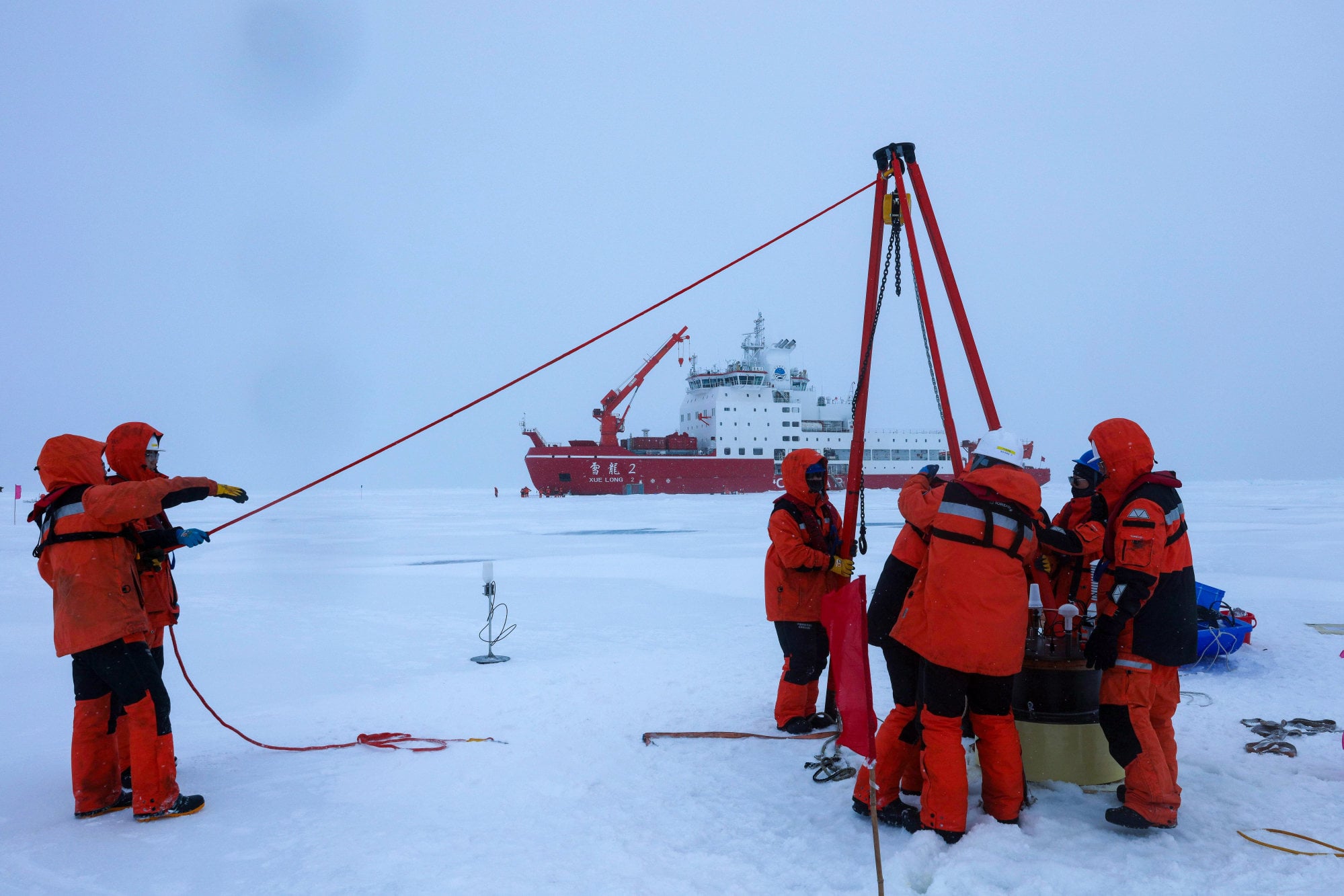
Li said that it was “almost inevitable” that the Arctic would become increasingly crowded in the future and there may be opportunities for China to further define its role there.
“[China] should continue to maintain strategic focus, deepen scientific engagement, act in accordance with international law and provide public goods where its capacity allows,” he said.
He also called for Chinese enterprises in the Arctic to place greater emphasis on environmental, social and governance standards and transparency, as well as engaging with indigenous communities.
Madarshahi also said climate change could create a strong case for limited but meaningful cooperation between China and the US.
“China’s observer status in the Arctic Council and existing multilateral frameworks show that even in a competitive environment, selective cooperation remains both possible and necessary,” she said. -- SOUTH CHINA MORNING POST


