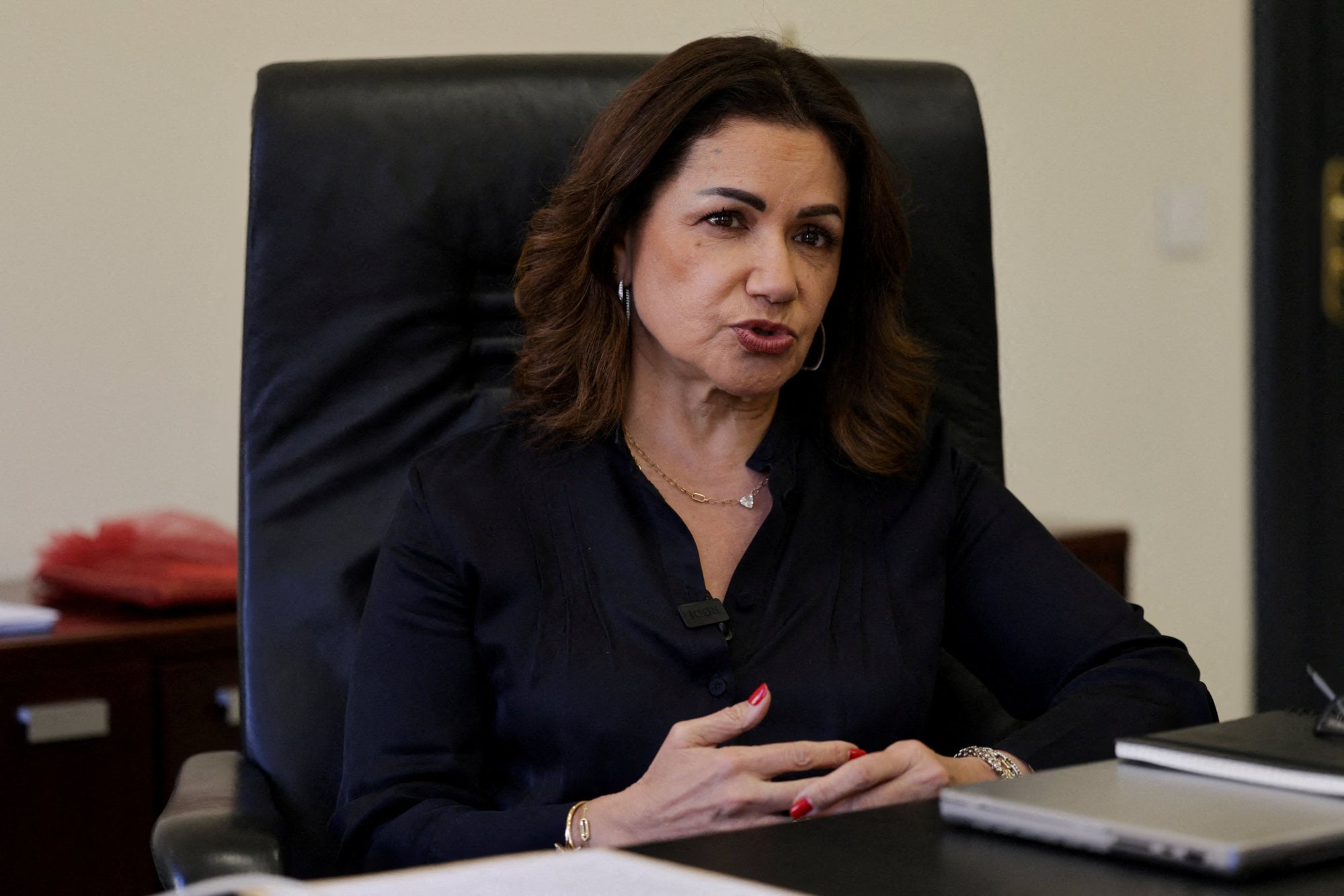
Lebanon’s social affairs minister has backed calls for the disarmament of Hezbollah, but cautioned the process would take time before a “political settlement” could be reached, noting that the group is also a “community”.
Haneen Sayed told a discussion in Washington on Monday that disarming Hezbollah – an Iran-backed militant group – was a demand of her government and its people, and that it “must happen”.
“Of course, we understand that implementation is not easy. It’s not instant coffee. It takes time, and it, of course, is going to require a political settlement [or] an agreement and negotiation for that to happen,” she told the discussion hosted by the Centre for Strategic and International Studies.
“It’s not an overnight thing, but at least what we want to get to is that there be an agreement, and then the implementation is the second stage.”
Sayed’s comments follow last week’s three-week extension of the Lebanon-Israel ceasefire, a period already marred by reported violations. Her remarks also signalled an awareness that the Lebanese government has to deal with Hezbollah to achieve long-term peace in the country.
US President Donald Trump earlier said that the truce – a result of rare direct talks between Lebanese and Israeli officials – would include Hezbollah, with Israel’s envoy to the US, Yechiel Leiter, saying the two countries stood united in liberating Lebanon from the group.
Lebanon has been a sticking point in a separate truce between the US and Iran, with Tehran earlier demanding that it be included in any ceasefire.
Hezbollah, which has opposed talks between the Lebanese government and Israel, on Monday said it would press ahead with “defensive resistance” against Israel, adding that it would continue fighting until all occupied Lebanese territory was regained.
Israel’s offensive in Lebanon began in early March, following a wave of Hezbollah rocket attacks launched at northern Israel in retaliation for the February 28 assassination of Iran’s Supreme Leader Ayatollah Ali Khamenei.
The campaign, comprising heavy air strikes and a ground invasion in southern Lebanon, has killed at least 2,500 people and wounded several thousand more. Sixteen Israeli soldiers have died in the current round of violence.
Meanwhile, Israeli troops have continued to occupy a 10km-deep zone along the border in southern Lebanon, where residents have been warned not to return. Israel’s military has destroyed buildings, a tactic aimed at dismantling Hezbollah’s infrastructure and flushing out fighters.
In a statement on Monday, Hezbollah leader Naim Qassem said the group would not engage in direct negotiations with Israel, and urged Lebanon’s government to “back down from their grave sin that is putting Lebanon in a spiral of instability”.
️ REVEALED: The Forward Defense Line and the area in which IDF soldiers are operating, following the ceasefire agreement.5 divisions are operating simultaneously south of the Forward Defense Line in southern Lebanon in order to dismantle Hezbollah terror infrastructure sites... pic.twitter.com/eibA2pgDHe— Israel Defense Forces (@IDF) April 19, 2026
Israel’s Defence Minister Israel Katz responded by warning Hezbollah that its defiance would result in catastrophic consequences for Lebanon, saying: “Naim Qassem is playing with fire, and the fire will burn Hezbollah and all of Lebanon”.
“If the Lebanese government continues to take cover under the wing of the Hezbollah terrorist organisation – fire will break out and engulf the cedars of Lebanon,” he added.
Sayed described Hezbollah as “not just an armed group ... [but] a community”, suggesting that Iran’s war with the US could create an opening for Beirut.
“Hezbollah is a community that [is] like many other communities in Lebanon that have been depending on assistance ... on the social side, on the medical side, from the political party itself, which has been funded by and large from Iran over the years,” she said.
“Now, that is also a reality that’s going to change because I believe the Iranians, once that war stops, will have a huge challenge on their hands to rebuild Iran, and that will be their priority. But my point is that the communities of Hezbollah will need support, and that is where the state has to come in.”
Despite a truce in Lebanon, Israel and Hezbollah have continued to trade fire. On Saturday, Israel’s Prime Minister Benjamin Netanyahu ordered his military to “vigorously attack” Hezbollah targets.
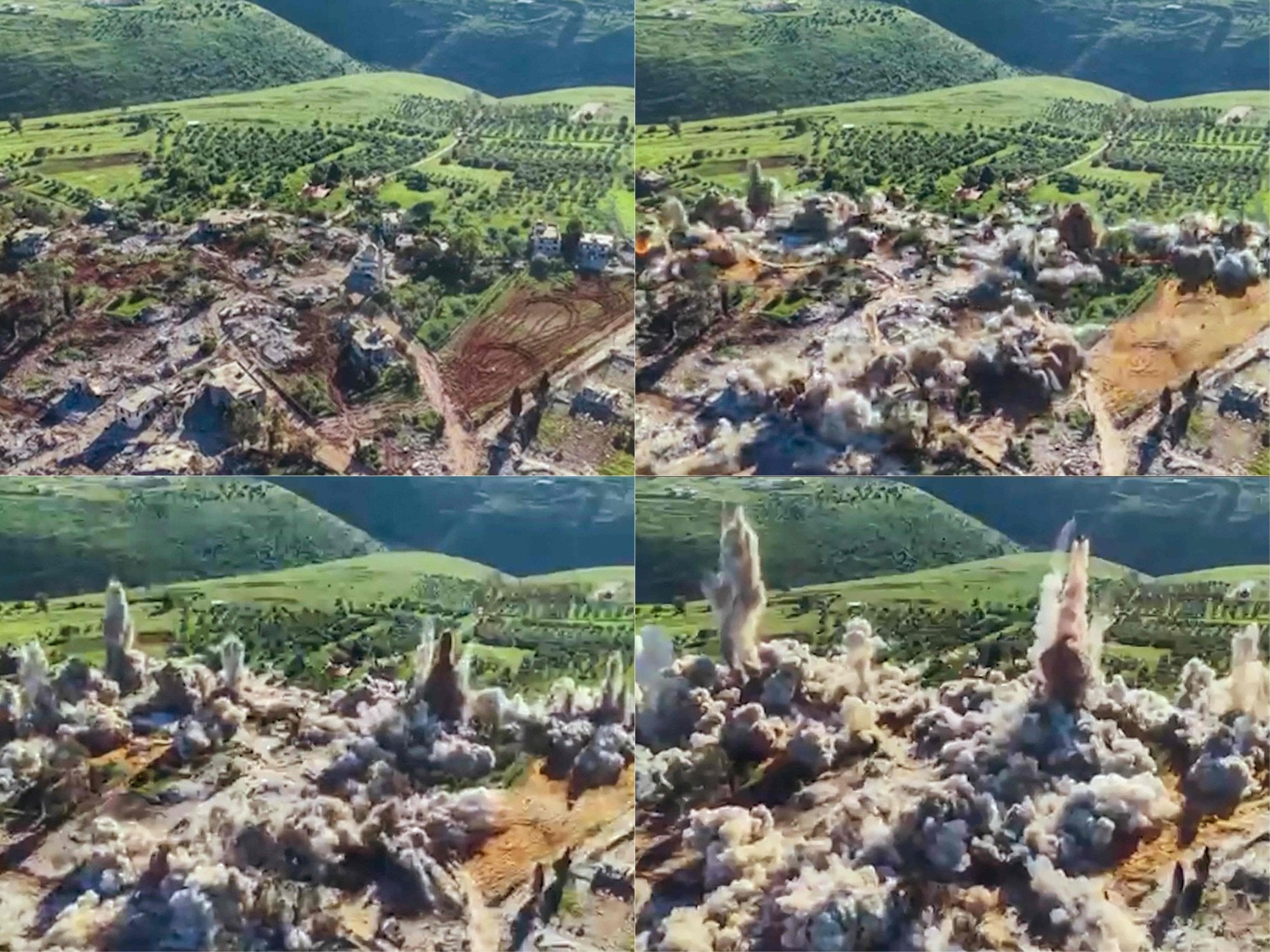
The next day, Israeli strikes in southern Lebanon killed 14 people, marking the deadliest day since the truce took effect.
On Monday, the Israeli military said it carried out fresh strikes on weapons depots and rocket launch positions. Lebanon’s health ministry reported an additional four people were killed in the south.
Sayed told Monday’s discussion in Washington that “the Israelis have not stopped bombing”, adding that a lack of public confidence in the ceasefire was deepening the humanitarian crisis.
About a million Lebanese have been displaced, Sayed said, and even with a ceasefire in place – which she described as “not as stable” as previous ones – people have not returned home from shelters.
“People are wary. They don’t know what’s happening. They don’t know when things can restart again. And in fact ... we haven’t had a real ceasefire. The Israelis continue to hit areas,” she said.
“It’s a very fluid, uncertain situation. People are anxious ... [It’s] not the kind of conditions that would give them comfort to go back home.” -- SOUTH CHINA MORNING POST