As the US-Israeli war on Iran enters a third month, there is no sign of a break in the deadlock between Washington and Tehran.
These are the main takeaways from what happened overnight.
What did Trump say?
US President Donald Trump told his aides to prepare for an extended blockade of Iran, The Wall Street Journal reported in Asian early trading hours on Wednesday, citing US officials.
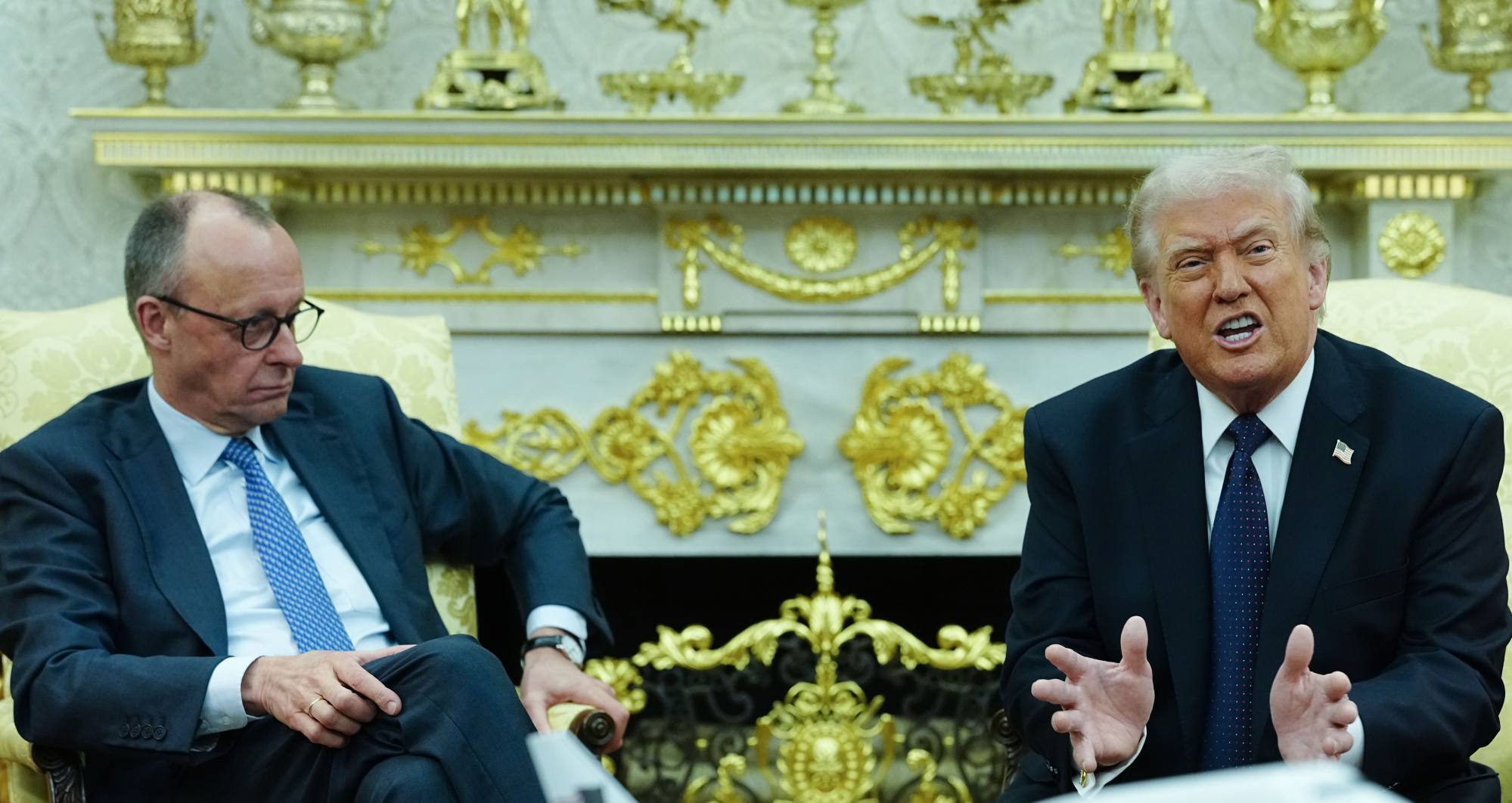
And after welcoming Britain’s King Charles in Washington on Tuesday, he lashed out at German Chancellor Friedrich Merz.
“I am doing something with Iran, right now, that other Nations, or Presidents, should have done long ago,” Trump wrote in a social media post.
“Iran has just informed us that they are in a ‘State of Collapse.’ They want us to ‘Open the Hormuz Strait,’ as soon as possible, as they try to figure out their leadership situation (Which I believe they will be able to do!).”
Merz on Monday said the US was “being humiliated” by Iran and there was “no exit strategy” to end the Middle Eastern conflict any time soon.
Addressing a state dinner to welcome Charles and Queen Camilla, Trump said the US would never let a “particular opponent” in the Middle East get a nuclear weapon.
What did Iran say?
Iran’s army spokesman Mohammad Akraminia on Tuesday said the country did not consider the war to be over.
During a television interview, he said it was still regarded as a wartime situation and the army’s “target bank, training and equipment have been updated”, according to Iran’s Tasnim news agency.
He added that the Strait of Hormuz was being controlled by the armed forces.
Iranian lawmaker Seyyed Mahmoud Nabavian, who was part of Tehran’s negotiating team in Pakistan, said in a social media post on Tuesday that “fees are also being collected from ships in the Strait of Hormuz, though priority passage is given to ships that pay the fees earlier”.
“The country has no problems with exports and imports,” he added.
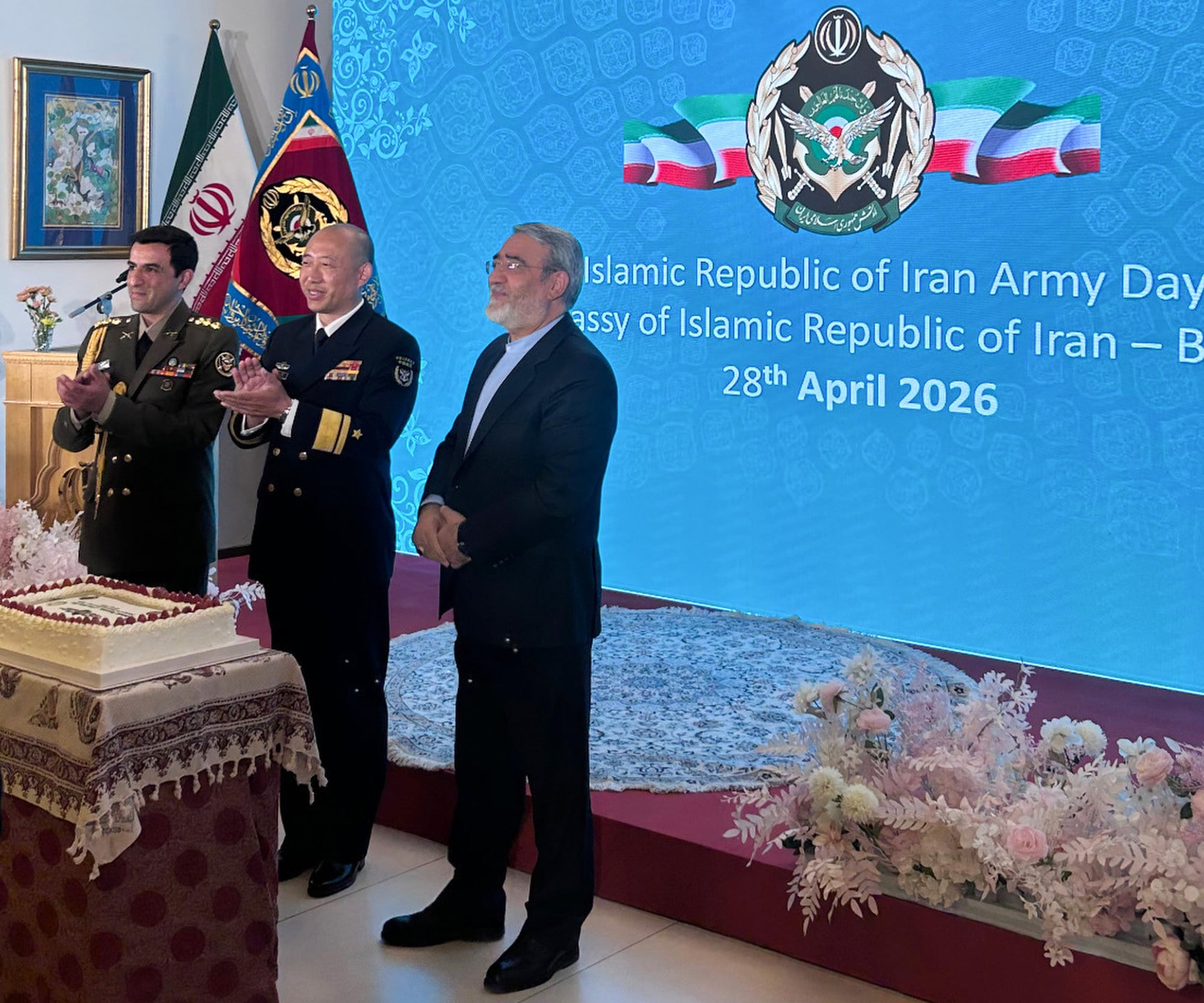
In a reception marking Iran’s Army Day on Tuesday, Abdolreza Rahmani Fazli, Tehran’s top envoy in Beijing, said Iran welcomed diplomacy and dialogue to build trust with other countries.
But Iran “opposes negotiations whose results are predetermined and imposed, and will never surrender to the illegal demands of the enemies”, he told foreign military attaches and Chinese People’s Liberation Army representatives.
Is China being targeted?
The United States is ramping up economic pressure against Iran.
Washington on Tuesday announced sanctions on another 35 entities and individuals linked to Iran’s covert financial network.
“Financial institutions are on notice: Any institution that facilitates or engages with these networks is at risk of severe consequences,” US Treasury Secretary Scott Bessent wrote on social media on Tuesday.
The US Treasury Department also alerted financial institutions to the sanctions risks associated with independent “teapot” oil refineries in China, mainly in Shandong province, “given their continued role in importing and refining Iranian crude oil”.
Bessent said Tehran’s economic situation continued to worsen.
“The Treasury Department, through Economic Fury, has targeted Iran’s international shadow banking infrastructure, access to crypto, shadow fleet, weapons procurement networks, funding for terrorist proxies in the region, and independent Chinese “teapot” refineries that support Iran’s oil trade. These actions have disrupted tens of billions of dollars in revenue that would be used to fund terrorism,” he wrote on social media.
“Tehran’s inflation has doubled and its currency has rapidly depreciated.”
He continued: “Kharg Island, Iran’s primary oil export terminal, is soon nearing storage capacity, which will force the regime to reduce oil production, resulting in an additional approximately $170 million per day in lost revenue, and causing permanent damage to Iran’s oil infrastructure. Treasury will continue to exert maximum pressure and any person, vessel, or entity facilitating illicit flows to Tehran risks exposure to US sanctions.”
What did the GCC say?
The US Central Command said American forces were continuing to enforce a blockade across the Middle East and so far 39 vessels had been redirected.
It also said more than 20 vessels remained anchored in Chabahar, an Iranian port outside the Strait of Hormuz, as “US forces cut off economic trade going into and coming out of Iran during the ongoing blockade”.
But Iran’s Fars news agency reported on Tuesday that 52 vessels had bypassed the US naval blockade within a 72-hour period, citing satellite tracking data up to 10pm local time on Monday.
Leaders of the Gulf Cooperation Council met in Jeddah, Saudi Arabia on Tuesday – the first in-person GCC summit since the Iran war began on February 28. The meeting condemned Iranian attacks against GCC member states, opposed the imposition of fees for passage through the Strait of Hormuz and called for it to be reopened with free navigation.
UAE and Iron Dome
The United Arab Emirates on Tuesday said it would leave the Organisation of the Petroleum Exporting Countries and the wider Opec+ alliance – effective from Friday – and that it would gradually raise oil production.
The UAE is the third-largest oil producer in Opec.
Meanwhile, Israel sent an Iron Dome air-defence system along with troops to the United Arab Emirates “early in the war with Iran”, Axios reported earlier this week, citing two Israeli officials and a US official.
That would mark the first time Israel’s Iron Dome has been used in a country other than Israel or the United States.
Political rift
Some 261 members of the 290-seat Iranian parliament issued a statement supporting the country’s negotiating team led by speaker Mohammad Bagher Ghalibaf, according to Iran’s official Islamic Republic News Agency on Monday.
“We have firm belief in the team’s insistence on defending and securing national interests and the country’s rights,” the statement said.
But several prominent hardline figures did not sign the statement, according to Iranian media reports.
There had been signs of a rift between Iran’s hardliners and negotiators, including rare criticism in state media of Foreign Minister Abbas Araghchi after he declared the Strait of Hormuz reopened for the remainder of the ceasefire on a “coordinated route”.
In a post on Tuesday, the social media account attributed to Iranian Supreme Leader Mojtaba Khamenei highlighted domestic solidarity. “The ice between various social classes with differing inclinations began to melt,” the post said.
Meanwhile, Abbas Ka’bi, a member of Iran’s powerful Assembly of Experts, said any discussion of Iran’s “legitimate right to nuclear enrichment” was prohibited and the issue was outside the main negotiating framework and should not be entered into.
In an interview with Iran’s Rasa news agency, he also called for strategic synergy with China and Russia to help end the conflict.
-- Report from SOUTH CHINA MORNING POST